Hardware Stores Near Your House in Northern VirginiaPlus the first 2 weeks in a new home, what to buy, and what to fix yourself
Type your address: see the stores within 3 to 5 miles, then a checklist fitted to the year your house was built.
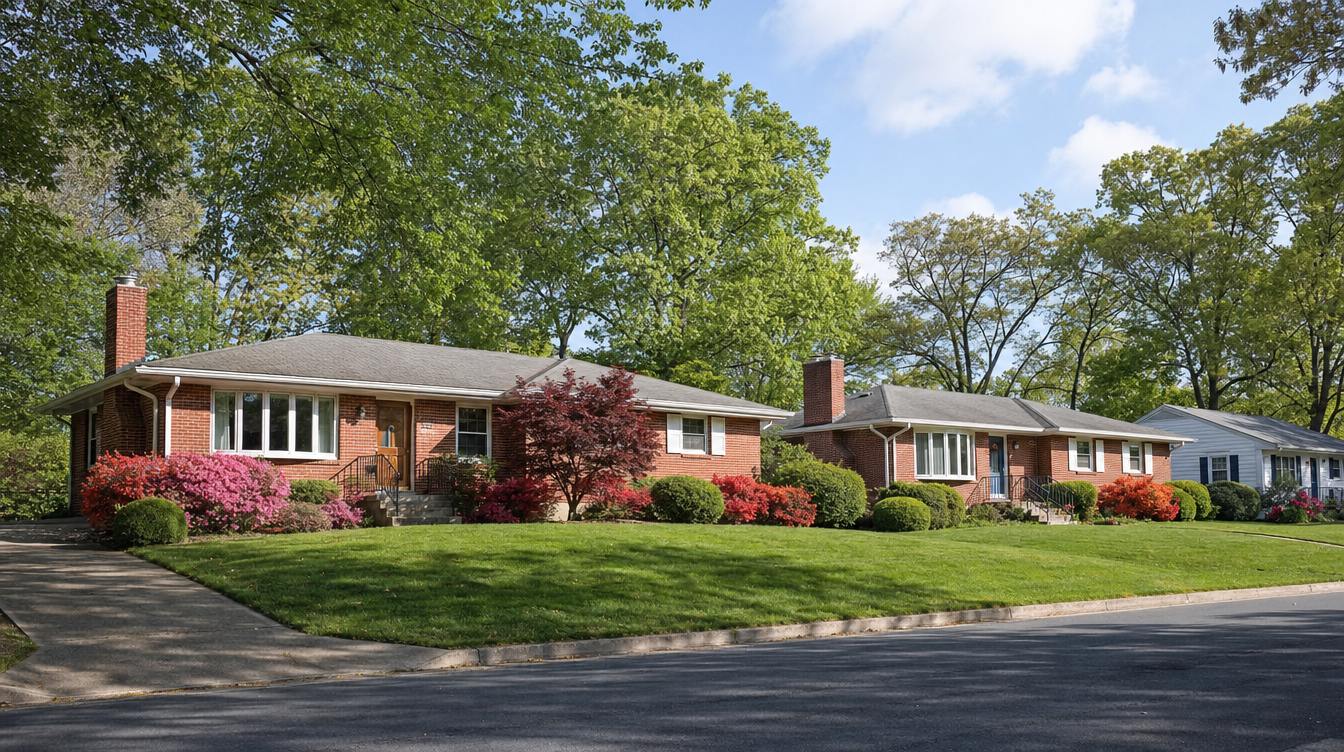
1950s to 70s: check the wiring· Springfield, Fairfax County
Stores and facts checked October 27, 2026. Pictures: artist’s renderings of real places.
Hardware stores near you
Type your address. See every hardware store within 3 to 5 miles.
At the house now? Tap and see the stores around you, no typing. Your location stays on this page and is not saved.
3 mi5 mistraight line
Home DepotLowe’sAce HardwareLocal store
Your stores show here
Type the address and pick it from the list, or tap Use my location. Each store gets a numbered dot on the radar and a card here: how far, the phone, the hours and directions.
36 stores checked October 27, 2026: 17 Home Depot, 8 Lowe’s, 10 Ace Hardware and 0 local hardware store.
Miles are a straight line from the house to the store; driving is longer.2,1 Store details from each store’s own page, checked October 27, 2026: call ahead for holiday hours.
All 36 stores we checked, by chain
Home Depot 17
The Home Depot Alexandria400 S Pickett St, Alexandria, VA 22304(703) 823-1900 · Mon–Sat 6 AM–10 PM, Sun 8 AM–8 PM · Store page
The Home Depot Annandale6555 Little River Tpke, Alexandria, VA 22312(703) 642-3660 · Mon–Sat 6 AM–10 PM, Sun 8 AM–8 PM · Store page
The Home Depot Hybla Valley7710 Richmond Hwy, Alexandria, VA 22306(703) 619-5124 · Mon–Sat 6 AM–10 PM, Sun 8 AM–8 PM · Store page
The Home Depot Ashburn43675 Greenway Corporate Dr, Ashburn, VA 20147(703) 726-2883 · Mon–Sat 6 AM–10 PM, Sun 8 AM–8 PM · Store page
The Home Depot South Riding25000 Riding Plaza, Chantilly, VA 20152(703) 327-3517 · Mon–Sat 6 AM–10 PM, Sun 8 AM–8 PM · Store page
The Home Depot Fairfax12275 Price Club Plaza, Fairfax, VA 22030(703) 266-9800 · Mon–Sat 6 AM–10 PM, Sun 8 AM–8 PM · Store page
The Home Depot Fairfax Circle3201 Blenheim Blvd, Fairfax, VA 22030(703) 591-6808 · Mon–Sat 6 AM–10 PM, Sun 8 AM–8 PM · Store page
The Home Depot Merrifield2815 Merrilee Dr, Fairfax, VA 22031(703) 205-1245 · Mon–Sat 6 AM–10 PM, Sun 8 AM–8 PM · Store page
The Home Depot Falls Church6210 Seven Corners Ctr, Falls Church, VA 22044(703) 534-9580 · Mon–Sat 6 AM–10 PM, Sun 8 AM–8 PM · Store page
The Home Depot Haymarket15450 John Marshall Hwy, Haymarket, VA 20169(571) 445-7600 · Mon–Sat 6 AM–10 PM, Sun 8 AM–8 PM · Store page
The Home Depot Leesburg280 Fort Evans Rd, Leesburg, VA 20176(703) 737-0255 · Mon–Sat 6 AM–10 PM, Sun 8 AM–8 PM · Store page
The Home Depot East Manassas8805 Liberia Ave, Manassas, VA 20110(703) 393-1954 · Mon–Sat 6 AM–10 PM, Sun 8 AM–8 PM · Store page
The Home Depot Manassas7486 Stream Walk Ln, Manassas, VA 20109(703) 368-4900 · Mon–Sat 6 AM–10 PM, Sun 8 AM–8 PM · Store page
The Home Depot Reston1651 Reston Pkwy, Reston, VA 20194(703) 435-0778 · Mon–Sat 6 AM–10 PM, Sun 8 AM–8 PM · Store page
The Home Depot Springfield6691 Frontier Rd, Springfield, VA 22150(703) 924-0193 · Mon–Sat 6 AM–10 PM, Sun 8 AM–8 PM · Store page
The Home Depot Sterling Park46261 Cranston Way, Sterling, VA 20165(703) 444-2900 · Mon–Sat 6 AM–10 PM, Sun 8 AM–8 PM · Store page
The Home Depot Dale City14025 Foulger Square, Woodbridge, VA 22192(703) 670-3699 · Mon–Sat 6 AM–10 PM, Sun 8 AM–8 PM · Store page
Lowe’s 8
Lowe's of Alexandria6750 Richmond Hwy, Alexandria, VA 22306(703) 765-8011 · Mon–Sat 6 AM–10 PM, Sun 8 AM–8 PM · Store page
Lowe's of Chantilly13856 Metrotech Dr, Chantilly, VA 20151(703) 376-6300 · Mon–Sat 6 AM–10 PM, Sun 8 AM–8 PM · Store page
Lowe's of Fairfax4080 Jermantown Rd, Fairfax, VA 22030(703) 332-0000 · Mon–Sat 6 AM–10 PM, Sun 8 AM–8 PM · Store page
Lowe's of Gainesville13000 Gateway Center Dr, Gainesville, VA 20155(703) 468-6000 · Mon–Sat 6 AM–10 PM, Sun 8 AM–8 PM · Store page
Lowe's of Leesburg1390 Russell Branch Pkwy SE, Leesburg, VA 20176(571) 510-8163 · Mon–Sat 6 AM–10 PM, Sun 8 AM–8 PM · Store page
Lowe's of N. Manassas7500 Broken Branch Ln, Manassas, VA 20109(703) 361-9101 · Mon–Sat 6 AM–10 PM, Sun 8 AM–8 PM · Store page
Lowe's of Sterling45430 Dulles Crossing Plaza, Sterling, VA 20166(703) 948-0010 · Mon–Sat 6 AM–10 PM, Sun 8 AM–8 PM · Store page
Lowe's of Dale City13720 Smoketown Rd, Woodbridge, VA 22192(703) 586-4000 · Mon–Sat 6 AM–10 PM, Sun 8 AM–8 PM · Store page
Ace Hardware 10
Old Town Ace Hardware809 S Washington St, Alexandria, VA 22314(703) 566-7040 · Mon–Sat 8 AM–8 PM, Sun 10 AM–6 PM · Store page
Bill's Ace Hardware2213 N Buchanan St, Arlington, VA 22207(703) 524-2503 · Mon–Sat 8 AM–7 PM, Sun 9 AM–6 PM · Store page
Twins Ace Hardware (Clarendon)2001 Clarendon Blvd, Arlington, VA 22201(571) 444-7703 · Mon–Fri 8 AM–8 PM, Sat 8 AM–7 PM, Sun 9 AM–5 PM · Store page
Twins Ace Hardware (Crystal City)2051 S Bell St, Arlington, VA 22202(703) 563-6373 · Mon–Fri 8 AM–8 PM, Sat 8 AM–5 PM, Sun 9 AM–5 PM · Store page
Fairfax Ace Hardware10310-B Main St, Fairfax, VA 22030(703) 359-4703 · Mon–Fri 8 AM–8 PM, Sat 8 AM–7 PM, Sun 9 AM–6 PM · Store page
Rice Hardware (Ace)9124 Mathis Ave, Manassas, VA 20110(703) 361-3141 · Mon–Fri 7:30 AM–8 PM, Sat 8 AM–8 PM, Sun 9 AM–5 PM · Store page
Woodbine Hardware (Ace)13418 Dumfries Rd, Manassas, VA 20112(703) 791-7855 · Mon–Sat 8 AM–8 PM, Sun 8:30 AM–5 PM · Store page
Costello's Ace Hardware of Purcellville801 E Main St, Purcellville, VA 20132(540) 254-5500 · Mon–Sat 8 AM–8 PM, Sun 9 AM–6 PM · Store page
Ace of Vienna264 Cedar Ln SE, Vienna, VA 22180(703) 936-0881 · Mon–Sat 8 AM–7 PM, Sun 9 AM–6 PM · Store page
Dale City Hardware (Ace)4340 Dale Blvd, Woodbridge, VA 22193(703) 670-2139 · Mon–Sat 8 AM–8 PM, Sun 8:30 AM–6 PM · Store page
Checked October 27, 2026 on each store’s own page. Hours show only where the store’s page lists them.
Pick the address from the list, or tap Use my location. Tap a dot on the radar to jump to that store.
Stores checked October 27, 202636 stores, each on its own pageA 10-second finder, plus checklists
Quick answer
Type your address above to see the hardware stores within 3 and 5 miles, with their phone, hours and directions. In the first two weeks in a new home: rekey the outside locks, find the water, gas and power shutoffs, test every smoke and CO alarm, change the HVAC filter and set the water heater to 120°F.6,7 Then let the year it was built decide the rest: before 1978, test before you sand paint; 1965 to the mid-1970s, look for aluminum wiring; 1978 to 1995, look for polybutylene pipe.9,8,11
36hardware and home improvement stores mapped across Northern Virginia, each checked on its own page1
87%of homes built before 1940 have lead paint; 24% of homes built 1960 to 19779
2,900home dryer fires a year in the U.S.; 34% start because the vent wasn’t cleaned4
500,000+people a year treated for ladder injuries in the U.S.5
120°Fthe water heater setting that helps prevent scalds7
$2,154kept, one-time, doing the 10 DIY jobs on this page yourself instead of hiring a pro3
Store count: Northern Virginia, checked October 27, 2026. Safety figures: U.S. agencies. Savings: Angi’s 2026 national prices, one-time.
By the year it was built
How old is your house? Here is what to check.
Slide to the year or tap the era: the checklist and shopping list below change with it.
In shortA 1960s rambler and a 2024 townhouse need different checklists. Pick the year and the page fits your house.
Slide to the year, or tap the era. The address at the top fills it in from the county record when the county has it.
Built before 1950
Charm, plaster and the oldest systems in the house.
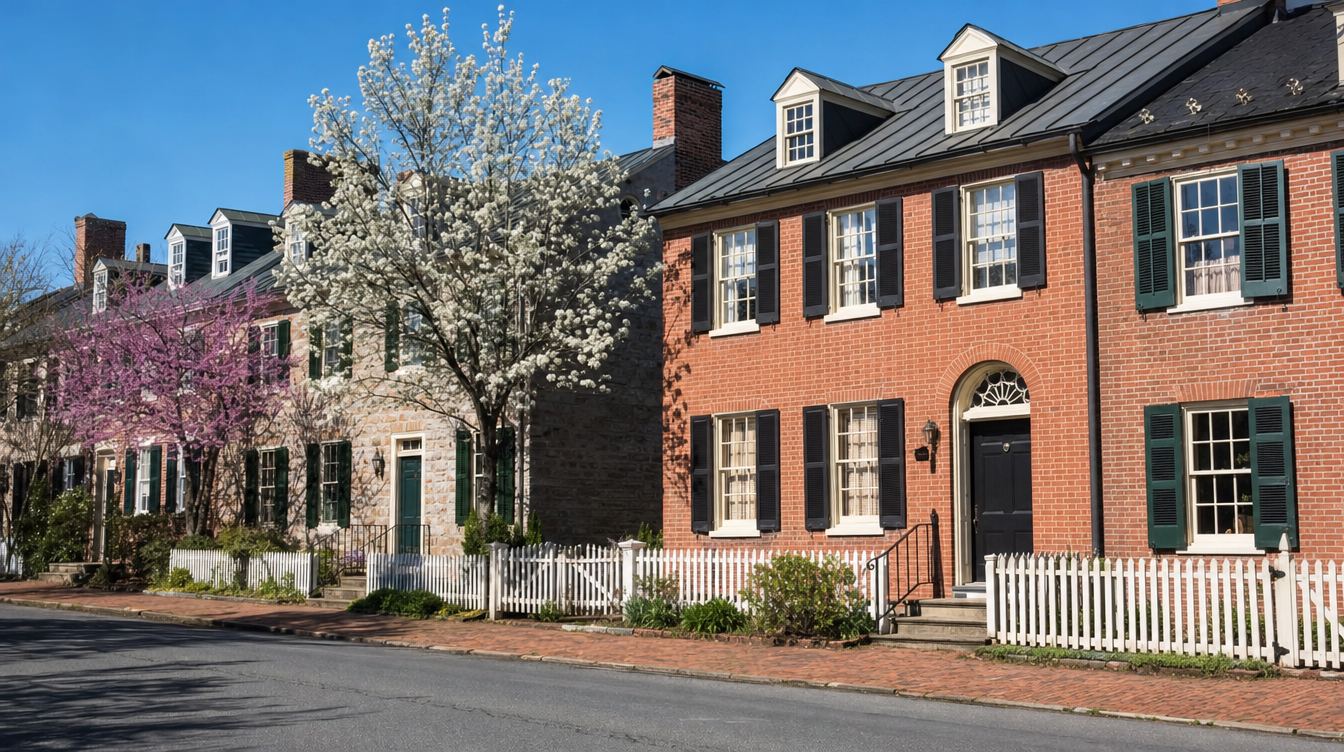
Often here: Old Town Alexandria, Arlington bungalows, Leesburg and Purcellville main streets.
Test firstLead paint is likely87% of homes built before 1940 have some. Don’t sand or scrape old paint; a contractor who disturbs it must be EPA lead-safe certified.
Call a proOld wiringKnob-and-tube or 2-prong outlets with no ground. Have a licensed electrician look before you add loads.
Call a proOld pipes and sewer lineGalvanized steel or cast iron can rust inside; clay sewer lines crack. A sewer camera check is a cheap first step.
Test firstAsbestos in old wrapPipe or boiler wrap and old floor tiles may hold it. Leave it alone and ask a pro to test.
Call a proChimney before the first fireGet it inspected and swept before you light it.
You can do itTest for radonEvery house, any age. A kit is a few dollars.
Built 1950 to 1977
Solid bones, but the paint, wiring and ceilings need a look.
Often here: Ramblers and split-levels in Annandale, Springfield, McLean, Vienna and Arlington.
Test firstLead paint is common69% of homes built 1940 to 1959 and 24% of homes built 1960 to 1977 have some. Test before you sand, scrape or remove old trim.
Call a proAluminum wiring (1965 to mid-1970s)Silver-colored wire at outlets. Homes wired with it before 1972 were 55 times more likely to have a connection reach fire-hazard conditions. A licensed electrician repairs it.
Test firstPopcorn ceilings and 9-inch floor tilesMay hold asbestos. Don’t scrape or sand; test first.
Call a proSmall electric serviceMany have 60 to 100 amp panels. Ask an electrician before adding a car charger or new appliances.
You can do itOld windows, thin insulationLook in the attic; drafty windows and thin insulation mean bigger bills.
You can do itTest for radonEvery house, any age.
Built 1978 to 1994
The plastic pipe years: check the plumbing first.
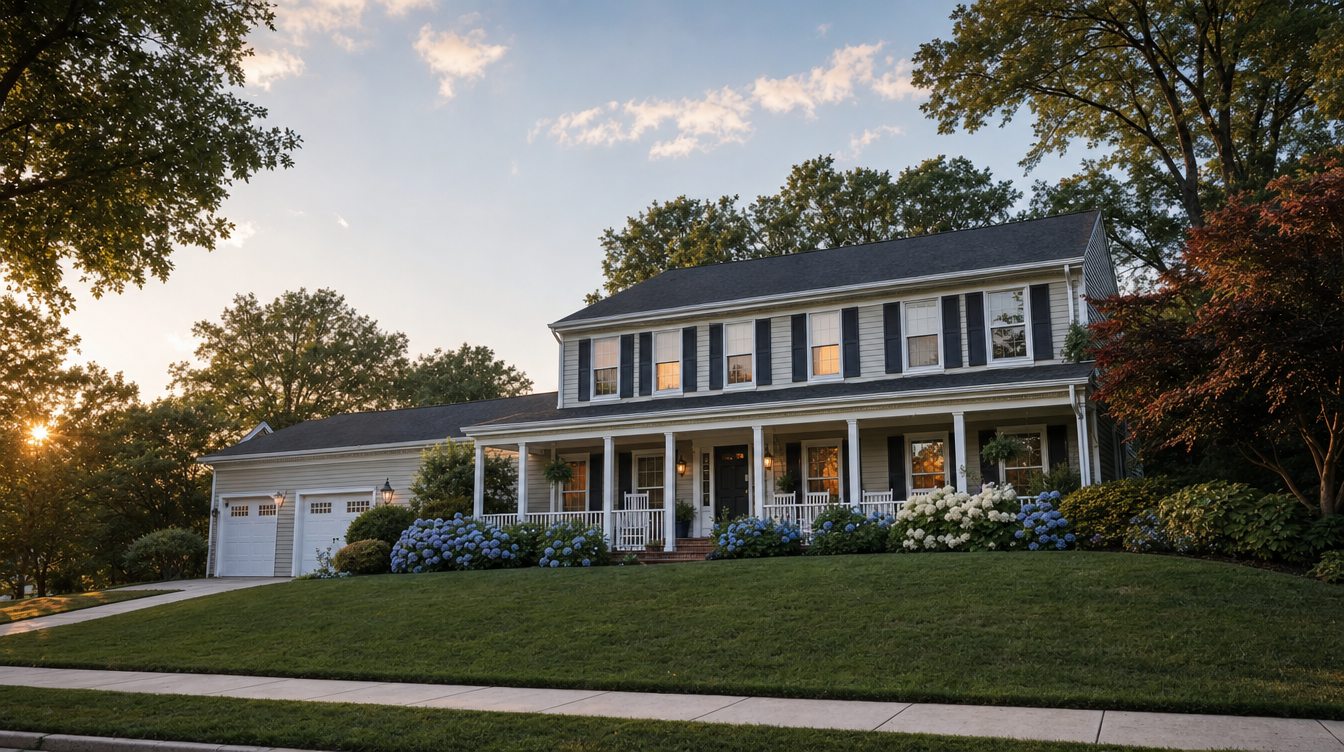
Often here: Colonials and townhouses in Reston, Burke, Centreville, Sterling and Woodbridge.
Call a proPolybutylene pipes (1978 to 1995)Gray (sometimes blue or black) plastic supply pipe, often stamped PB. It was the subject of a national class action; plan to replace it, and ask your insurer.
Call a proAir conditioner ageSystems installed before 2010 usually run on R-22, which hasn’t been made in the U.S. since January 1, 2020. Repairs get pricey; budget for a new system.
You can do itSiding and trimPressed-wood siding from these years can swell where it stays wet. Look low on the walls and around trim.
You can do itOriginal windows and skylightsFogged glass and leaks around skylights are common at this age.
You can do itLead paint is unlikelyLead paint was banned for homes in 1978, so paint from then on is safe to sand.
You can do itTest for radonEvery house, any age.
Built 1995 to 2009
Big systems at the end of their life, all at once.
Often here: Ashburn, South Riding, Bristow, Gainesville and the Loudoun boom years.
Call a proFurnace, AC and heat pumpOriginal systems from these years are 15 to 30 years old. EPA suggests a pro check any system over 10 years old.
Call a proWater heaterTanks last about 8 to 13 years. Read the date on the label; plan the swap before it leaks.
Call a proRoofMany first roofs from these years are near the end of their life. Look for curling shingles and granules in the gutters.
You can do itBuilder-grade parts wearing outFaucets, toilet valves, disposals, door locks: easy DIY wins (see the ladder below).
You can do itSmoke alarms past 10 yearsEvery alarm gets replaced 10 years after the date on its back.
You can do itTest for radonEvery house, any age.
Built 2010 to 2020
Mostly upkeep: filters, alarms and the water heater clock.
Often here: Newer townhouses and single-family homes across Loudoun and Prince William.
You can do itSmoke alarms turning 10Alarms from 2010 to 2016 are due now. Check the date on the back.
Call a proWater heater at 8 to 13 yearsHomes from the early 2010s are in the window. Read the label date.
You can do itSmart devices from the sellerReset the thermostat, doorbell, garage opener and smart locks so only you control them.
You can do itDrainage and gradingDownspouts should carry water a few feet away; soil should slope away from the house.
You can do itDeck and caulkSeal the deck and redo dried caulk around tubs, sinks and windows.
You can do itTest for radonEvery house, any age.
Built 2021 or later
A new house: protect the warranty and write everything down.
Often here: New construction and recent builds across Northern Virginia.
You can do itVirginia’s new-home warrantyBy law a builder warrants a new home for 1 year against defects and 5 years against foundation defects. Send any claim in writing.
You can do itKeep a running listNail pops, small drywall cracks, sticking doors and caulk gaps are normal as a house settles. List them for the builder’s walk-through.
Call a proDon’t void a warrantyLet the builder or maker fix the roof, HVAC and appliances while they are covered.
You can do itNew grass and gradingWater new sod and watch where rain goes in the first storms.
You can do itChange the builder’s filterThe first HVAC filter is often full of construction dust.
You can do itTest for radonNew homes too.
The oldest homes sold in Northern Virginia in 202617Out of 15,889 houses and townhouses sold January 1 to October 2, 2026
Single-family house
Built 1756
Bluemont, Loudoun County
$1,295,000 sale price, closed September 10, 2026
3 beds · 2 baths · 2,430 sq ft
270 years old this year
Townhouse
Built 1750
Waterford, Loudoun County
$889,000 sale price, closed May 8, 2026
4 beds · 3 baths · 2,854 sq ft
276 years old this year
Pick the year your house was built above to see it here.
Year built as listed in the MLS; for a house this old it is often the best estimate. Next oldest: a 1768 house in Purcellville and a 1770 townhouse in Old Town Alexandria. No street addresses on this page.
What went into houses, and when9,10,8,11,12Pick your year above and a navy mark shows it on each bar.
Lead paint in homes (banned 1978)until 1978
Asbestos insulation most common1930 to 1950
Aluminum branch wiring1965 to 1975
Polybutylene water pipe1978 to 1995
R-22 air conditioners installeduntil 2010
192019401960198020002020
Homes with lead paint, by the year builtEPA
Before 194087%
1940 to 195969%
1960 to 197724%
1978 and newer0%
Lead paint was banned for homes in 1978. Sanding, scraping or removing older paint makes lead dust.9
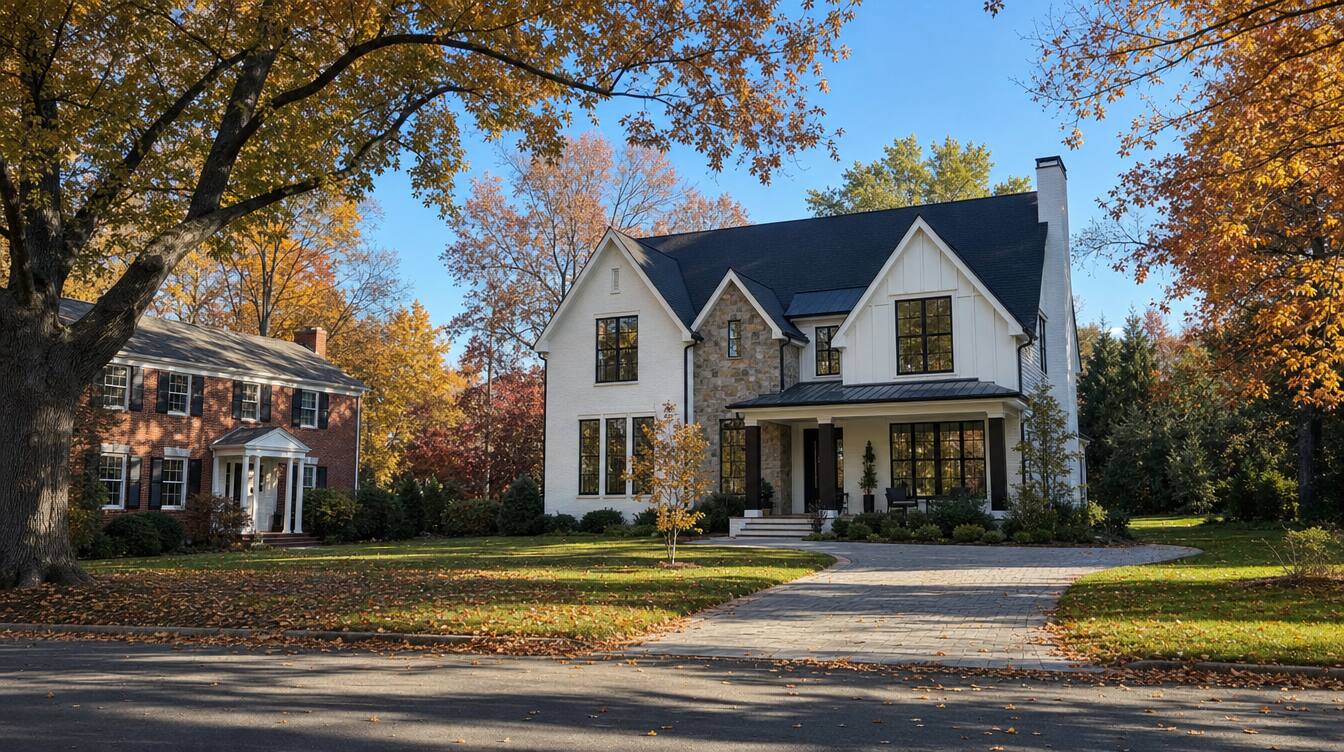
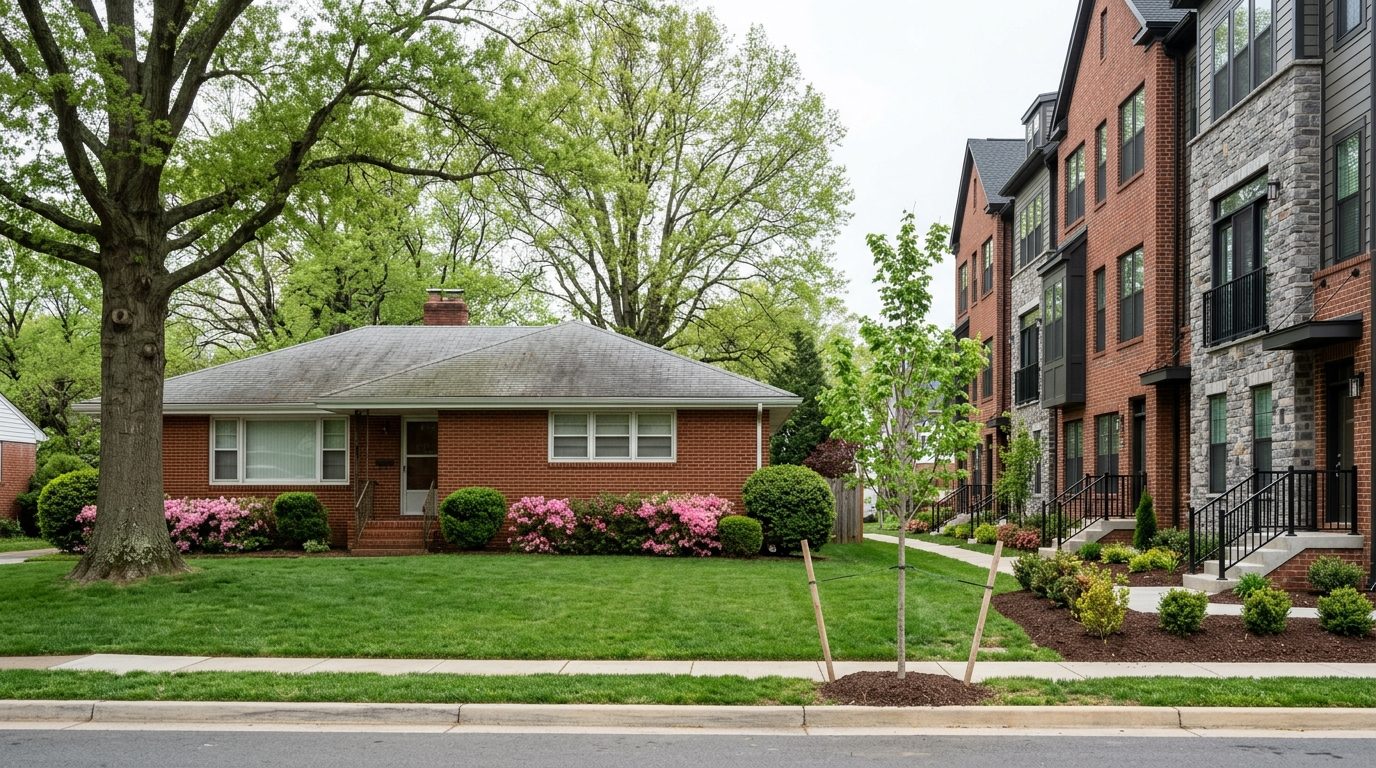
Same street, different checklists: the year a house was built changes what to look for. A concept image.
Radon is the one test for every house, any age: it is the second-leading cause of lung cancer in the U.S., and testing is the only way to know. EPA says fix the home at 4 pCi/L or more.13
New homes come with Virginia’s builder warranty: 1 year for defects, 5 years for the foundation. Put every claim in writing.14
The first 2 weeks
Your first 2 weeks in a new home, day by day.
Pick owner, landlord or tenant. Tick as you go.
In shortDay 1 is about safety and control: the locks, the shutoffs, the alarms. Week 2 is about habits.
0
0 of 0 doneShowing every item. Pick the year built above to see only what fits your house.
Day 1
Days 2 and 3
Days 4 to 7
Week 2
Day 1
Days 2 and 3
Days 4 to 7
Week 2
Day 1
Days 2 and 3
Days 4 to 7
Week 2
Your ticks stay on this phone or computer only, and you can come back to them.6,7,13,16,27
Know someone who just bought a home? Send them this list.
Text opens your phone’s messages with the list typed in: send it to yourself. Nothing is sent from this page. With a store found at the top, its name, address and phone go on the list too.
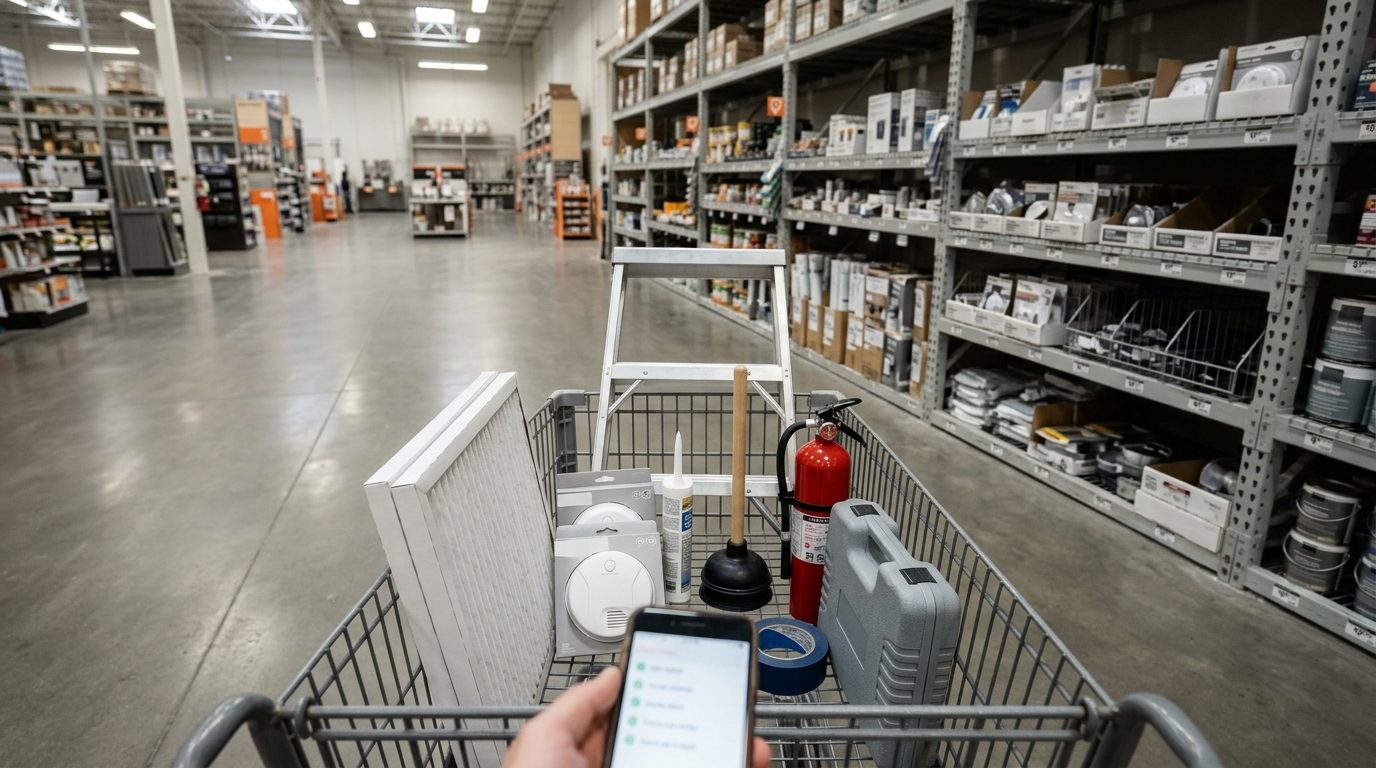
One trip, one list: filters, alarms, caulk and a plunger cover most first weeks. A concept image.
The big three
How Home Depot, Lowe’s and Ace got to Northern Virginia.
Tap a name to follow one story. Every date has its source.
In shortA general store in 1921, a buying club in 1924, two warehouses in 1979. Then a store fight here in the 1990s.
1921
A general store in North Carolina
L.S. Lowe opens a store in North Wilkesboro. Hardware is on the shelves, but so are sewing notions, horse tack, snuff, produce and groceries.18
1924
Chicago store owners team up
A small group of Chicago hardware store owners start buying together in bulk, to pay the lowest price. That is Ace.19
1924
Virginia Hardware opens in Rosslyn
Around 1924, Harry Goldman’s store opens at 2016 N. Moore Street. In 1963 it moves to Wilson Boulevard in Clarendon.24
1940s
Lowe’s goes all in on building supplies
The general store turns into a hardware and building supply business.18
1948
McLean Hardware opens
Dick Hinkle opens it at 6811 Old Dominion Drive. Glenn Wiggs buys it in 1984.25
1979
Home Depot’s first two stores
June 22, 1979, in Atlanta: two warehouse stores of about 60,000 square feet each, with 25,000 products.20
1991
Home Depot heads for Alexandria
The Washington Post reports a warehouse store planned in Alexandria by the end of 1992, Home Depot’s “second front” against Hechinger, the area’s own chain.21
1998
Lowe’s and Home Depot eye Loudoun
Both look at Leesburg, where Hechinger has a store on the Route 15 bypass.22
1999
Hechinger closes
After filing for bankruptcy in June, Hechinger says in September it will close its last stores.23
2005
Virginia Hardware closes
After about 81 years. In 2017 the Wilson Hardware restaurant opens in the same Clarendon spot, named for it.24
2008
McLean Hardware moves
On July 15, 2008, to 1445 Chain Bridge Road. Chris Wiggs, the next generation, takes over in 2021.25
2016
Twins Ace opens in Clarendon
Twin brothers open it in November 2016, the start of today’s Twins Ace stores.26
2026
36 stores on this page
17 Home Depot, 10 Ace, 8 Lowe’s, 1 local store, each checked on its own page.1
How long each one has been around, in 2026Years since it started
Lowe’s since 1921105 years
Ace since 1924102 years
McLean Hardware since 194878 years
Home Depot since 197848 years
The 36 stores on this pageOne square for each store
Home Depot 17Ace 10Lowe’s 8Local stores 1
The first Home Depot vs. a store todayDrawn to scale by floor area20
Five things you might not know
Lowe’s once sold snuff.
And horse tack, sewing notions and groceries. Building supplies came later.18
Nobody owns Ace but the stores.
Ace has more than 5,000 stores around the world, and the company is owned only by its local store owners.19
Today’s Home Depot is 75% bigger.
The first stores were about 60,000 sq ft with 25,000 products. A typical store today is about 105,000 sq ft, with more than a million products online.20
The area’s own chain lost.
Hechinger was the Washington area’s home store chain. Home Depot took it on in the early 1990s; by 1999 Hechinger was gone.21,23
A hardware store became a restaurant.
Virginia Hardware was a Clarendon fixture for 42 years. Since 2017 its spot has been Wilson Hardware, a restaurant named for it.24
Do it yourself
The DIY ladder: from changing a filter to calling a licensed pro.
Twelve jobs, easiest first, with what a pro charges and what you keep.
In shortStart at the bottom of the ladder: levels 1 and 2 save money with almost no risk. Level 5 is always a licensed pro.
The DIY ladder. The higher the rung, the more it takes: tools, know-how, then a license.3
What you keep doing it yourself, one-time, per jobPro, typical price Your parts
Paint a 12 by 12 roompro about $580 · DIY about $115
keep about $465
Replace a garbage disposalpro about $550 · DIY about $150
keep about $400
Replace a kitchen faucetpro about $263 · DIY about $22
keep about $240
Swap a light for a ceiling fanpro about $253 · DIY about $22
keep about $230
Fix a running toiletpro about $250 · DIY about $20
keep about $230
Install a smart thermostatpro about $186 · DIY about $0
keep about $186
Recaulk a tub or showerpro about $182 · DIY about $15
keep about $168
Clean the dryer ventpro about $145 · DIY about $28
keep about $118
Rekey a lockpro about $90 · DIY about $28
keep about $62
Patch a small drywall holepro about $70 · DIY about $15
keep about $55
Do each of these 10 jobs once yourself and you keep about $2,154, one-time.
Typical pro price = Angi’s 2026 national average where the guide gives one, else the middle of its range. Parts we’d buy either way (the faucet, the fan, the thermostat) are left out of both sides.3
1Anyone5 to 15 minutes, no tools
1
Change the HVAC filter
5 min
Pro$70–$200 one-time, an HVAC tune-up visit
DIY$10–$40 each time, one filter
A pro does it as part of a tune-up. You do it every 1 to 3 months for the price of the filter.
How to do it
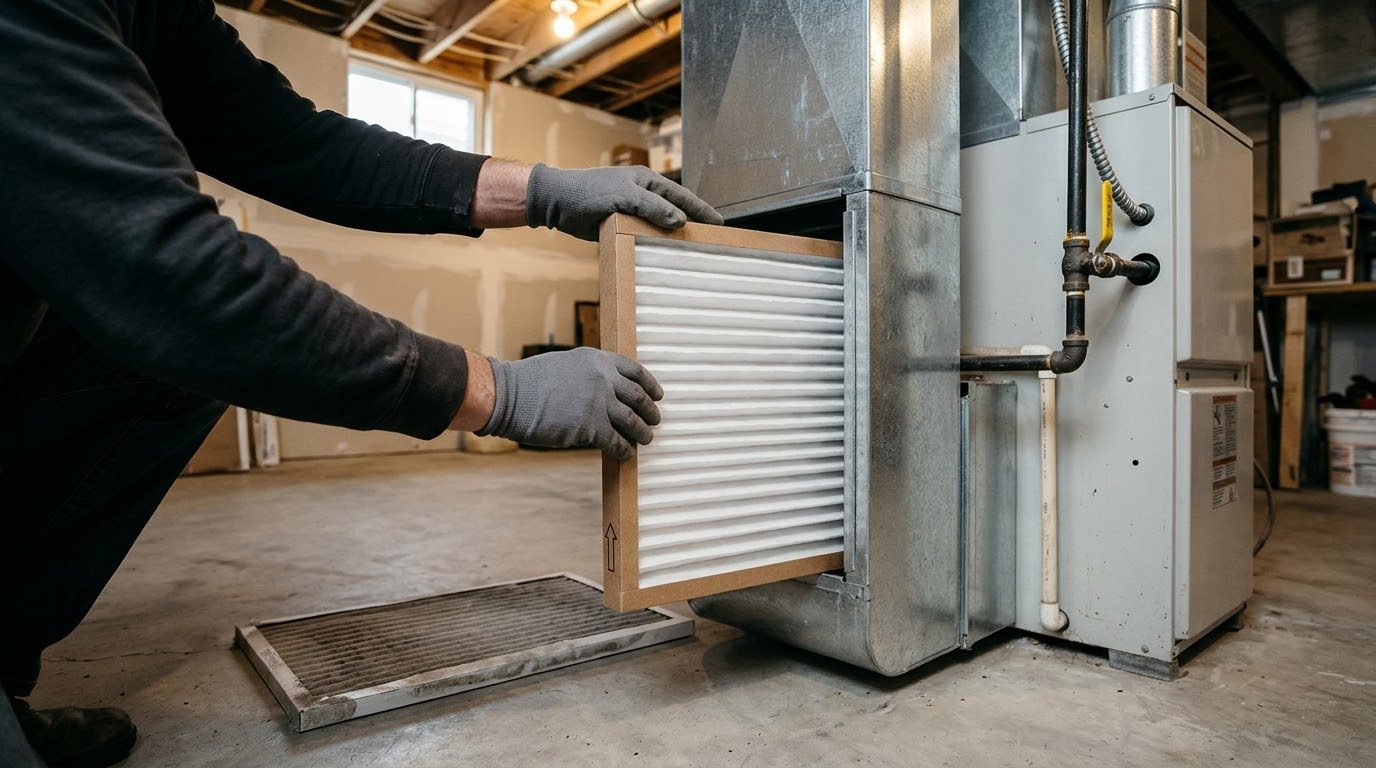
Turn the system off, slide out the old filter, match the size and the airflow arrow, slide in the new one.
Careful: Arrow points toward the furnace. Write the date on the filter edge.
Level 1: the filter. Five minutes, no tools. A concept image.
Trained or not
DIY with experience vs. without: the honest pros and cons.
Where doing it yourself pays, and where it gets people hurt.
In shortTraining doesn’t just save time. It’s knowing when to stop: ladders, wiring and gas are where DIY goes wrong.
500,000+people a year are treated for ladder injuries in the U.S.; about 300 die5
2,900home dryer fires a year; 34% start because the vent wasn’t cleaned4
55×more likely to reach fire-hazard conditions: connections in homes wired with aluminum before 19728
With training or experience
You get it right the first time and know when to stop.
You pay for parts only, no labor bill.
You spot the next problem while you’re in there.
It still takes your weekend.
Tools cost money the first time (they pay back on the second job).
Without training or experience
Levels 1 and 2 are made for you: filters, caulk, a running toilet.
You learn how your house works, which helps every year after.
A small mistake can flood a floor, start a fire or void a warranty.
A fix gone wrong can cost more than the pro would have.
Ladders, wiring and gas are where untrained DIY gets people hurt.
Always a licensed pro
Gas lines and gas appliancesA leak or a bad vent is deadly. Needs a permit and a licensed pro.
New circuits and the electric panelSwapping a switch or a fixture is fine; new wiring needs a permit and an electrician.
Air conditioner refrigerantFederal law: only EPA-certified technicians may handle refrigerant.
The roof and anything up highLadders send more than 500,000 people a year to get treated.
Walls that hold up the houseRemoving or cutting framing needs a permit and often an engineer.
Lead paint and asbestosDon’t disturb them; use certified firms.
Virginia’s building code lets you skip a permit to replace plumbing fixtures, switches, outlets, light fixtures, ceiling fans and electric (not gas or oil) appliances in a single-family home. New wiring, gas work, structural changes and most water heater swaps need a permit. When in doubt, call your county or city building office first.15
Fix it or call?
Something just went wrong. Fix it, or call?
Tap what is happening. See the first steps and who to call.
In shortGas smell or CO alarm: get out first, then call. Everything else: the valve or the breaker first, then decide.
I smell gasGet out, then call
Leave the house now. Don’t flip switches, light anything or use the garage door.
From outside, call 911 or your gas company’s emergency line.
Don’t go back in until they say it’s safe.
Who to call: Call 911 or the gas company
The CO alarm is going offGet out, then call
Get everyone outside to fresh air.
Call 911.
Don’t go back in until the fire department says so.
Who to call: Call 911
Water is leakingAct now, then call
Shut the nearest valve, or the main water shutoff.
If water is near outlets or the panel, keep away and turn the power off at the panel only if the floor is dry.
Towels, a bucket, photos for insurance.
Who to call: A plumber; tenants tell the landlord in writing
Part of the house lost powerAct now, then call
Check the panel for a breaker in the middle position; push it fully off, then on.
Press Reset on GFCI outlets in baths, kitchen, garage and outside.
If it trips again right away, stop: unplug things on that circuit and call an electrician.
Who to call: DIY first, then an electrician
No heat or no coolingAct now, then call
Check the thermostat mode, setting and batteries.
Change a dirty filter.
Check the breaker and the furnace switch (looks like a light switch near the unit).
Who to call: DIY first, then HVAC pro
Sink or toilet is cloggedTry this first
Plunge: cup plunger for sinks, flange plunger for toilets.
No chemical drain cleaner if you may plunge after.
Still stuck, or every drain is slow? That’s the main line: call a plumber.
Who to call: DIY first, then a plumber
A smoke alarm keeps chirpingTry this first
A chirp every minute is a low battery: replace it.
Still chirping? Check the date on the back; over 10 years, replace the alarm.
Hardwired alarms: replace with the same plug style.
Who to call: DIY
A door won’t latch or a lock sticksTry this first
Tighten the hinge screws; use a 3-inch screw in the top hinge.
Spray graphite (not oil) into a sticky lock.
Lost keys or a new home: rekey.
Who to call: DIY
In an emergency call 911 first. Tenants: tell the landlord in writing as soon as you are safe. This is general safety information, not a substitute for a licensed pro.
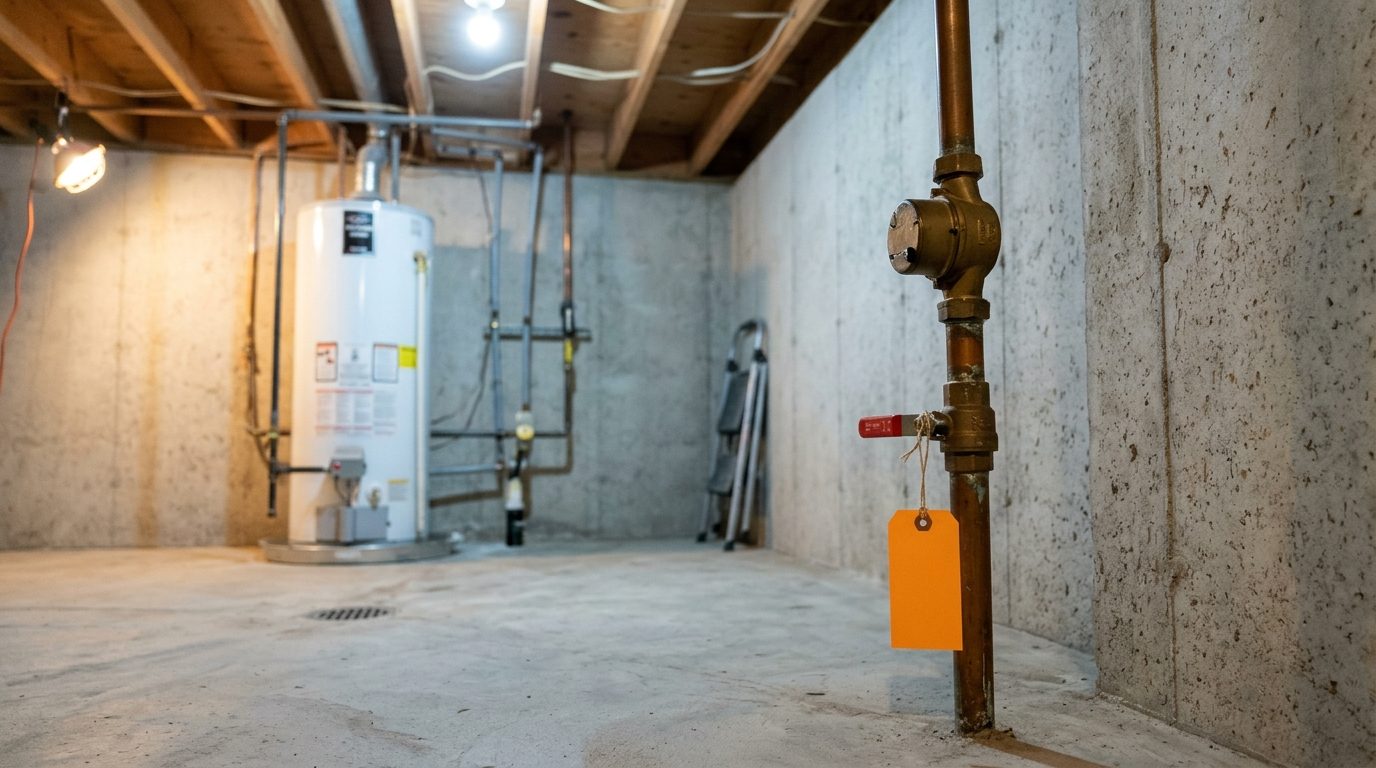
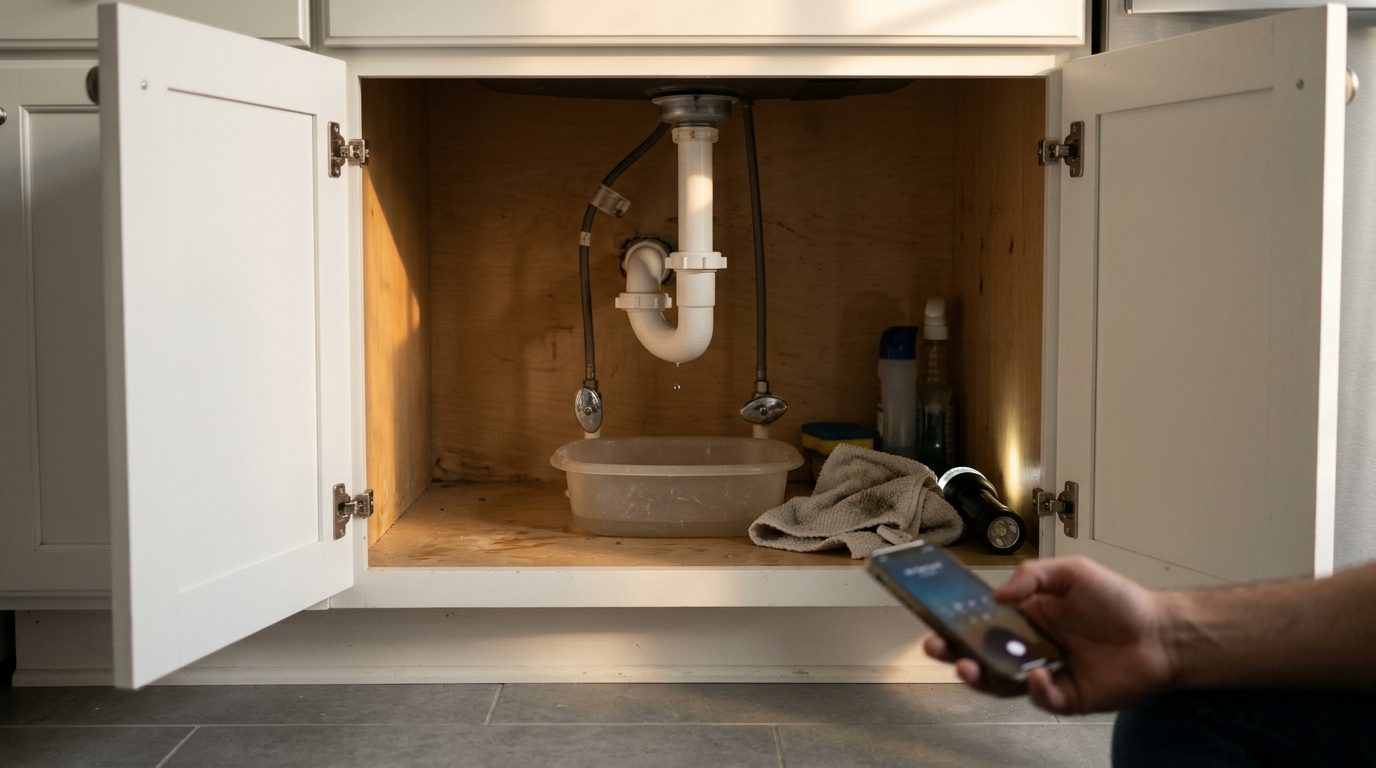
Valve first, then the call. A concept image.
Reminders
Put the upkeep on your phone’s calendar.
Tick the reminders you want, then add them in one tap.
In shortThe jobs that matter most are the boring ones: filters, alarms, gutters. Let your phone remember them.
One file with every reminder you ticked, each repeating on its own. iPhone: tap, then Add All. Android or a computer: open the file with your calendar, or use the Google Calendar links. Each starts on a Saturday at 9 AM (your phone’s time) and you can change it in your calendar. Nothing is sent to us.
Selling soon?
Selling in the next year? Fix the right things first.
What buyers notice, what your home is worth, and whether you are ready.
How do you find the hardware stores near my house?
Type the address (or tap Use my location). Virginia's address list places the house on the map, and the page measures the straight-line distance to 36 hardware and home improvement stores across Northern Virginia, then shows the ones within 3 and 5 miles. Driving distance is longer than the straight line.
What should I do in the first two weeks in a new house?
Day 1: rekey the outside locks, find the water, gas and power shutoffs, and test every smoke and carbon monoxide alarm. Days 2 and 3: change the HVAC filter, check the water heater's date and set it to 120°F, clean the dryer vent. Days 4 to 7: start a radon test and walk outside in the rain. Week 2: set reminders and start a home file.
Does the year a house was built change what I should check?
Yes. Homes built before 1978 may have lead paint; 1965 to the mid-1970s homes may have aluminum wiring; 1978 to 1995 homes may have polybutylene pipes; systems installed before 2010 usually use R-22 refrigerant; new homes have Virginia's 1-year and 5-year builder warranty.
What home repairs can I do myself in Virginia without a permit?
Virginia's building code lets you replace plumbing fixtures, switches, outlets, light fixtures, ceiling fans and electric (not gas or oil) appliances without a permit in a single-family home. New wiring, gas work and structural changes need a permit. Check with your county or city building office.
How much can I save doing simple repairs myself?
On the 11 DIY jobs on this page, pros charge from about $20 to $950 each (Angi's 2026 national averages). Doing them yourself, you pay for parts only, often under $40.
I'm renting. What can I fix myself?
Only what your lease allows. Changing the filter, a light bulb or a shower head is usually fine; locks, painting and drilling usually need the landlord's OK. Send repair requests in writing.
Your next step
Buying or selling a home in Northern Virginia?
I can tell you what a house needs before you buy it, what is worth fixing before you sell, and what your home is worth today. I work with buyers and sellers, in English or Arabic, with real numbers, not a pitch.