
Rental Profit SimulatorWill a Northern Virginia rental pay? Cash flow, paydown and appreciation, 2026
Enter a price, a down payment and a rent. See what you keep each month, what the loan pays down, what the home gains, and the worst and best case, year by year.
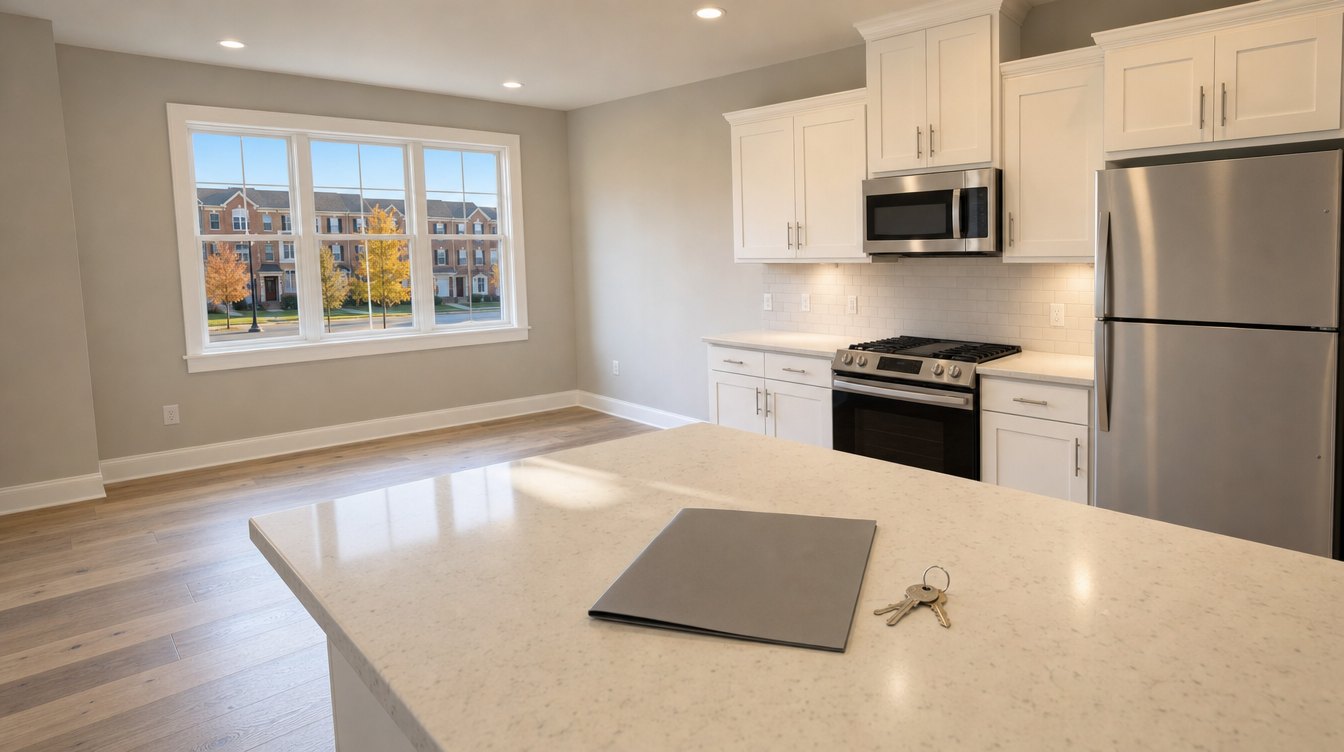
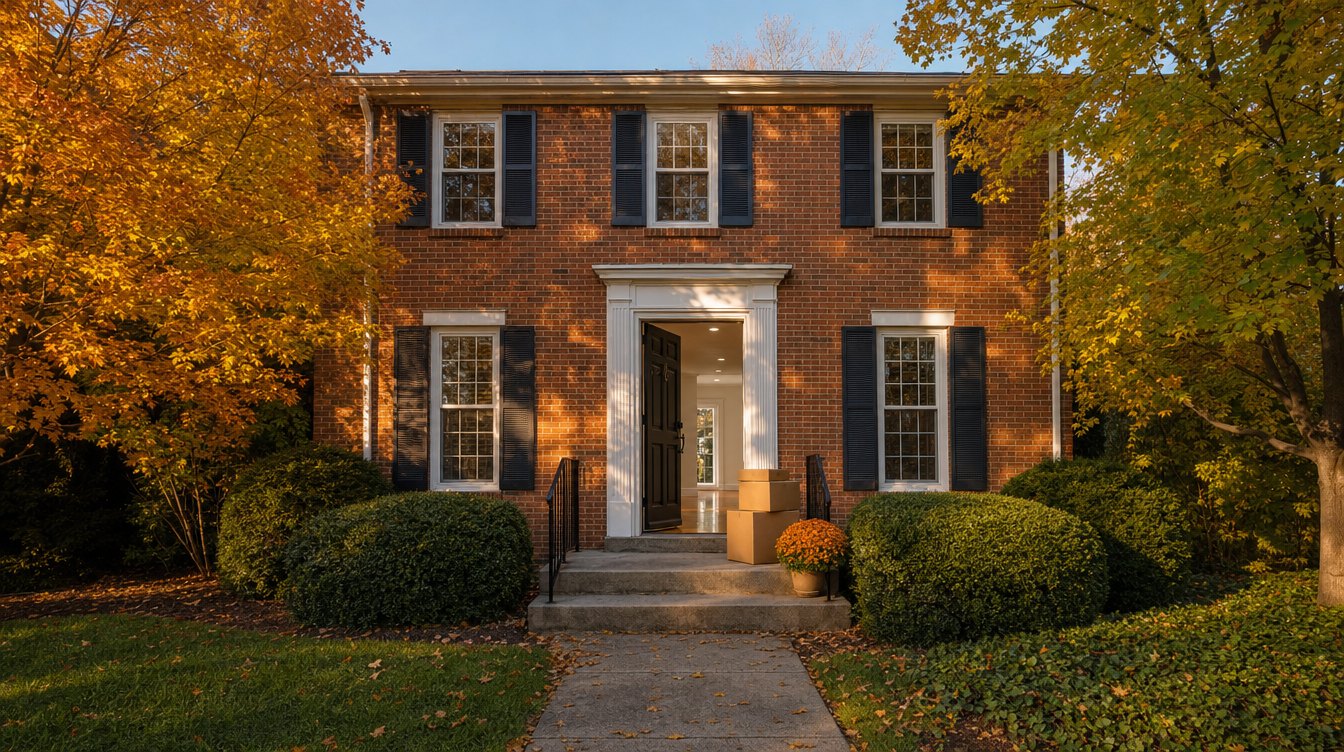
Keys and a lease, ready for a tenant· Centreville, Fairfax County
Numbers: Ahmed’s Bright MLS pulls, county tax rates, Freddie Mac. Pictures: artist’s renderings of real places.
The simulator
Your numbers, live.
Running costs
Prefilled for your town: tax, insurance, HOA, repairs and a reserve. Tap to check or change.
Cash flow each month, year 1
Where each month’s rent goes
Blue is rent in, red is money out, striped is loan principal (it leaves your pocket but builds your equity). The last bar is what is left.
Wealth built, year by year
Each bar stacks what the home gained, what the loan paid down and the cash flow so far; red below the line is the monthly shortfall so far plus the costs to buy. The line is the total.
- Appreciation
- Loan paid down
- Cash flow so far
- Shortfall so far + buying costs
- Wealth built
Worst, base and best case
The same home, three futures. The base case is your numbers.
Year by year table
Want the real rent for your exact neighborhood?
Ahmed pulls the comparable closed leases for your subdivision, size and condition from Bright MLS and texts you the range, free.
Pick the town and the kind of home: the tax rate, the price trend and the 2026 rent range fill in from that town’s own records. Then set the price, the down payment and the rent. Every result changes as you type. It opens on the Fairfax test case below.
Updated October 22, 2026Rate: Freddie Mac weekly, read liveAbout a 6-minute read, plus the tool
Quick answer
At today’s rates most Northern Virginia homes do not pay for themselves from rent in year 1. A $1,350,000 house in Fairfax with 25% down at 7.4% and $6,000 rent runs about −$3,461 a month after every cost.1,2 But a rental pays three ways, not one: if prices keep the pace of 2023 to 2026 (3.8% a year for Fairfax houses), that same house builds about $364,765 of wealth in 10 years from appreciation and loan paydown, after the monthly shortfall. If prices stay flat, it loses about $215,952. The simulator below shows yours, with each town’s own tax rate, price history and 2026 rents.

A rental in six numbers
The Fairfax test case: a $1,350,000 house, 25% down, $6,000 rent; rate for the week of October 15, 2026
Wealth built = the home’s gain in value + loan principal paid + every month’s cash flow − the costs to buy; before costs to sell and income taxes. Past price growth is not a promise.
How a rental pays
Three engines, not one.
Most people judge a rental by one number: rent minus payment. That is only the first engine. The loan gets smaller every month, paid by the rent, and the home itself changes value. Here is the Fairfax test case after 10 years, with prices growing 3.8% a year.
1. Cash flow
Rent in, every cost out, including the full mortgage payment. Often negative in the early years here.
2. Loan paydown
Part of each payment is principal. The tenant’s rent pays the loan down, and that equity is yours.
3. Appreciation
The whole home grows in value, not just your down payment. A small yearly percent on a big price adds up.
Wealth built
After the costs to buy ($21,374), before costs to sell and income taxes, on $358,874 of cash in.
+$364,765The $400 a month that paid off
Ahmed’s brother-in-law bought a home in Fairfax to rent out. In the first year the rent fell about $400 a month short of the payment, so he added the $400 himself. On a cash-flow-only calculator that is a bad deal. Counted with the other two engines it looks different: the tenant paid most of the mortgage, the loan got smaller every month, and the home’s value moved with the Fairfax market.
That is the question the simulator answers: is the shortfall a cost, or the price of owning an asset that grows? Set your own numbers and watch the line.
Why this is not a sure thing
Appreciation is the biggest engine here and the least certain. Prices can stall or fall for years: the same house with flat prices ends 10 years at about −$215,952. That is why the worst case sits next to the base case. Before you buy, make sure you can carry the monthly shortfall through a vacancy, a big repair and a flat market.
Short of money each month, a bigger down payment helps: with 40% down instead of 25%, the same house runs −$2,059 a month in year 1.
A real question
A family moving from New Jersey, a $1,350,000 house in Fairfax.
A family moving from New Jersey asked Ahmed to help them buy in Fairfax at $1.3 to $1.4 million, and to rent the house out before moving in. Their first question was the rent: what similar homes in their neighborhood had actually leased for. Here is the whole picture with this week’s numbers.
The numbers we used
- Price $1,350,000, 25% down ($337,500), loan $1,012,500 at 7.4% for 30 years (Freddie Mac average, week of October 15, 2026)
- Rent $6,000 a month, near the top of 2026 Fairfax house leases ($3,000 to $6,500, 142 leases), growing 3% a year
- Property tax $1.1535 per $100 ($15,572 a year), landlord insurance about $3,040 a year, no HOA
- Repairs 5% and replacements 5% of the rent, empty 5% of the year, no manager
- Home value growth 3.8% a year: Fairfax house medians, 2023 to 2026
What it shows
- Year 1: −$3,461 a month after every cost and the payment of $7,010
- Loan paid down in year 1: $9,518
- Cash in: $358,874 (down payment + $21,374 buying costs)
- After 10 years: home worth about $1,960,231, loan $876,853, wealth built +$364,765
- If prices stay flat instead: −$215,952 after 10 years
For this family the rent is the swing number, which is why the comparable leases in their own subdivision mattered more than any county average. Ahmed pulls those for you.
The biggest engine
How fast house prices grew, town by town.
Each row is a town’s median house sale price, January 1 to September 30 of each year, from Ahmed’s own Bright MLS pulls. The dark bar is the slower of two periods, the light bar the faster. The simulator starts at the slower one. For comparison, the federal house price index for the Arlington-Alexandria-Reston area rose 27.35% over the 5 years to mid-2026, about 5.0% a year.5
slower: average yearly change, whichever of 2023 to 2026 or 2019 to 2026 is lowerfaster of the two
Houses: detached, 3+ bedrooms, 2+ full baths, no condo-owned homes; towns with at least 30 sales in 2026. A median moves with the mix of homes that sold, not only with prices. Past growth is not a promise.3
Every cost, explained
What goes into the monthly number, and where each default comes from.
A calculator is only as honest as its defaults. Here is each one, what it is based on and when to change it.
| Cost | Starting figure | Where it comes from, and when to change it |
|---|---|---|
| Mortgage rate | 7.4% | Freddie Mac’s 30-year weekly average (week of October 15, 2026), read live each time the page opens. Loans on a home you rent out usually price higher: use your lender’s quote.2 |
| Property tax | $1.1535 per $100 | The 2026 county or city rate for the town you pick, with Fairfax County’s stormwater and pest fees and Prince William’s fire levy. Town add-ons (Vienna, Herndon, Leesburg and others) apply only inside town limits; the box shows them. The tax grows with the home’s value.6 |
| Insurance | $3,040 a year | Virginia homeowners averages by dwelling coverage (NerdWallet, 2026: $1,375 at $300,000, $2,010 at $600,000), plus 25% for a landlord policy (Insurance Information Institute), on 60% of the price as the rebuild cost. Land is not insured, and in Northern Virginia it is a big part of the price: that is why the starting figure is lower than a flat percent of price.7 |
| HOA | $0 / $70 | House / townhouse. Dues vary a lot by community: always use the real number from the HOA disclosure packet. |
| Empty weeks | 5% | About 2.5 weeks a year between tenants. The U.S. rental vacancy rate was 7.3% in the second quarter of 2026 (Census).8 The month you list moves it most: see the best month to rent out. |
| Repairs | 5% of rent | A rule of thumb. We found no published survey of what owners actually spend. Older homes need more. |
| Replacements | 5% of rent | Money set aside for the big items: an asphalt roof lasts about 20 to 30 years, a furnace 15 to 20, a heat pump about 16, a water heater about 10.9 |
| Management | off (9% if on) | Northern Virginia firms quote 8% to 12% of the rent, plus a leasing fee of half to one month’s rent and renewal fees of $0 to $300; flat-fee plans exist too.10 |
| Rent increase | 3% a year | Washington-area rents (BLS, rent of primary residence) rose 2.1% in the year to March 2026, after 3.4% in the year to November 2025.11 |
| Cost increase | 3% a year | Washington-area consumer prices rose 2.2% in 2025 and 4.1% in the year to September 2026 (BLS).11 |
| Buying costs | 0.33% + 0.33% + 1% | Virginia recordation taxes a buyer pays: 0.33% of the price on the deed and 0.33% of the loan on the deed of trust; plus a 1% starting guess for title, lender and settlement. Your Loan Estimate has the real numbers.6 |
| Mortgage insurance | $150 a month | Only under 20% down, until the loan falls to 78% of the price: Ahmed’s working average. |
Insurance: pay less
The insurance number that scares people off, and how to bring it down.
Insurance is the cost people guess worst. Some calculators use a flat share of the price, but an insurer prices the cost to rebuild the house, not the land under it, and in Northern Virginia the land is a big part of the price. Virginia averages also run far apart by source: from about $2,000 to $3,300 a year at $600,000 of dwelling coverage.14 Two choices move your own premium most: the deductible, and how you shop.
The deductible sweet spot
How much less the Virginia average premium is at each deductible than at $500. Two quote-site datasets, because no regulator publishes this.15
Does a higher deductible pay off?
Years without a claim it takes for the savings to cover the bigger deductible: the extra deductible ÷ the yearly savings.
- $500 → $2,500saves about $214 a year (Insurance.com, Virginia)9.3 yrs
- $1,000 → $2,000saves about $113 a year (The Zebra, Virginia)8.8 yrs
- $1,000 → $2,500about 9% less (NerdWallet, national)7.4 yrs
- $1,000 → $5,000saves about $238 a year (The Zebra, Virginia)16.8 yrs
The Insurance Information Institute has said the average homeowner files a claim about once every 8 to 10 years.15 So $1,000 to $2,500 is the sweet spot for most owners: go to $2,500 if you keep that much cash set aside and would not file a small claim anyway, since a claim can raise your rate for years. Past $2,500 the savings shrink fast.
How to shop, in three steps
1. Get 3 or more quotes, three ways
Independent agentQuotes several companies for you and can move you if one declines or raises the price.
Captive agentWorks for one company (State Farm, Allstate and others).
Direct insurer or comparison siteOnline, no agent. Comparison sites are free to you and paid by the insurers.16
2. Compare the same policy
- Same dwelling coverage (the rebuild cost) and same liability
- Ask each for $1,000 and $2,500 deductibles
- Check for a separate wind or hail deductible on the declarations page15
- Landlords: a landlord (DP-3) policy with loss-of-rent cover, not your homeowners policy
3. Check the company, then decide
- AM Best rating A or better (A and A- are “Excellent”, A+ and A++ “Superior”)17
- NAIC complaint index: under 1.0 means fewer complaints than average for its size
- J.D. Power satisfaction score
- Re-shop every year or two, and after any big increase
Discounts to ask for
Typical sizes, Insurance Information Institute via CNBC (June 2026), and one insurer’s average for leak sensors.18
Also ask about claims-free, new-roof and updated-wiring credits and send proof. Virginia lets insurers use credit-based insurance scores on homeowners policies, with notice to you (Va. Code 38.2-2126), and each company weighs them differently: one more reason to compare.19
J.D. Power 2026 home insurance study
Customer satisfaction, homeowners segment, 1,000-point scale (released September 15, 2026). USAA scored 741 but is not ranked because only military families can buy it.17
A ranking is one input, not a recommendation: quotes for your own home decide. Buying? Ask the seller for a CLUE report, the record of insurance claims on the home for the last 7 years.19
Rent it first, then move in
Buy now, rent it two years, live in it later.
Many buyers are not ready to move yet: a job that starts later, a lease that has not ended, children finishing a school year. Buying first and renting the home until you move in lets the tenant carry most of the cost while you lock in the house. Tick “Rent it first, then move in” in the simulator to see the rented years alone.
The loan
A loan for a home you will live in usually asks you to move in within 60 days and live there about a year. If the plan is to rent first, tell your lender and plan on an investment-property loan: it usually needs more down (often 15% to 25%) and a higher rate. Saying you will live there when you will not is mortgage fraud.
The sale, years later
To exclude a gain from tax when you sell a main home you must have owned it and lived in it at least 2 of the last 5 years. Rental years before you moved in can reduce the exclusion; rental years after you move out generally do not count against you (IRS Publication 523). Ask a CPA before you buy.12
Before you rent it out
The Virginia rules every new landlord should know.
The Virginia Residential Landlord and Tenant Act sets the ground rules for almost every home rental in the state. Several changed on July 1, 2026. This is a checklist, not legal advice: read the Code sections or ask a Virginia attorney.13
- Security deposit: no more than two months’ rent, pet deposits included; return it with an itemized list within 45 days after the tenancy ends (Va. Code 55.1-1226).
- Move-in inspection: a written report of the home’s condition within 5 days of move-in (55.1-1226).
- Fees: an application fee of no more than $50 plus outside screening costs (55.1-1203); a late fee of no more than 10%% of the rent or of the unpaid balance, whichever is less (55.1-1204); and, since July 1, 2025, a list of fees on the first page of the lease (55.1-1204.1).
- New in 2026: 14 days, not 5, after a written notice of unpaid rent before ending the lease; rent and deposits must be accepted by check and money order; no payment fees above your real cost; no repair fees unless the tenant caused the damage.
- Homes built before 1978: the federal lead-based paint disclosure and pamphlet.
- Rental inspection districts: Virginia lets localities register and inspect rentals only inside designated districts (Va. Code 36-105.1:1). The City of Alexandria does ($75 inspection, certificate for 4 years); the City of Fairfax has rental inspection districts too. Ask your county or city.
- Short stays: rentals under 30 days need a permit in Fairfax County ($285, 2 years) and yearly registration plus a zoning permit in Loudoun County.
- Fair Housing: Virginia law protects race, color, religion, national origin, sex, elderliness, familial status, source of funds (such as housing vouchers), sexual orientation, gender identity, military status and disability. Screen every applicant by the same written standards.
- Your HOA: many communities set rental rules (minimum lease terms, registration, a copy of the lease). Read the declarations before you buy to rent.
Taxes, briefly
What this page leaves out on purpose.
Income taxes can change what a rental earns, in both directions, and they depend on your whole situation. So the simulator leaves them out. Two rules to ask your CPA about:
Depreciation
A rental home’s building (not the land) is depreciated over 27.5 years, a yearly deduction even when the home is gaining value (IRS Publication 527).12
Rental losses
Owners who actively take part may deduct up to $25,000 of rental loss a year against other income; the allowance phases out between $100,000 and $150,000 of modified adjusted gross income (Publication 527).
Questions
What investors and owners ask about renting in Northern Virginia.
Is buying a rental property in Northern Virginia worth it in 2026?
It depends on what you count. With the 30-year average at 7.4% (Freddie Mac, week of October 15, 2026), most homes here do not cover their full cost from rent in year 1, so the owner adds money each month. What a rental here has earned is mostly appreciation and loan paydown: Fairfax County house medians grew 3.8% a year from 2023 to 2026. The calculator shows all three, so you can see the trade: money out each month against wealth built over the years.
How much does landlord insurance cost in Virginia?
No regulator publishes a landlord-policy average. Virginia homeowners policies average about $1,375 a year at $300,000 of dwelling coverage and $2,010 at $600,000 (NerdWallet, 2026), and a landlord policy usually costs about 25% more (Insurance Information Institute). This calculator starts from those figures on the rebuild cost, not the price: in Northern Virginia much of a price is land, which is not insured. For a $1,350,000 house that is about $3,040 a year. Use your own quote.
What expenses should I include when renting out my house?
Property tax, a landlord insurance policy, HOA dues, repairs, a reserve for big replacements (roof, heating and cooling, water heater), empty weeks between tenants, and property management if you hire it (8% to 12% of the rent in Northern Virginia, plus a leasing fee of half to one month's rent, from management company price pages, 2026). Then the mortgage: interest is a cost, but the principal part is money you keep as equity.
What is a good cash-on-cash return or cap rate?
Cash-on-cash return is the first year's cash flow divided by the cash you put in; cap rate is the first year's rent after costs, before the loan, divided by the price. In Northern Virginia's price range both are often low or negative for a single home, because prices are high next to rents. That is why the calculator also shows loan paydown and appreciation: for many owners here those are most of the return.
Can I buy a house, rent it out for two years, then move in?
Yes, many people do. Two things to plan for. The loan: a loan for a home you will live in usually asks you to move in within 60 days, so if you rent first, plan on an investment-property loan and tell your lender your plans. Taxes on a later sale: to exclude a gain you must have owned and lived in the home 2 of the last 5 years, and rental time before you move in can reduce the exclusion (IRS Publication 523). Ask a CPA before you buy.
How much rent can I get for my house in Northern Virginia?
For 2026 closed leases, houses in the Fairfax County part of Fairfax leased for $3,000 to $6,500 a month (142 leases, Bright MLS, January 1 to early October 2026). The calculator shows the range for each town. For your own home, Ahmed pulls the comparable closed leases for your neighborhood, size and condition: text him.
Do I need a rental license to rent out my home in Virginia?
Virginia lets cities and counties require registration and inspection of rentals only inside designated rental inspection districts (Va. Code 36-105.1:1). The City of Alexandria runs such a program ($75 inspection, certificate good for 4 years). Ask your county or city before you list. Rentals shorter than 30 days need their own permit in Fairfax County ($285, 2 years) and Loudoun County (free yearly registration plus a zoning permit).
Is this tax advice?
No. Rental homes can be depreciated over 27.5 years (the land is not), and owners who actively take part may deduct up to $25,000 of rental loss a year, phased out between $100,000 and $150,000 of income (IRS Publication 527). Those rules can change what you keep, a lot. Ask a CPA; this page leaves taxes out.
Your next step
Thinking of renting one out? Start with the real rent.
Tell me the home or the neighborhood and I will send you the comparable closed leases, or ask what your own home is worth. I answer in English or Arabic, with real numbers, not a pitch.
اقرأ هذه الصفحة كاملة بالعربية ←
وكيلك العقاري الموثوق في شمال فرجينيا.
Keep exploring
More numbers before you buy.
Buying power calculator
Start from the payment you want. Tax, insurance and HOA included.
TaxesFairfax County property tax
Rates, due dates and how the bill is figured.
Market studyPrices since 2020
What cheap money did to prices, county by county.
Market studyWill prices crash?
The worst case, looked at with real data.
MarketThe housing market now
This year’s prices and sales, dated.
Home valuationPriced on evidence.
Comparable closed sales near you, checked by hand.