
What to fix before you sell, and what to skipFix, shine, skip or stage, for Northern Virginia sellers
Tap what your house has. See what to fix, what to make shine, and what to skip, with the reason for each.
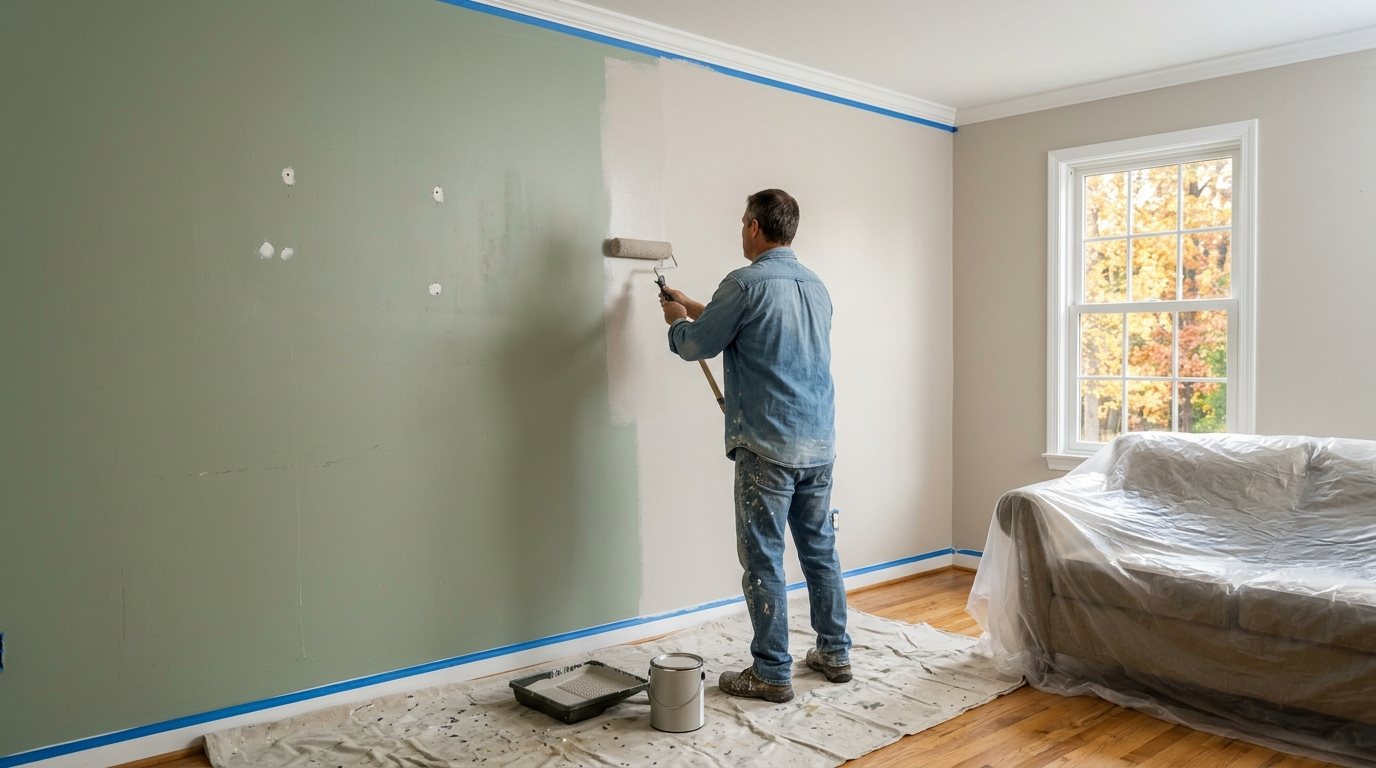
Fresh, light paint: the cheapest shine· A concept image
Pictures: artist’s renderings of real places and concept images.
Fix or skip?
What should you fix before you sell?
Tap what your house has
Tap what your house has. Each one lands in Fix before you list, Make it shine, or Skip it, with the reason.
Updated October 25, 2026HUD rules as of August 12, 2026A 30-second check, plus a 5-minute read
Quick answer
Fix what stops a buyer’s loan, polish what shows in photos, and skip the remodels. In Northern Virginia, 1 in 6 buyers in the last 24 months used an FHA or VA loan,2 and their appraisers require repairs for things like peeling paint on a pre-1978 home, a worn-out roof, or systems that don’t work.1 Paint, light, a clean yard and less clutter cost little and show in every photo. A new kitchen or bath rarely pays back by listing day; a smart kitchen update can. If it’s fall and the house needs work, a winter of touch-ups and a late-February or March list date often beats listing now. Tap what your house has below to sort your list.

Getting ready to sell, in six numbers
Northern Virginia sales, October 2024 to October 2026, and the 2025 staging study
Every house is different: these show the pattern, not your list.
The real cost
A house that isn’t ready costs more than the fix.
What a price cut cost sellers here in the last 24 months.
The most expensive mistake is not a dated kitchen. It is listing a house that isn’t ready, at a price it can’t hold. In the last 24 months, 8,705 of homes here cut their asking price. They sold for a median 95.1% of their first price, about $40,000 less, and took 42 days instead of 6.2
Right timing, right price and right condition make a smooth sale. Timing is a decision, not a coincidence: fix the short list, shine the rest, then list on a date you chose.
The must-fix list
The repairs a buyer’s loan can require.
FHA appraisers follow HUD’s minimum property rules. Here is what they require and what they let go.
- Can hold up the loan: a leaking or worn-out roof, outside paint that bares the wood, an unsafe stair rail, a heating system that fails, water in the basement.
- Cosmetic, won’t stop the loan: a torn screen, cracked window glass, a dripping faucet.
Your buyer’s lender sends an appraiser. With an FHA loan, the appraiser follows HUD’s minimum property rules: on a home built before 1978, every spot of cracking, chipping or peeling paint must be repaired, inside and out; on any home, outside paint that exposes the wood to the weather must be repaired; a roof with less than 2 years of life, a leaking roof, failing systems, a wet basement or signs of pests send the appraisal to an inspector.1 VA loans have their own, similar rules.
What FHA calls cosmetic does not stop a loan: a missing handrail that is not a safety threat, torn screens, cracked window glass, a dripping faucet.1 Those go on the shine list. With 1 in 6 buyers here using FHA or VA, fixing the short list keeps every buyer in the running.2

The kitchen
Smart kitchen touch-ups, not a full remodel.
What pays back, what to skip, and how to tell which your kitchen needs.
The kitchen is where buyers decide how much work a house needs. In NAR’s 2025 Remodeling Impact report, a kitchen upgrade topped the list of projects where agents saw buyer demand rising: 48% of agents saw it.8 But the size of the job decides whether it pays. In the Washington, DC area, the 2025 Cost vs. Value report estimates that a midrange minor kitchen remodel adds back 100.5% of its cost at resale. A major remodel adds back about half, or less.7
Price gets buyers in the door. Condition decides whether they write the offer. I have seen houses priced right sit because nothing about them said wow, and the kitchen is usually where the wow lives. When mortgage rates are high, many buyers spend most of their cash on the down payment and closing costs, with little left for a project. A kitchen that needs nothing lets them stretch for the house instead.
Weekend shineAlways do it
- Deep clean, inside the oven and the refrigerator too.
- New pulls and knobs, all one finish.
- Bright bulbs, all the same warm color; under-cabinet lights run $500 to $1,500 installed.9
- Fresh caulk at the sink and backsplash, and every counter cleared for photos.
Smart updatePick the one or two things that date it
- Laminate or worn counters to quartz: about $70 to $160 a square foot here. A townhouse kitchen has about 30 to 40 square feet of counter, a single-family 50 to 70; taking out the old top runs $150 to $400.9
- Old granite in good shape? Clean and reseal it. Change it when it’s chipped or cracked, or when it’s the last dated thing in the room.
- Mismatched or very old appliances to a matching set: about $2,026 to $2,176 for a budget 4-piece package, $3,309 to $3,376 mid-range, at big-box prices.9
- Solid but dated cabinets: paint them, $3,000 to $7,000.9
- A new faucet and a tile backsplash: sink and faucet $400 to $2,500; tile $15 to $40 a square foot installed.9
All of it: about $8,000 to $21,000 in a townhouse kitchen, $9,500 to $26,000 in a single-family one.9 Most sellers need only part of it.
Full remodelSkip it before you sell
- New layout, new cabinets, everything new.
- A midrange major remodel costs $79,988 in the DC area and adds back 48.9% of it at resale; an upscale one, 32.4%.7
Price it in, and let the buyer choose their own kitchen.
Four levels, three kitchens
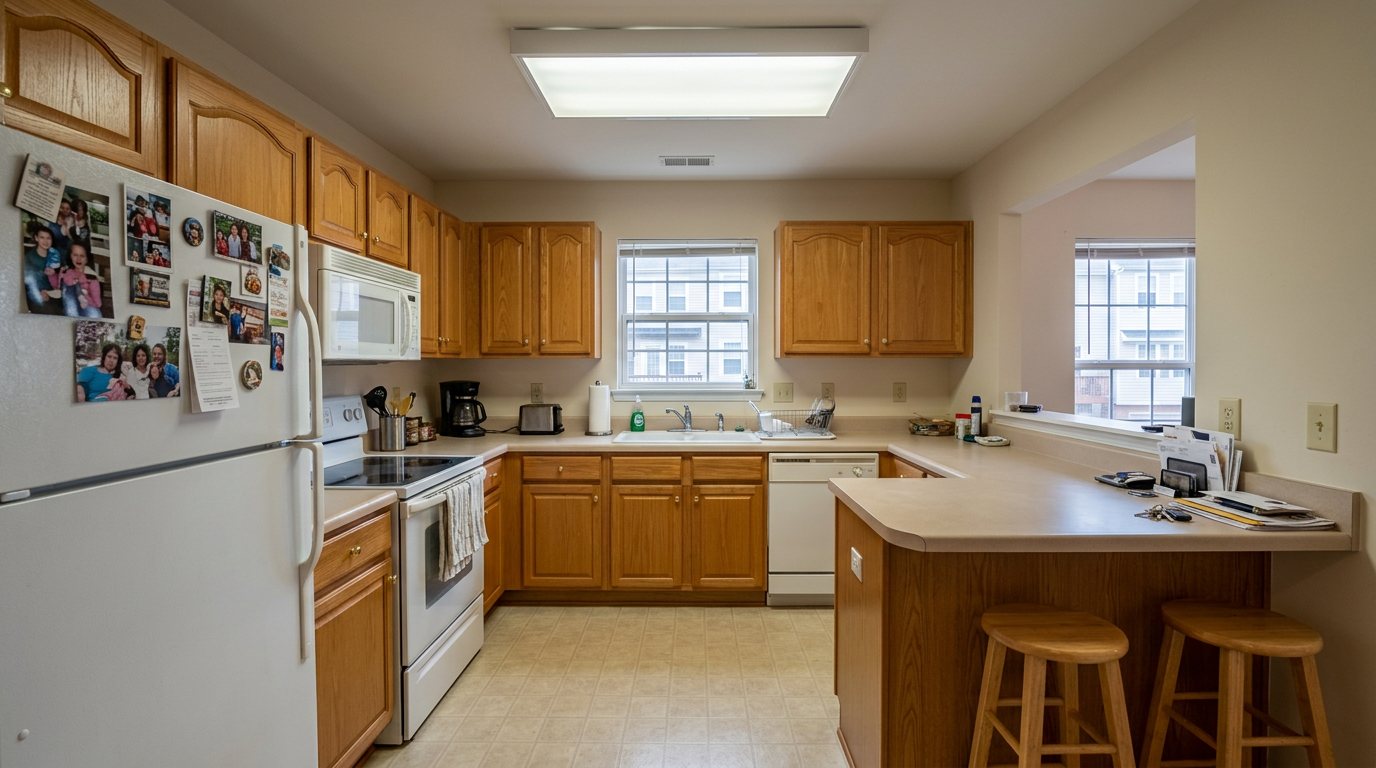
1. As is
Nothing to spend.
Ahmed’s take, buyer appeal: ●●○○○ Reads as a project. Buyers price in a remodel.
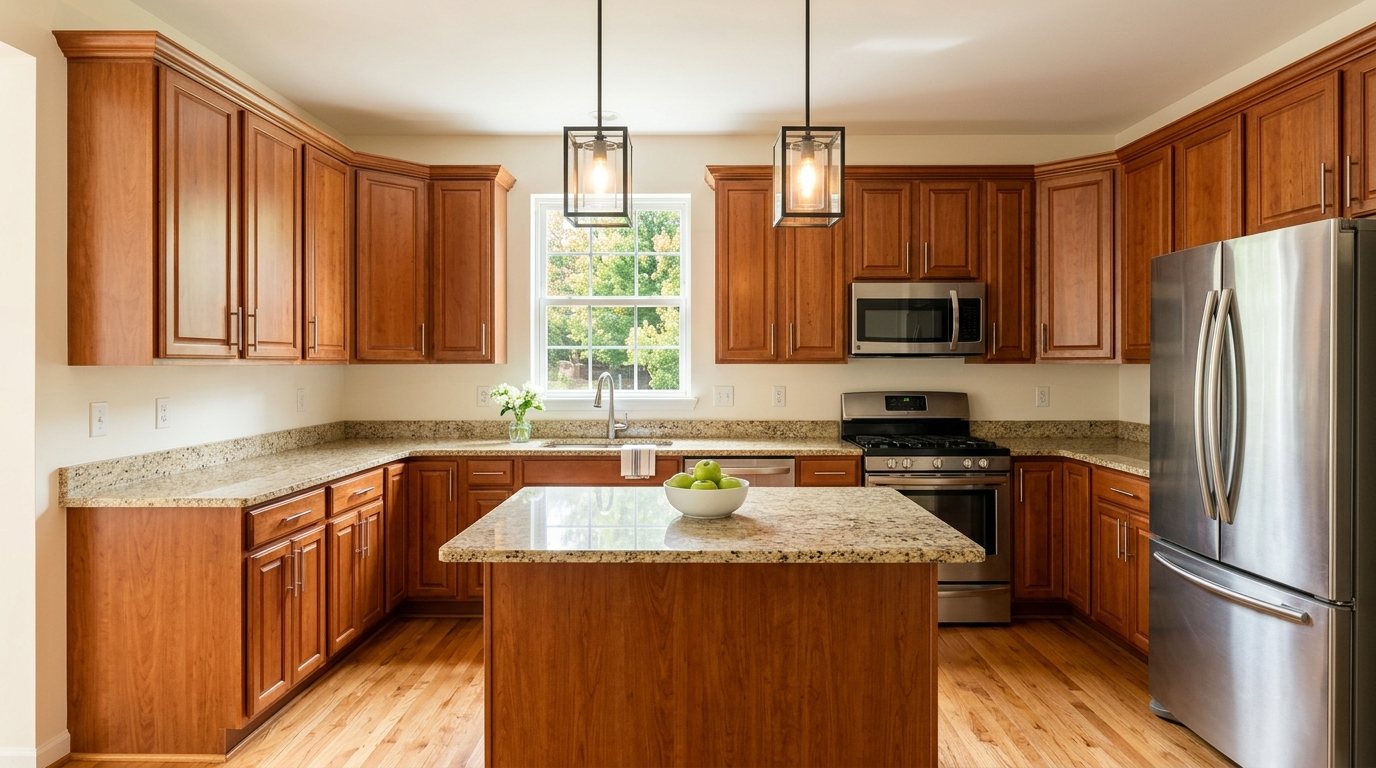
Concept images, made for this page: each level is its own picture, not one room photographed four times. “Ahmed’s take” is my opinion from showing homes here, not data. The costs are sourced.
What it costsWhat it adds at resale
Midrange minor remodelsame layout; new fronts, counters, appliances and sink
Costs $27,308Adds about $27,450 at resale: 100.5% back
Midrange major remodelsemi-custom cabinets, an island, everything new
Costs $79,988Adds about $39,088 at resale: 48.9% back
Upscale major remodelcustom cabinets, stone, pro appliances, a new layout
Costs $160,104Adds about $51,897 at resale: 32.4% back
Washington, DC area, 2025 Cost vs. Value report: the job’s cost, and what it adds to the home’s value at resale.7
Do the smart update when
- The counters are laminate, or chipped, burned or stained.
- The appliances don’t match, or one is broken.
- The homes that sold for the most near you have updated kitchens.
- You have time before you list, like a winter before a spring sale.
Shine it and skip the rest when
- It already has stone counters and matching appliances in good shape.
- Buyers at your price plan to remodel anyway.
- You need to list in the next few weeks.
Not sure which level your kitchen needs? Text me three photos of it. I’ll tell you which changes pay at your price, and which to skip.
Timing
List now, or touch up over winter and list in spring?
Three years of listings here, by the month the house went on the market.
Right timing, right price and right condition make a smooth sale, and timing is the one you choose. Here is what happened to 70,875 houses and townhouses listed in Northern Virginia from 2023 to 2025, by the month they went on the market.10
Listed in October
- Sold over asking
- 35%
- Cut the price first
- 23%
- Never sold
- 20%
- Median days on market
- 10
Listed in March
- Sold over asking
- 58%
- Cut the price first
- 13%
- Never sold
- 14%
- Median days on market
- 5
The slow season for sellers isn’t winter. It’s late summer and fall. Homes listed in October sold over asking 35% of the time; homes listed in March, 58%. October listings cut their price almost twice as often, and March beat October on all four counts in each of the three years.10
The same holds at higher prices. Listed at $750,000 to $1 million, spring listings went unsold 14% of the time against 19% in the fall; at $1 million to $1.5 million, 17% against 20%.10
Touch up over winter, list in spring
- NovemberWalk through it with mePick the must-fix list and the one or two kitchen changes that pay at your price. Get quotes.
- December to JanuaryDo the workCounters, paint, lights, and anything a buyer’s lender would flag. Book the trades early, so it’s done by February.
- Early FebruaryClean, stage, photographThe new kitchen goes in the first photos.
- Late February to MarchListAhead of the crowd: April and May brought 11% and 12% of the year’s new listings, February 7%.10
When listing now is right: the house is ready, the price is right, or your next move can’t wait. Fall buyers are serious buyers: 35% of October listings still sold over asking. And winter is not a mistake: homes listed from December to February sold over asking 50% of the time, close to spring’s 54%.10 These are patterns from past years, not a promise. Rates and the economy shape every spring.
Staging
Stage it, or leave it empty?
What the 2025 national staging study found, and how to stage while you still live there.
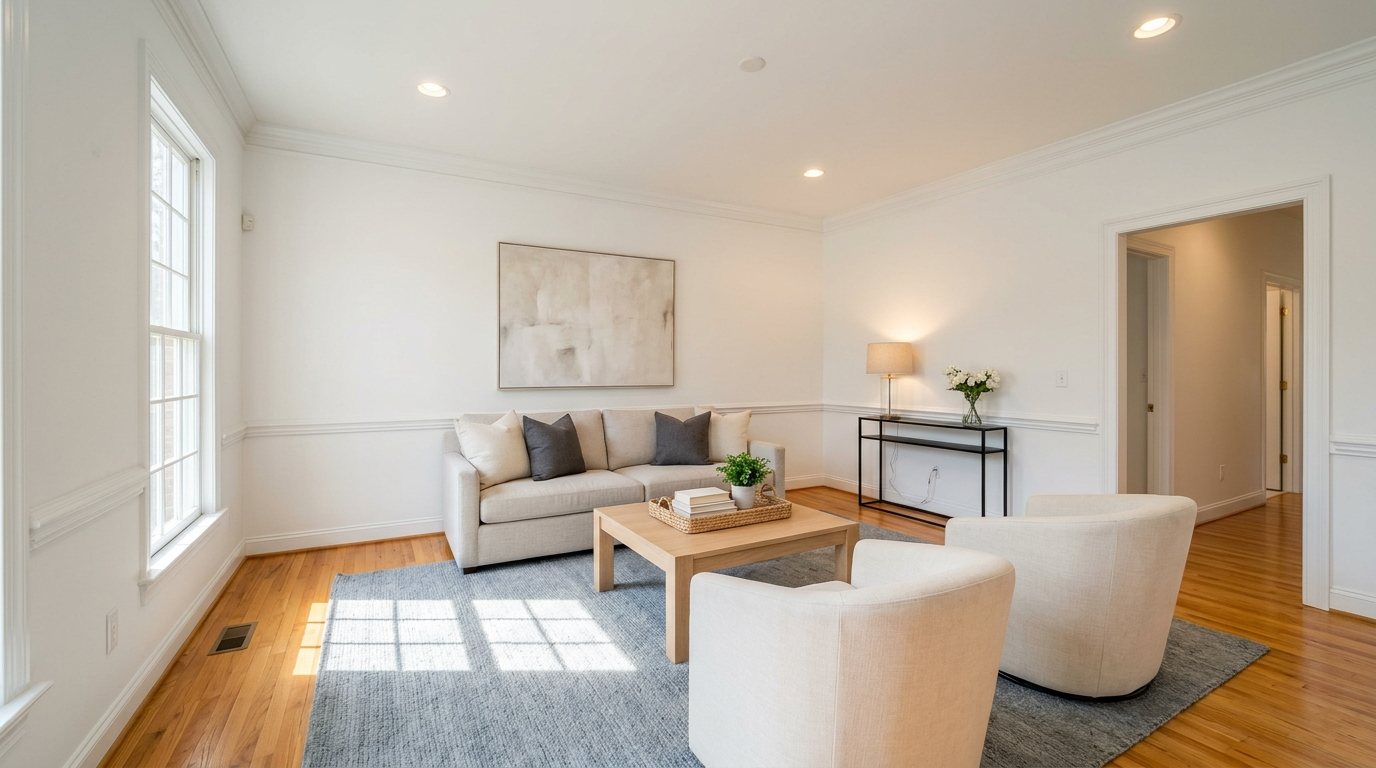
In NAR’s 2025 staging study, 83% of buyers’ agents said staging made it easier for buyers to picture the home as their own. 29% of sellers’ agents saw offers rise by 1% to 10%, and 49% saw less time on the market. The rooms staged most: the living room, the primary bedroom, the dining room and the kitchen. A staging service cost a median $1,500.3
Staged or empty? Staged, if you can. Empty rooms look smaller in photos and give buyers nothing to measure against. Still living there? Pack a third, keep the furniture that shows how a room works, and clear every counter. If photos are virtually staged, label them: buyers who feel misled at the door rarely make their best offer.
Pre-listing inspection
Should you inspect before you list?
When it pays, and the one rule that comes with it.
Inspect before you list
- You order the inspectionBefore the house is on the market.
- Fix on your scheduleAt your price, with time to compare quotes.
- List with the report in handBuyers see what was done.
- The buyer’s inspection finds lessLess to renegotiate.
- A smoother road to settlementFewer deals fall apart.
Wait for the buyer’s inspection
- List the houseNothing checked yet.
- Contract signed, the clock startsThe inspection window is short.
- The buyer’s inspection finds itNow it’s their list, not yours.
- Repair request, on their deadlineRushed fixes or a credit.
- Renegotiate, or the buyer walksBack on the market.
A pre-listing inspection is the same inspection a buyer orders, done for you before you list. It makes the most sense on an older home, one you haven’t lived in, or one with a system you’re unsure about. On a newer home in good shape, a roof, HVAC and plumbing check by the right trade can be enough.
| Point | What it means for you |
|---|---|
| You learn first | You fix problems on your schedule and at your price, not under a buyer’s deadline. |
| Fewer surprises | The buyer’s inspection finds less to renegotiate, so fewer deals fall apart. |
| You can’t un-know it | A problem you know about must never be hidden or covered up. Plan to fix it or price it in. |
| It costs you | You pay for it, and buyers still order their own. |

Selling as is
Can you sell a house as is in Virginia?
What Virginia law says, and what “as is” does not cover.
Yes, you can sell a house as is in Virginia. Virginia is a “buyer beware” state: the disclosure statement you give the buyer says you make no representations about the home’s condition, and it advises the buyer to do their own inspections before settlement.4 The regional sales contract used here has an “as-is” property condition clause.5
Three things “as is” does not mean. It does not stop the buyer from inspecting and walking away inside their contingency. It does not change an FHA or VA appraiser’s repair list, so as-is homes sell mostly to cash and conventional buyers. And it never allows hiding a defect you know about: covering up a problem can turn into a fraud claim. Separate laws also require certain disclosures, such as a home built before 1978 (lead-based paint), pending code violations and a nearby military air installation.4,6
As is works best priced as is: the buyer prices in the work. Ask me for the as-is number and the fixed-up number side by side.
The buyer can still inspectThey can still walk away inside their inspection contingency.
Lender repair rules still applyAn FHA or VA appraiser’s list does not change, so as-is homes sell mostly to cash and conventional buyers.
Nothing known can be hiddenCovering up a defect you know about can turn into a fraud claim.
Questions
What sellers ask before they list.
What should I not fix before selling my house?
Skip big remodels (kitchens, baths, finishing a basement), replacing an older roof, furnace or water heater that still works, new appliances, and small wear like nail pops. Buyers price those in. Fix what stops a buyer's loan and polish what shows in photos.
Should I renovate before selling?
Not a full one. A major remodel rarely earns back its cost by listing day. Fresh neutral paint, bright lights, a clean yard, repairs a lender would require and, when the kitchen dates the house, a smart update (counters, appliances, paint) do far more for the price.
What repairs are required to sell a house in Virginia?
None by state law: Virginia is a buyer-beware state. But a buyer using an FHA or VA loan needs the home to pass the appraiser's minimum property rules, and 1 in 6 buyers here used one. Peeling paint on a pre-1978 home, a worn-out roof and systems that don't work are the common ones.
Should I update my kitchen before selling?
Skip the full remodel: in the DC area a midrange major kitchen remodel adds back 48.9% of its cost at resale, and an upscale one 32.4%. A smaller update can pay: the midrange minor remodel (same layout; new fronts, counters, appliances and sink) adds back about 100.5%. Do it when the kitchen is the one thing dating the house and the homes that sold best nearby have updated kitchens.
Should I replace laminate countertops before selling?
Often, when the rest of the kitchen is in good shape. Laminate is a plastic sheet over particleboard (Formica is the best-known brand). Quartz runs about $70 to $160 a square foot in Northern Virginia, and a townhouse kitchen has about 30 to 40 square feet of counter.
Should I list in the fall or wait for spring?
If the house needs work, waiting usually pays here. Of homes listed from 2023 to 2025, 58% of March listings sold over asking, against 35% of October listings, and March listings cut their price about half as often. Use the winter for the touch-ups and list in late February or March.
Do I need to stage my house to sell it?
No, but it helps. In NAR's 2025 study, 83% of buyers' agents said staging helps buyers picture the home as theirs, and 49% of sellers' agents saw less time on the market. A staging service cost a median $1,500.
Is it better to stage a house or leave it empty?
Staged, if you can. Empty rooms look smaller in photos. If you're still living there, declutter and keep furniture that shows how each room works.
Should I get a home inspection before selling?
It helps on an older home or one you're unsure about: you find problems on your own schedule. Remember that anything you learn must never be hidden from a buyer.
Can you sell a house as is in Virginia?
Yes. The seller's disclosure statement makes no representations about condition, and the regional contract has an as-is clause. Buyers can still inspect and walk away within their contingency, FHA and VA appraisers still require their repairs, and known defects must never be hidden.
What does a price cut cost a seller here?
In the last 24 months, 22% of homes here cut their price. They sold for a median 95.1% of their first asking price, about $40,000 less, after 42 days on the market instead of 6.
Does this check save what I tap?
No. It runs in your browser, and nothing is stored or sent unless you choose to text or email Ahmed.
Your next step
Want a second pair of eyes before you spend a dollar?
Send me photos or invite me over. I will tell you what to fix, what to skip and what each choice does to your price, then help you pick a list date. In English or Arabic, with real numbers, not a pitch.
اقرأ هذه الصفحة كاملة بالعربية ←
وكيلك العقاري الموثوق في شمال فرجينيا.
Keep exploring
Your next pages.
Keep reading
- CheckAm I ready to sell?Seven taps: a readiness score for timing, price and condition, and your next steps.
- ToolWhat is my home worth?A written valuation from the closed sales nearest you.
- ToolClosing cost calculatorWhat a seller and a buyer pay at closing in Virginia: grantor tax, recordation tax, title and settlement.
- Selling guideSelling a houseCosts, timing and pricing, step by step.