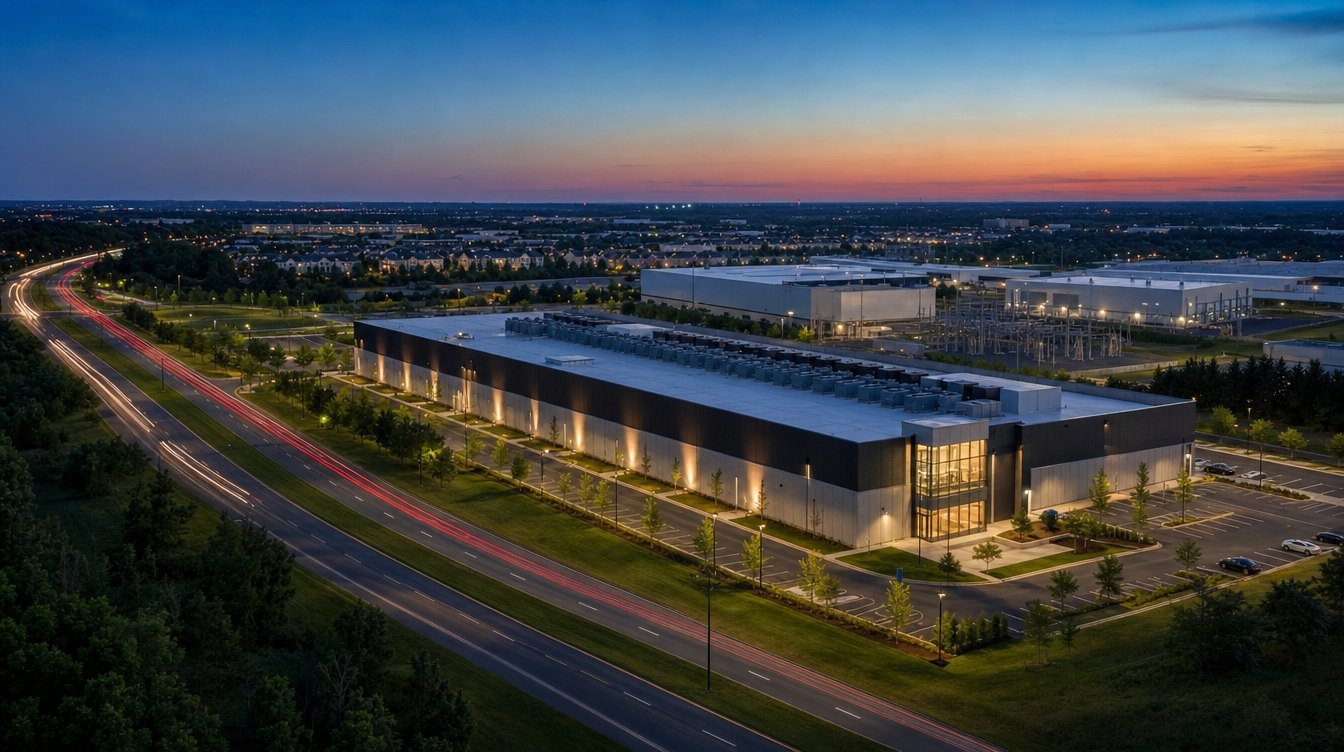
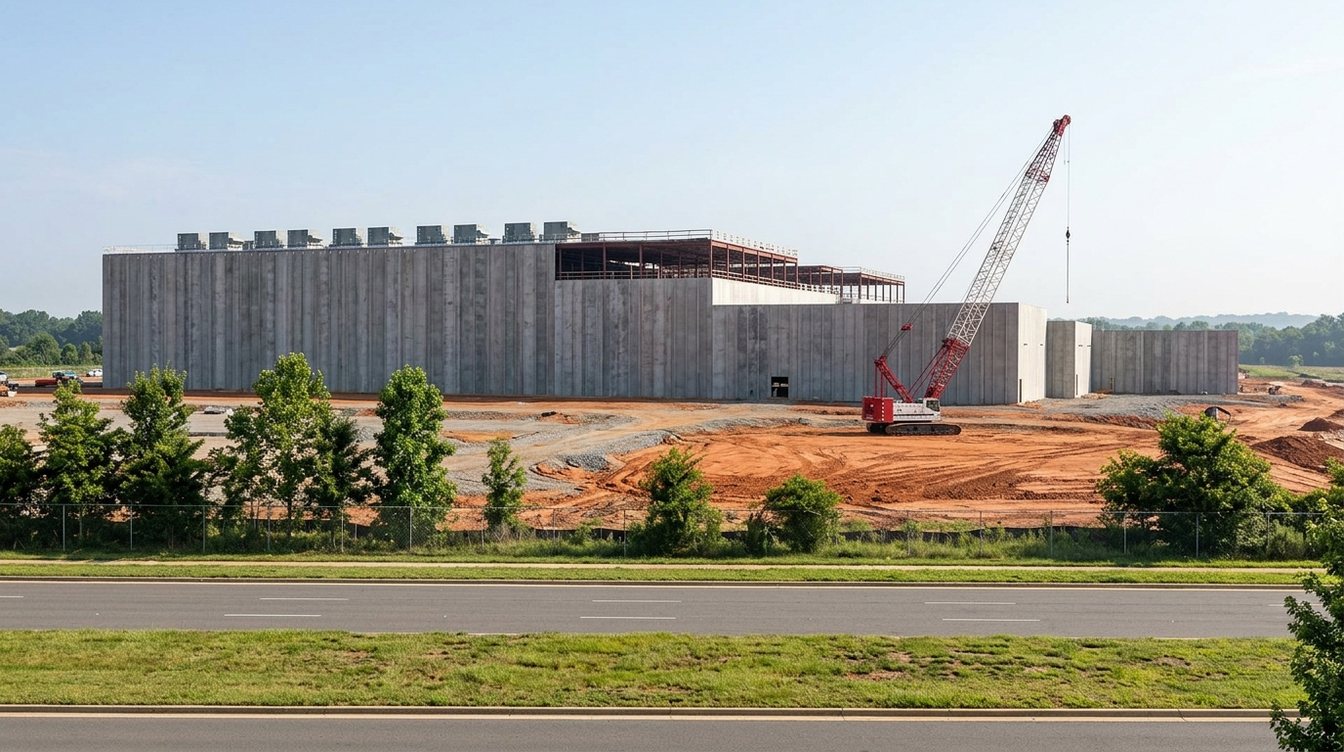
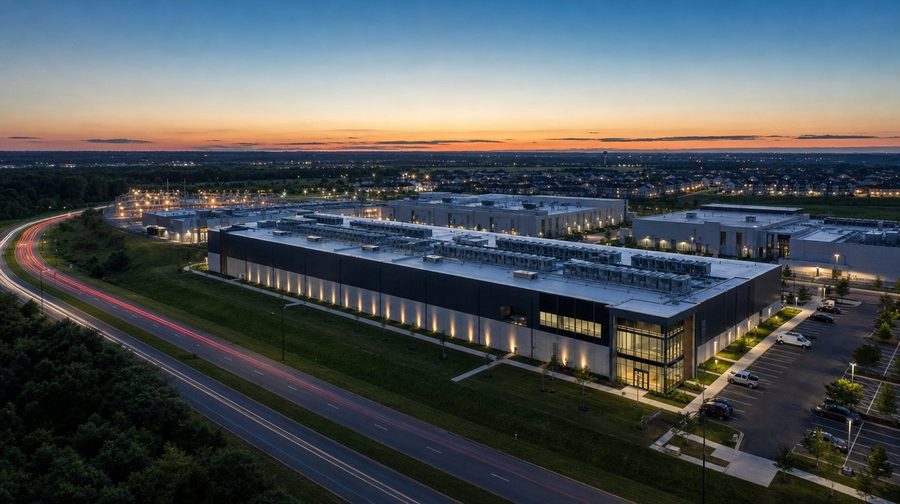
A long gray data center campus beside a curving road at dusk, its walls lit and car lights streaking past
Loudoun County

Living Near a Data Center in Loudoun CountyThe county’s own map and rules, in plain English (October 2026)

Where the data centers are, what’s coming, how loud they can be, and how to check any address before you buy.

A data center campus at dusk· Eastern Loudoun

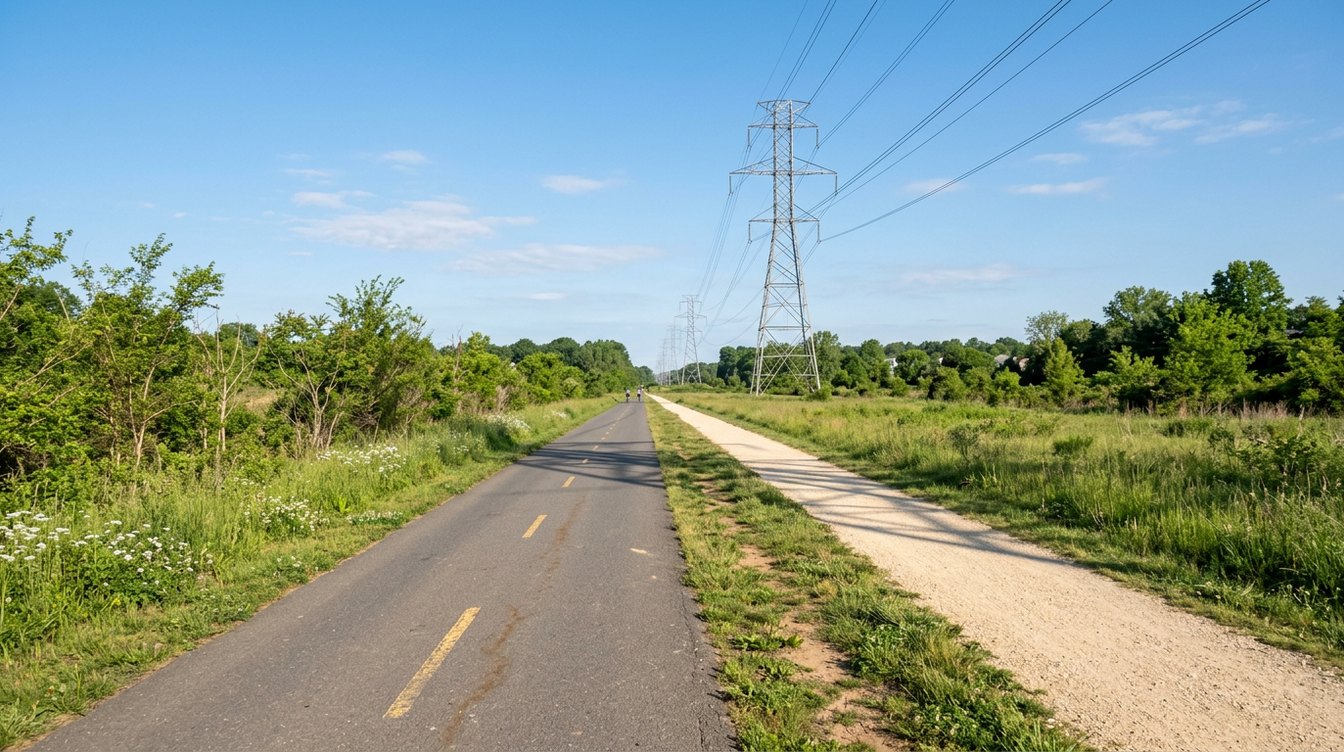
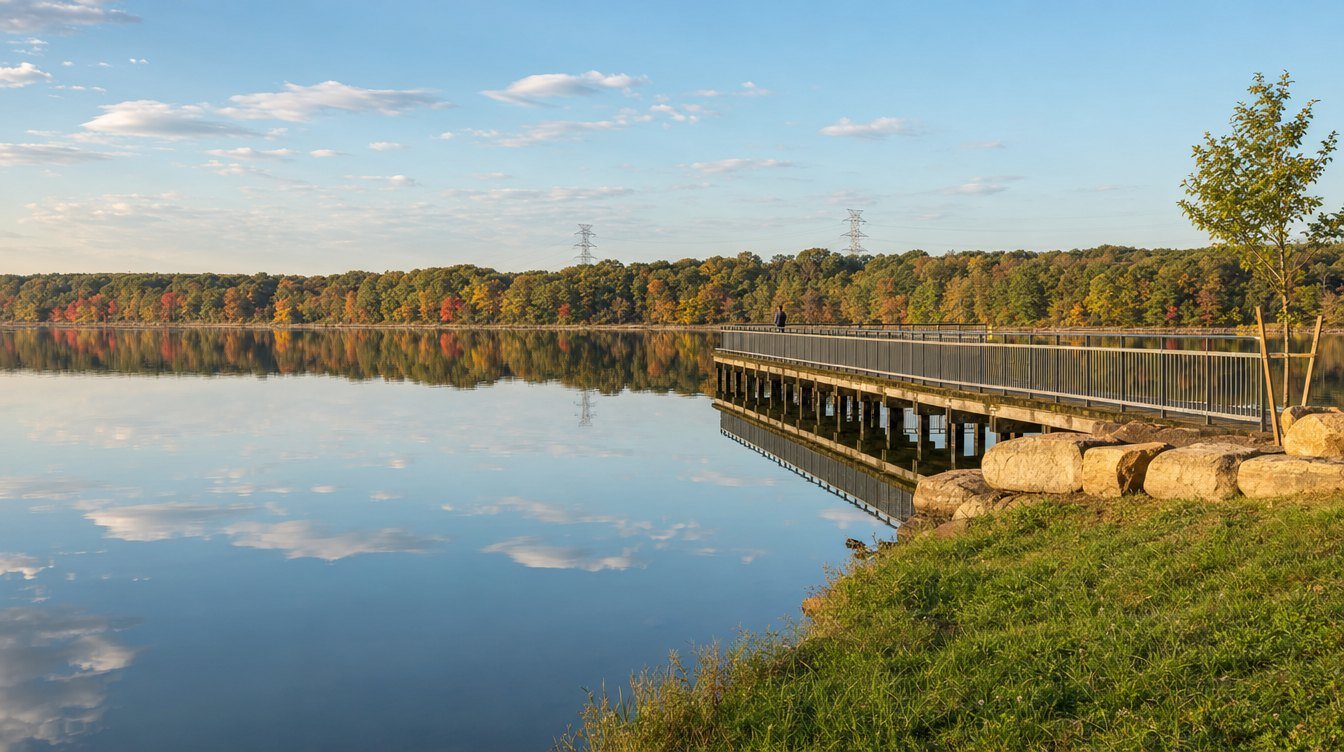
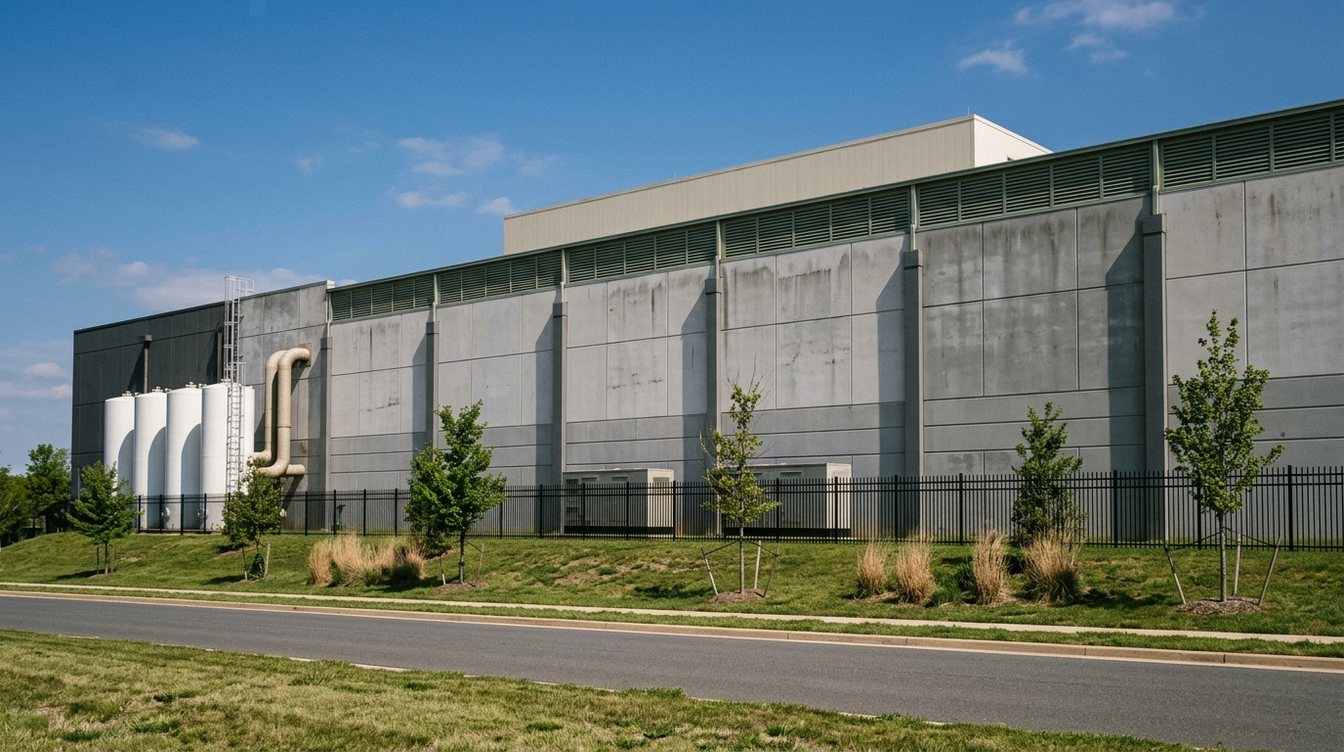
Artist’s renderings of real Loudoun County places.

Loudoun’s data centers in four numbers

Loudoun County counts as of March 1, 2026, and the county’s zoning rules in force on October 18, 2026

233Data center buildings built or under construction, 56.5 million square feet in all2
116More buildings approved but without a building permit yet, 35.7 million square feet2
21Applications still asking the Board for approval, 56 buildings and 20.7 million square feet2
55 dBThe most a data center may put out at a home’s property line, day and night (A-weighted decibels)9

The county says it does not expect every approved project to be built. Counts are of buildings; 56.5 million square feet of floor space is about 980 football fields, end zones included.2

Last updated October 18, 2026Data center counts from Loudoun County as of March 1, 2026; rules and power lines as of October 18, 2026About a 7-minute read

The question buyers ask

“Is there a data center near this house?”

The short answer: Loudoun County counts about 233 data center buildings built or under construction (56.5 million square feet, as of March 1, 2026), nearly all in the eastern part of the county, and about 64% of that space is in the county’s Ashburn planning area.13 Western Loudoun’s rural zoning does not allow them.1 Since March 18, 2025, every new one needs a public hearing and a Board vote, and next to homes the building must sit at least 200 feet back and stay under 55 decibels at the property line.56 Check any address in 5 steps or see the map.

Latest news

The latest data center news in Northern Virginia.

Takeaway: new projects, Board votes, power lines, land sales and court rulings from local newsrooms and county records. Each headline links to the original story.

    Headlines and one-line summaries are our own short words from each story; read the original before you rely on it. Only local newsrooms, regional and trade press, and public bodies are used.

    The map

    Every data center parcel in eastern Loudoun, from the county’s own records.

    Takeaway: the dark shapes crowd the land between Leesburg, Ashburn, Sterling and Dulles Airport. Hatched and red shapes are what’s coming next.

    Map of eastern Loudoun County with every data center parcel the county lists: built or under construction, approved, and waiting for a Board voteLeesburgLansdowneAshburnBroadlandsBrambletonSterlingCascadesSouth RidingDulles AirportFairfax CountyPotomac RiverMaryland“Data Center Alley”1 mile
    • Built or under construction 139 parcels, 56.5 million sq ft
    • Approved or in county review 64 areas, no building permit yet
    • Waiting for a Board vote 21 applications
    • Dulles Airport for reference
    Loudoun County GIS layers, data as of March 1, 2026 (the built layer was last edited September 3, 2026).3 Each shape is a whole parcel or application area, not a building. Zoom in to see the streets around any home, and tap a key item to show or hide that layer. Western Loudoun is left off because its rural zoning does not allow data centers.

    Before you buy

    Check any Loudoun address in 5 steps, with the county’s free map.

    Takeaway: look at what’s built, what’s approved, and what the land next door is zoned for. Then go and listen.

    1. Open the county’s data center mapGo to Loudoun County’s “Existing & Potential Data Centers” map and type the address in the search box.14 Open the county map
    2. Look half a mile around the houseBuilt and approved parcels show by default. Tap one to see its status, project name and size.
    3. Turn on what’s pendingSwitch on “In Legislative Process” and “Substations” to see applications still waiting for a vote.
    4. See what the land next door could becomeSwitch on “Zoning Districts Allowing Data Centers by SPEX.” Empty land in those zones is where a future application could be filed. The county’s Land Applications map lists open cases and takes comments.14
    5. Check the power lines, then listenSwitch on “Major Power Lines,” and check Dominion’s GeoVoice map for proposed routes. Then visit at night and on a weekday afternoon: generator tests run 5 p.m. to 7 a.m. from May through September and 11 a.m. to 5 p.m. from October through April.6

    Buying in Ashburn, Sterling, Leesburg, Brambleton or South Riding? I’ll run this check with you for any house you’re serious about, at no cost. Send me the address.

    Where they are

    64% of Loudoun’s data center space is in the Ashburn area.

    Takeaway: four of the county’s planning areas hold all of it. The county calls Ashburn “the most connected place for data centers on earth,” the reason for the name Data Center Alley.1

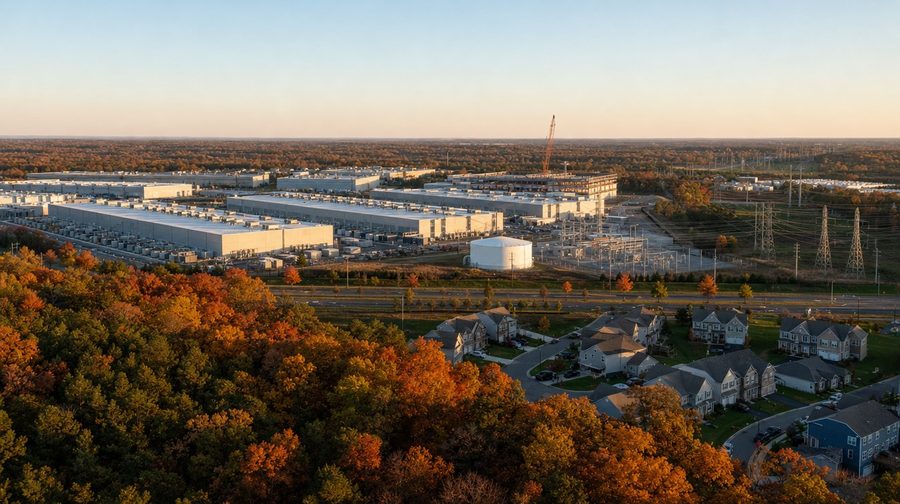
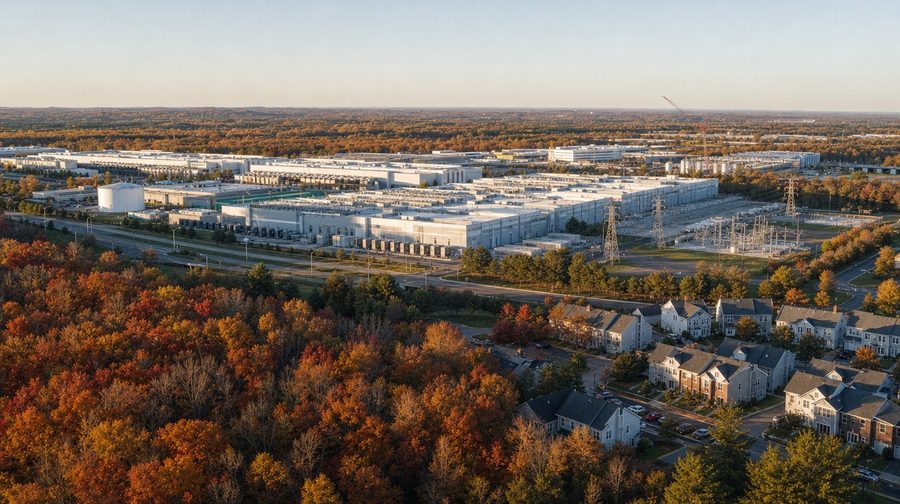
    Aerial view of long data center halls, a substation and a neighborhood among fall trees in the Ashburn area
    Artist’s rendering. Data center halls, a substation and nearby neighborhoods in the Ashburn corridor in fall.

    56.5 million square feet ≈ 980 football fields

    Each block = 10 football fields

    98 blocks, 10 fields each. This is Loudoun County’s data center floor space, built or under construction, from county data as of March 1, 2026.2 Field size used: an American football field with both end zones, 360 by 160 feet, or 57,600 square feet. 56.5 million divided by 57,600 is about 981. Floor space counts every story, so a two-story building counts twice. The land under the buildings is smaller.
    County planning areaParcelsSquare feetShare
    Ashburn9836.2 million64%
    Dulles139.9 million17.5%
    Sterling195.5 million9.7%
    Leesburg95.0 million8.8%
    All four13956.6 million100%
    • Built or under construction only, grouped by our count of the county’s parcel layer as of March 1, 2026.3 Planning areas are county planning zones, so they don’t match mailing addresses exactly: part of the “Ashburn” area has Sterling or Leesburg addresses.
    • Streets that come up most in the county’s list of data center buildings: Beaumeade Circle, Pacific Boulevard, International Drive, Loudoun County Parkway, Devin Shafron Drive and Gigabit Plaza.3
    • Close to homes is common. A 2024 state study of 71 Loudoun data center sites found 24% within 200 feet of land zoned for homes and 34% within 500 feet.4
    • Only where zoning allows. Data centers stand only on land zoned for offices and industry; the rural zoning that covers about two-thirds of the county has never allowed them.1

    From the power line to your phone

    Power comes in on high-voltage lines. Data goes out on fiber, to homes and phones, and comes back.

    • Electricity
    • Data, going out and coming back
    1. High-voltage line230 or 500 kilovolt lines, usually on steel poles 150 to 180 feet tall.11
    2. SubstationSteps the power down for the building. Loudoun counts 95 existing and proposed (March 1, 2026).9
    3. Data centerServers run day and night. A typical one needs 30 to 200 megawatts, nonstop (Loudoun County).
    4. Fiber lineGlass cables carry the data in and out.
    5. Your home and phoneA search, a video or a payment goes to a data center and comes back.
    A simple drawing, not to scale. Purple dashes show electricity flowing to the building. Blue dots show data moving out to the house and phone and back. The 30 to 200 megawatt range is from Loudoun County, “Energy Issues & Considerations,” an undated page read October 18, 2026: loudoun.gov/6404/Energy-Issues-Considerations.

    Cloud or AI?

    Cloud or AI? What kind of data centers these are.

    Takeaway: much of the demand here is cloud services and running AI models. AI buildings pack far more power into each cabinet and often use liquid cooling. That means more power lines and different cooling.

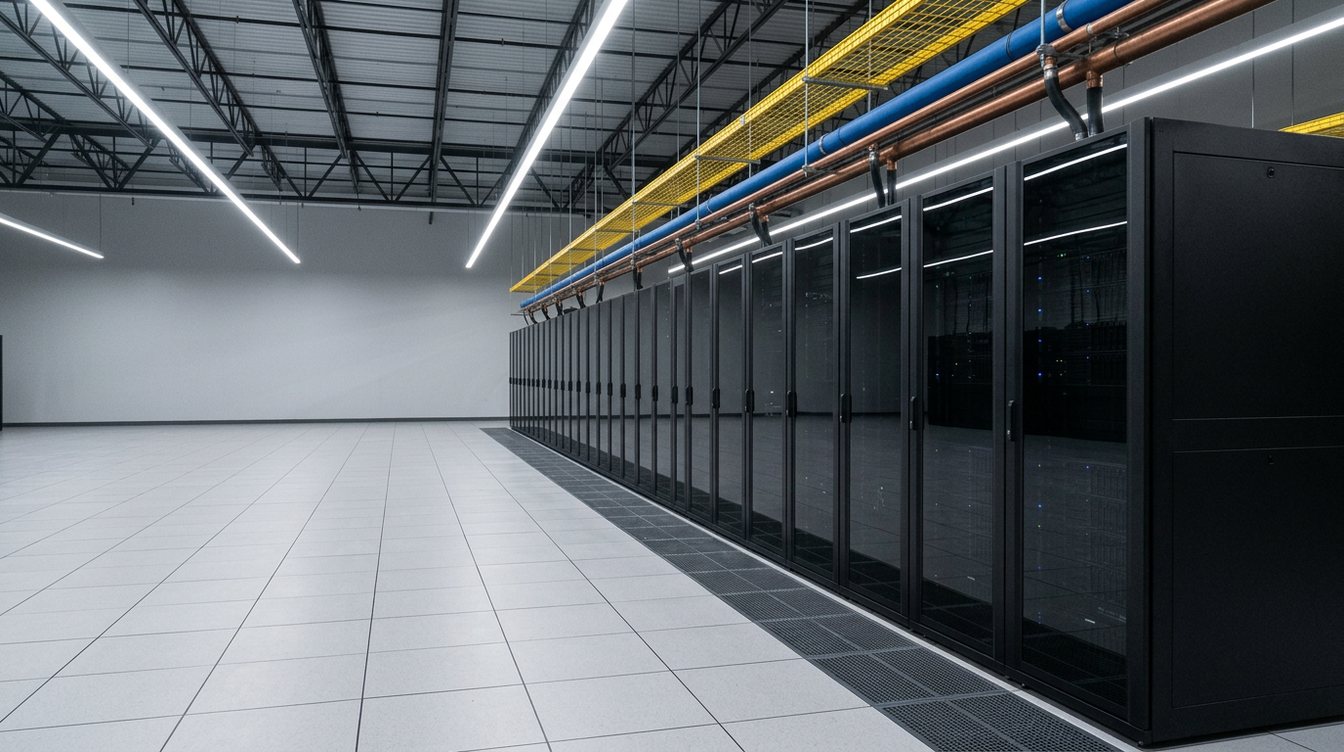
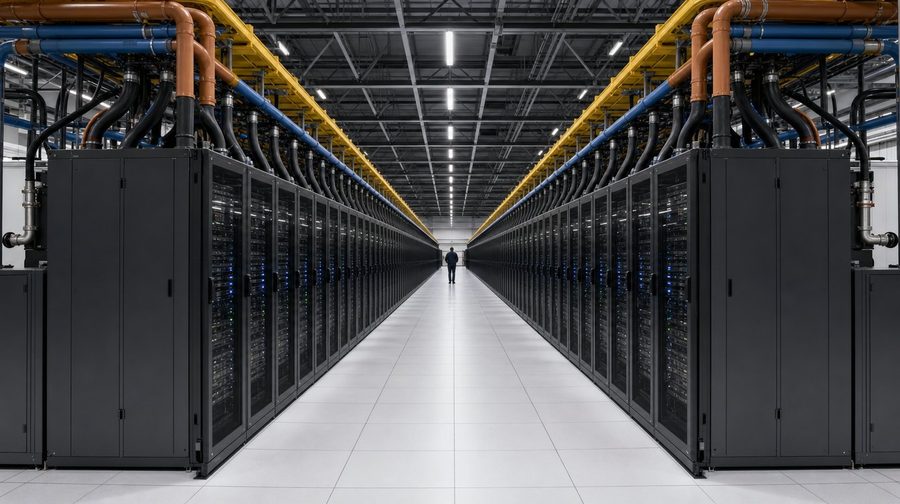
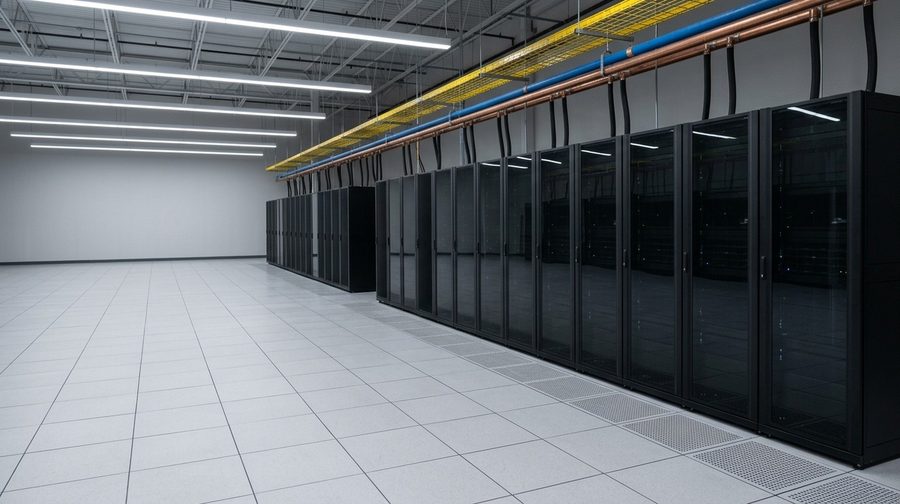
    A long aisle between black server cabinets with copper and blue cooling pipes overhead
    Artist’s rendering. A long aisle of server cabinets with cooling pipes overhead, the kind of hall built for AI computing.

    Cloud and colocation

    Many customers, cooled by air or water

    • Cool air in
    • Warm air out
    A drawing of one cloud server cabinet (a rack). Fans pull cool air through the servers and push warm air out the back.
    Power per rack
    In the Uptime Institute’s worldwide survey of data center operators (July 2026), the most common rack at each site averaged just over 11 kilowatts. Leave out a few very dense sites and the average was 7.8 kilowatts, up from 7.5 in 2025.15
    Cooling
    Air, or water that evaporates. A Loudoun supervisor’s brief posted on the county website rates air cooling as high power use and no water use. It says open-loop evaporative cooling (low power use, high water use) is used by most large data centers today.16
    What it does
    Everyday services like email, websites and apps for many customers. A colocation building rents space to other companies. Big tenants lease whole suites or buildings. Smaller ones rent a rack, cabinet or cage.17
    Examples here
    Amazon Web Services sites in Ashburn and Sterling, among other places.18 Equinix’s Ashburn campus, where its first building (DC1) opened in 1999.19

    AI (GPU) data centers

    Dense chips, often cooled by liquid

    • Cool liquid in
    • Heat carried out
    A drawing of one AI cabinet. GPU chips sit close together and run hot. Pipes carry liquid in to take the heat away.
    Power per rack
    AI training sites usually run at 40 kilowatts per rack “and well beyond,” JLL says (reported January 2026).20 One Nvidia GB200 NVL72 AI rack uses 132 kilowatts, according to HPE’s product page for its version.21
    Cooling
    Often liquid. In HPE’s version of that rack, liquid carries away 115 of the 132 kilowatts of heat.21 The supervisor’s brief rates closed-loop water cooling as low power use and low water use. It says closed loops use about 70% less water than open-loop systems.16
    What it does
    Trains AI models, then runs them for users. Running a trained model is called “inference.” JLL expects inference to pass training as the main AI need in 2027 (January 6, 2026).22
    Examples here
    STACK’s planned 144-megawatt campus in greater Ashburn: two 72-megawatt buildings with closed-loop water cooling for dense AI and cloud use (announced February 11, 2025).23 Digital Realty is building the 96-megawatt Aurora AI Factory with NVIDIA in Manassas, Prince William County. In October 2025 it was set to open in the first half of 2026. We could not confirm it has opened as of October 18, 2026.24
    • How much new building is for AI? Nobody publishes a share for Northern Virginia. We found no figure from Loudoun County, Dominion or PJM. Dominion’s September 29, 2026 forecast to PJM describes the market as “mainly cloud/AI inference.”25 Worldwide, JLL estimates AI could be 50% of all data center capacity by 2030, up from about 25% in 2025 (January 6, 2026).22
    • More power, more lines. The county says a typical data center can need 30 to 200 megawatts of power, all day and night.9 JLL says AI training sites need 10 times the power density of older data centers (January 6, 2026).22 New buildings are bigger too. Loudoun’s existing data centers average about 234,000 square feet, but those permitted since 2023 average closer to 339,000 (county data as of March 1, 2026).1 See the power lines.
    • Cooling noise. A City Journal writer said in April 2026 that liquid cooling is “much quieter.” That is a claim, not a measurement.26 Either way, the county’s 55-decibel limit at a home’s property line applies.9
    • Water. On an average day, Loudoun’s data centers use 9% of the county’s drinking-quality water, the county says.27 A Loudoun Water official told Loudoun Now in 2026 that data centers use up to 10% of its drinking water, and about 13% if you add reclaimed water.28 Loudoun Water delivered more than 750 million gallons of reclaimed (treated waste) water to about 40 customers in 2025, the county says.27 In open-loop cooling the water evaporates. Closed loops evaporate little to none, the supervisor’s brief says.16

    Who’s who

    Who’s who in Northern Virginia data centers.

    Takeaway: big tech companies run their own buildings or rent from landlords. Developers build and lease. Builders put them up. Dominion and NOVEC bring the power.

    Hyperscaler
    A giant tech company that runs its own huge fleet of data centers, built or rented. Example: Amazon Web Services. Its exact footprint here is not public. DCD put it at more than 50 data centers across the region in November 2024.18
    Colocation
    A landlord that rents data center space, and tenants bring their own servers. “Retail” rents a rack, cabinet or cage inside a shared building. “Wholesale” leases a whole suite or building to one big tenant.17 Vantage, for example, calls itself a wholesale provider.29
    Developer
    A real estate firm that buys land, gets zoning and power, builds, then leases or sells. Example: TA Realty, which in November 2023 signed a lease for its whole 430-megawatt Leesburg campus with one cloud company.30
    Builder
    The general contractor hired to build the building. Example: HITT Contracting at Corscale’s Gainesville Crossing campus.31
    Utility
    The power company. Dominion Energy owns all the high-voltage lines in this area and shares customers with co-ops like NOVEC.32 In its September 29, 2026 forecast to PJM, Dominion listed about 54 gigawatts of data center demand under some kind of contract as of July 2026. Only about 12 gigawatts of that was in signed service agreements, its firmest stage. Dominion’s data center billing peak, closer to power in use, was 4.8 gigawatts in August 2026.25
    Megawatt (MW)
    Data centers are measured by power, not floor space. Rent is set by the power a tenant gets.33 1,000 megawatts is 1 gigawatt. CBRE counted 4,496.5 megawatts of data center inventory in Northern Virginia in the first half of 2026, with 0.2% vacant.34 JLL counts a different way and gets nearly 7 gigawatts.35 Do not mix the two.
    CompanyTypeWhat they do hereWhere
    Amazon Web ServicesHyperscalerOwns or leases data centers for its own cloud. Its plan for more than 800,000 square feet of data centers on the former GWU campus in Ashburn needs county approval, county officials said October 6, 2026.36Ashburn, Sterling, Chantilly, Haymarket, Manassas, Warrenton, McNair18
    MicrosoftHyperscalerRuns its own cloud data centers.37Fairfax, Prince William and Loudoun counties37
    GoogleHyperscalerRuns its own data centers. In August 2025 it announced $9 billion more for Virginia through 2026, including expanding its Loudoun and Prince William sites.38Arcola and Leesburg in Loudoun; Gainesville in Prince William39
    EquinixColocationRents space to many companies and networks. Its Ashburn campus is home to North America’s largest internet peering point, where networks connect.19Ashburn
    Digital RealtyColocationLarge rental campuses, from multi-megawatt suites to single cabinets. The company lists its Ashburn campus at 98 acres and 500 megawatts.40Ashburn; Manassas24
    CloudHQDeveloperBuilds and leases large data centers. It plans 14 buildings and more than 1.7 gigawatts on its LC campus.41Ashburn, off Loudoun County Parkway41
    VantageWholesale colocationLeases large campuses to big tenants.29 Its VA2 campus in Sterling runs on its own natural gas turbines, not the grid. In July 2026 a turbine failure kept diesel backup generators running for nearly 24 hours.42Ashburn and Sterling29
    NTT DATAColocationBuilds and leases large data centers. Work began on a 24-megawatt NTT building in Ashburn in 2022.43Ashburn
    CyrusOneColocationRents data center space. Its NVA5 to NVA7 campus is in Loudoun County.44Sterling
    STACK InfrastructureDeveloperBuilds and leases large campuses, including the planned 144-megawatt campus above. DCD counted six STACK campuses in Northern Virginia in February 2025.23Greater Ashburn and other Northern Virginia sites23
    QTSDeveloperBuilds and leases large campuses. It ended the Prince William Digital Gateway project on July 2, 2026.45Manassas (a planned 6-building, 105-acre campus), Sterling, Ashburn46
    HITT ContractingBuilderGeneral contractor.31Corscale’s Gainesville Crossing campus, Gainesville
    DPR ConstructionBuilderGeneral contractor for Equinix’s Ashburn North campus and Digital Realty’s Loudoun Exchange data suites.47Ashburn
    Dominion EnergyUtilityThe main power company. Owns the high-voltage lines.32Loudoun and most of Northern Virginia
    NOVECUtility co-opA member-owned co-op. It powered 58 data center buildings for seven tech companies (reported January 2025).32Parts of Clarke, Fairfax, Fauquier, Loudoun, Prince William and Stafford counties32

    This table lists examples, not every company. It sticks to large names we could confirm, as of October 18, 2026. Locations are where each company is reported to run, lease or plan sites. Some sizes come from company pages that show no date.

    The rules

    Since March 18, 2025, every new data center needs a public hearing and a Board vote.

    Takeaway: new projects can now be turned down, and the county is writing stricter rules. Projects already approved, or filed early enough, still go ahead.

    Before March 18, 2025

    Allowed “by right”

    In most office and industrial zones a data center needed no public hearing; the county checked the plans against the zoning rules.

    Since March 18, 2025

    Special exception only

    Every new data center needs a special exception: a public hearing that ends with the Board of Supervisors approving or denying it.5

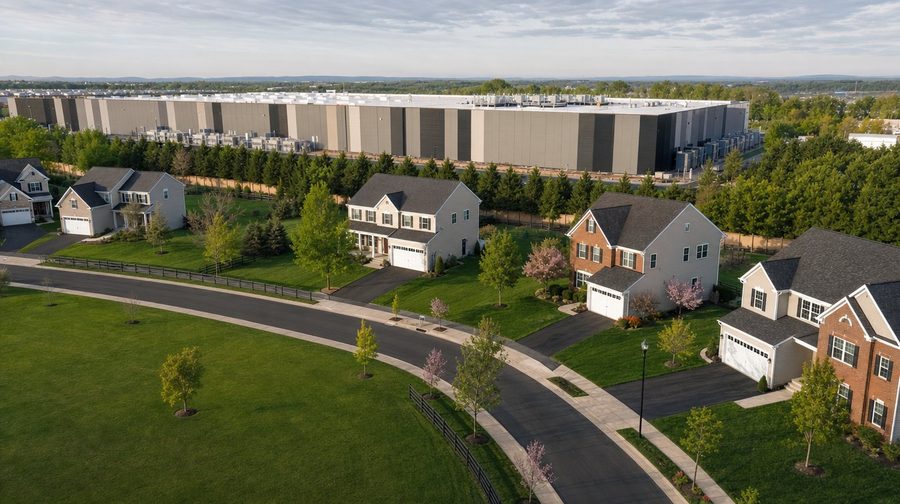
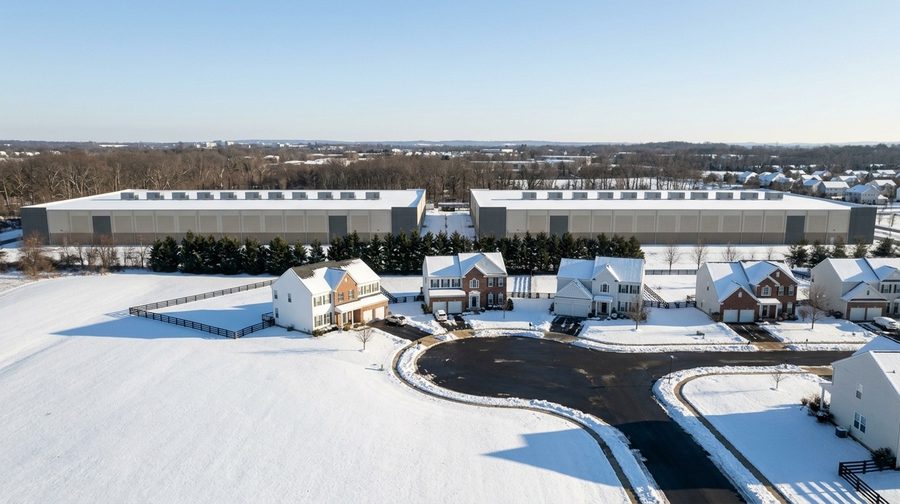
    Two-story homes on a curving street with a long data center building behind a strip of trees
    Artist’s rendering. Homes on a curving street with a data center behind a strip of trees, the kind of setting the 200-foot setback is written for.

    What the rules require today when a data center is next to homes

    • 200 feetBuildings set back at least 200 feet from the shared property line, parking at least 50 feet.
    • Berm and treesEarth berms with evergreen trees; where no forest exists, 10-foot berms with fencing and plantings on top.
    • 4 walls of sound barrierOutdoor mechanical equipment enclosed by an acoustical barrier on all four sides, with the building between it and the homes.
    • Generator test hoursMay 1 to September 30: 5 p.m. to 7 a.m. only. October 1 to April 30: 11 a.m. to 5 p.m. only.
    • 55 dBThe sound limit at a home’s property line, at all hours, checked by noise studies before and after construction.9

    Zoning Ordinance section 4.06.02, read October 18, 2026.6 The setback applies when the data center property touches homes, approved home plans or land zoned for homes, including across most roads.

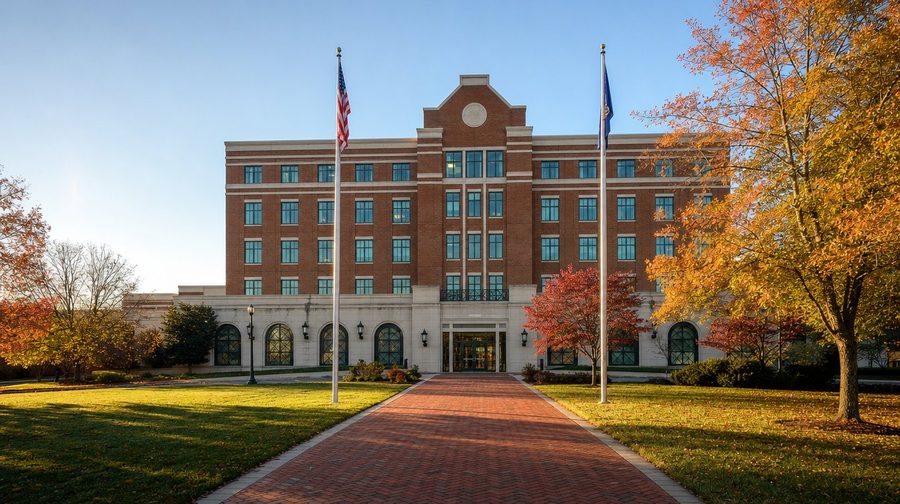
    A red brick and limestone government building with flags and a brick walkway in fall
    Artist’s rendering. The Loudoun County Government Center in Leesburg, where the Board of Supervisors holds data center hearings and votes.

    What’s still moving

    1. Grandfathered projects. Applications accepted before February 12, 2025 and more than 500 feet from homes could go ahead without a hearing. In September 2026 two supervisors counted 17 of them still in review, about 11 million square feet, and the Board asked its attorney about ending that exception.5
    2. A pause on votes. On September 15, 2026 the Board voted to consider pausing its final votes on data center and substation applications for up to 12 months. The formal vote is scheduled for October 20, 2026.7
    3. Stricter rules in draft. The county’s September 2026 draft would push new electrical substations 500 feet from homes, keep on-site power plants 200 feet away, and make every applicant study the sound at homes and schools within 500 feet. The Board vote is planned for July 2027.8

    Noise

    The limit is 55 decibels at your property line, but the steady hum isn’t well measured yet.

    Takeaway: the county says noise complaints are among the most common it gets, often about a steady tone. Its rules don’t cover that kind of sound yet; new ones are expected in spring or summer 2027.9

    How loud is 55 decibels?

    • 30 dBSoft whisper
    • 40 dBRefrigerator hum
    • 60 dBNormal conversation
    • 70 dBDishwasher, washing machine
    • 80 to 85 dBGas lawnmower
    • 95 dBMotorcycle
    • Loudoun limit: 55 dB

    55 dB (A-weighted) is the most a data center may put out at a home’s property line. The limit is the same day and night.9

    Everyday sound levels are the CDC’s average levels in decibels, from “What Noises Cause Hearing Loss?” (Centers for Disease Control and Prevention, undated page): cdc.gov/nceh/hearing_loss/what_noises_cause_hearing_loss.html. Those are levels near the sound itself. The county’s 55 dB is measured at the lot line, 5 feet above the ground, so use the bars to get a feel for loudness, not as an exact match.9 Bars run from 0 to 100 dB. The darker part of each bar is above the limit.
    Next door to the data centerMost allowed
    Homes and rural land55 dB
    Mixed-use neighborhoods (town centers)60 dB
    Shops, schools, offices65 dB
    Industrial land70 dB
    • Same limit day and night, measured at the lot line nearest the source, 5 feet above the ground.
    • Not counted: backup generators running in an emergency or at the power company’s request, generator testing, and substations and power lines.
    • More than 4,000 backup generators serve the county’s data centers, each about the size of a tractor-trailer; most are tested once a week for an hour.9
    • The hum: the county says decibel readings “generally do not capture low frequency noise or the discomfort caused by steady tonal sounds.”9
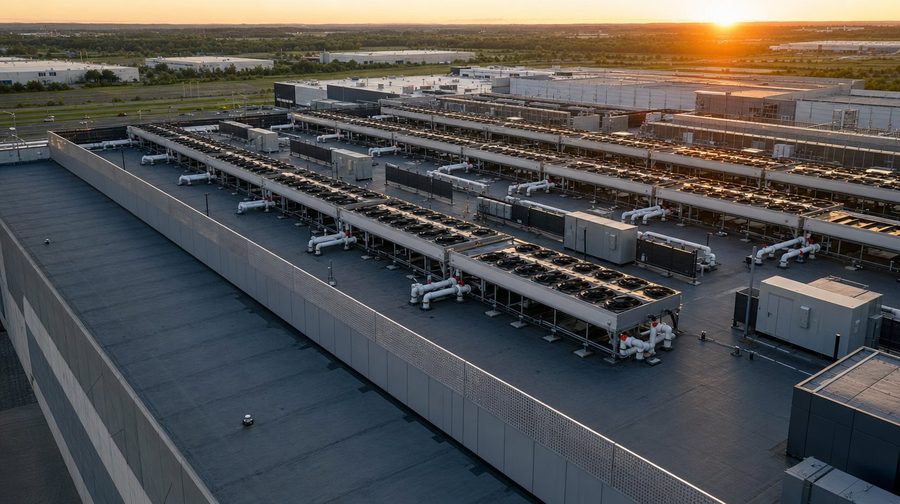
    Rows of cooling units and fans on a flat data center roof at sunset
    Artist’s rendering. Rows of cooling units and fans on a data center roof at sunset, a common source of the steady hum.

    How fast does the sound fade? It depends on how many machines there are.

    Same starting sound, 65 dB at 100 feet. From one unit, it drops under the 55 dB home limit at about 320 feet. From a long row of rooftop fans, it takes about 1,000 feet.69

    • One machine: 6 dB quieter each time the distance doubles
    • Long row of rooftop fans: 3 dB quieter per doubling
    • Loudoun’s 55 dB limit at a home’s property line
    Example: a sound of 65 dB at 100 feet. From one unit it falls 6 dB each time the distance doubles and passes under 55 dB at about 320 feet. From a long row of rooftop fans it falls 3 dB per doubling and passes under 55 dB at about 1,000 feet.405060701002004008001,600~320 ft~1,000 ftFeet from the equipment (each step doubles the distance)Decibels (dBA)
    Example math, not a reading at any real data center. The fade rates are the Federal Highway Administration’s rule of thumb for sound outdoors: 6 dB less per doubling of distance from a single source, 3 dB less from a line of sources. Grass and soft ground take off about 1.5 dB more per doubling; walls, berms, roof parapets and woods change the picture too.69 Loudoun and Fairfax both require data center buildings next to homes to sit at least 200 feet back.70

    More buildings, more sound: each new one can add about 3 dB.

    In Prince William County’s own example, each new data center building is as loud as everything already there, so each one adds 3 dBA: a 40 dBA neighborhood climbs to 49 dBA. If each building added only 40 dB, the neighborhood’s own 40 dB plus the three buildings (four equal sounds) would reach about 46 dBA instead.73

    Decibels (dBA); bars start at 30 dB so the steps show. The county consultants’ model from the March 18, 2025, Board presentation, not measurements at one place. Two equal sounds together are about 3 dB louder than one; that is the rule behind each step.73

    The rules next door: Loudoun, Fairfax and Prince William

    Rule at a home’s property lineLoudounFairfaxPrince William
    Most allowed by day (dBA)5560 (7 a.m. to 10 p.m.)60
    Most allowed at night (dBA)5555 (10 p.m. to 7 a.m.)55
    Limit for the low hum (C-weighted, dBC)None yet; new rules expected spring or summer 2027None73 by day, 68 at night, adopted October 28, 2025
    Noise study requiredBefore construction and 1 to 12 months after openingBefore site plan approval and after construction (rules of September 10, 2024)Under state law (below)
    Backup generator testsNot countedNot counted if 7 a.m. to 9 p.m. and 2 hours a day or lessNot checked
    Statewide since July 1, 2026: before a rezoning or special exception for a new data center expected to use 100 megawatts or more, the applicant must study its sound on homes and schools within 500 feet of the property line (House Bill 153 and Senate Bill 94, signed April 13, 2026).72

    Sources: Loudoun Zoning Ordinance 7.05.03;9 Fairfax Noise Ordinance (Chapter 108.1) and the 2024 data center rules;70 Prince William Noise Ordinance (Chapter 14), passed 5 to 2.71

    On the record

    • Great Oak, near Manassas: the Tanner Way data center complex has 424 rooftop exhaust fans. The county’s acoustician heard a low tone around 90 Hz, most distinct deeper in the neighborhood, likely because roof parapets shield the nearest homes (March 18, 2025).73
    • Prince William tests: none of 19 data center noise complaints tested since May 2026 went over the county’s limits. Supervisors plan to revisit the rules November 17, 2026 (Potomac Local, October 21, 2026).74
    • Loudoun: the county says noise complaints are among the most persistent it gets, often about a steady tone.9
    • Sterling generators: on July 16 and 17, 2026, backup generators at a Sterling data center ran for about 24 hours; the state’s environmental agency said it had no authority to stop them. On July 22, 2026, Loudoun’s Board asked staff for ways to regulate existing generators.75

    Reported, but not verified

    • One-off handheld readings, such as 67.4 dB in a Great Oak yard in 2022. Not county tests.76
    • Company figures: Amazon’s own 2022 study near Great Oak averaged 59.1 dB by day and 52.3 dB at night.76
    • Promises before building: a Chantilly applicant estimated 42 to 50 dBA in normal operation, with homes about 0.4 miles away (January 2024).76

    Hear it outside, at your property line?

    File a zoning complaint online through the county’s LEx system or call Zoning Enforcement at 703-777-0103. Staff can come and measure while it’s happening (weekdays 8:30 a.m. to 5 p.m.).10

    Hear it inside, with windows closed?

    Call the Sheriff’s non-emergency line at 703-777-1021 while it’s happening.10

    Power lines

    New high-voltage lines: 4 approved, 3 waiting at the state, 2 more proposed.

    Takeaway: data centers need power, so the lines and substations follow them. New towers here are usually steel poles 150 to 180 feet tall, and none of the new lines approved so far go underground.11

    New high-voltage lines for Loudoun, October 18, 2026

    • 4Approved by the state
    • 3Waiting at the state
    • 2More proposed, not yet filed
    A simple drawing, not to scale. The purple pulse shows current moving along the wires. New lines here are usually on steel poles 150 to 180 feet tall, carrying 230 or 500 kilovolt power.11 The counts are the 9 projects in the table below, with their status as of October 18, 2026.11
    ProjectWhere (as the county or Dominion describes it)Status, October 18, 2026
    Aspen to GoldenNew 500 and 230 kilovolt line, 2 substationsAshburn areaApproved February 5, 2025; upheld by the Virginia Supreme Court February 19, 2026
    Golden to MarsNew 500 and 230 kilovolt lines, overheadBetween the Golden and Mars substations, eastern LoudounApproved final order June 29, 2026 (Route 3A)
    Mars to Wishing StarNew 500 and 230 kilovolt line, 2 substationsBrambleton and Dulles areaApproved April 2023; under construction
    Evergreen MillsShort 230 kilovolt line in an existing corridorEast of Arcola BoulevardApproved October 2025
    Morrisville to Wishing StarAdded 500 kilovolt line, 4.8 miles in Loudoun, taller poles replace towersExisting corridor ending near ArcolaWaiting written comments due 5 p.m. October 30, 2026
    BECO to FirehouseTwo more 230 kilovolt lines, about 1 mileOff Russell Branch Parkway to Gloucester Parkway and Pacific Boulevard, SterlingWaiting filed May 8, 2026
    Line 514 rebuildAdded 500 and 230 kilovolt lines in the same 250-foot corridorAbout 3.5 miles from the Potomac south to Goose Creek, east of LeesburgWaiting filed May 21, 2026
    Gore to Doubs to Goose Creek138 kilovolt rebuild plus a 500 kilovolt lineAbout 10.5 miles across northern LoudounProposed not yet filed
    Valley Link (765 kilovolt)West Virginia to Frederick County, MarylandNorthwestern LoudounProposed not filed; the Board opposed it as proposed on September 15, 2026
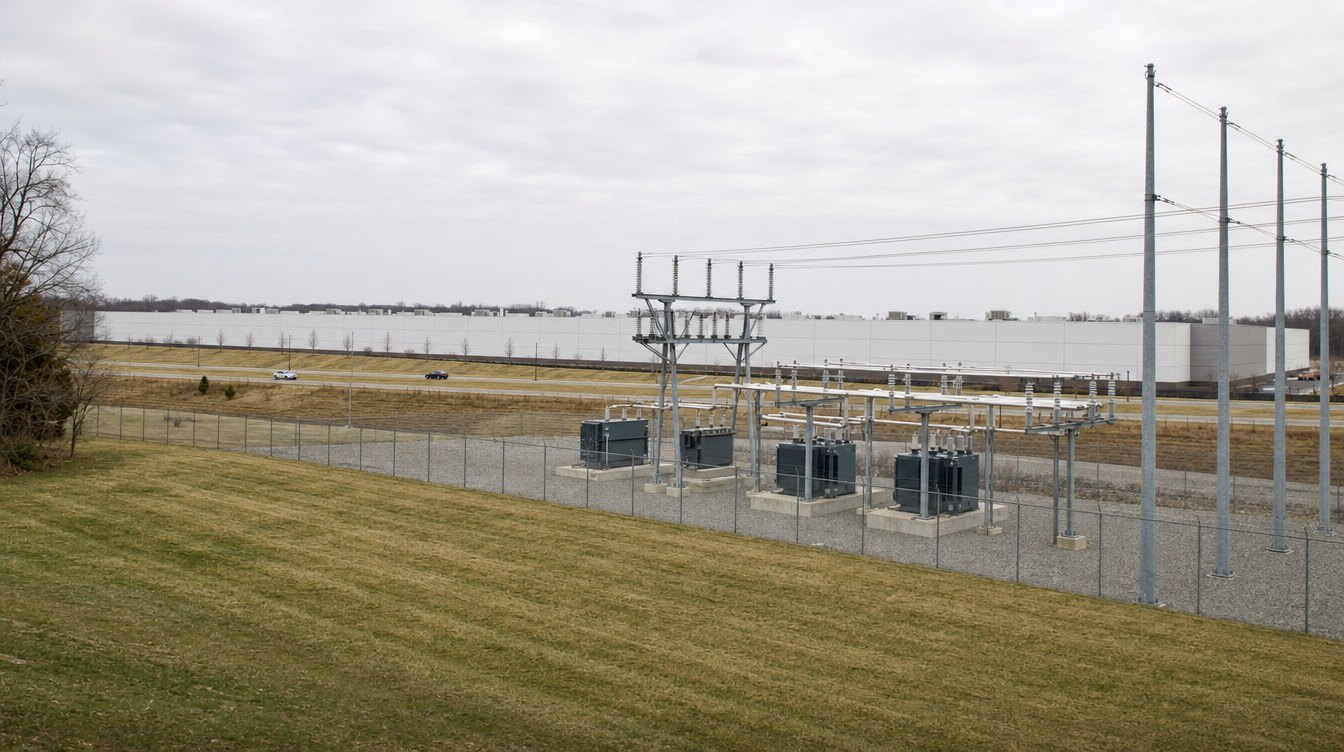
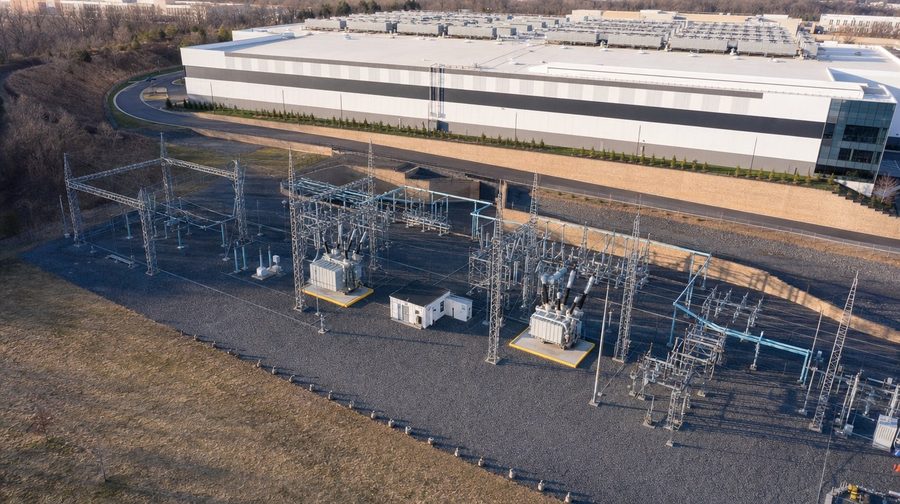
    An electric substation with transformers and steel frames beside a long white data center
    Artist’s rendering. An electric substation beside a data center hall. Every new campus needs one, or a new line to reach one.
    • The state decides routes. The Virginia State Corporation Commission approves power lines; the county can comment but has no formal say, and it asks for lines within 500 feet of a home or school to go underground.11
    • 95 substations existing and proposed in Loudoun as of March 1, 2026.9 Dominion’s GeoVoice map shows its proposed routes for any address.14

    Taxes

    Data centers paid $1.2 billion in fiscal 2026, 39% of the county budget.

    Takeaway: that money is why Loudoun’s home tax rate has fallen every year for a decade. Bills still rose with home values, and the county warns the growth will level off.12

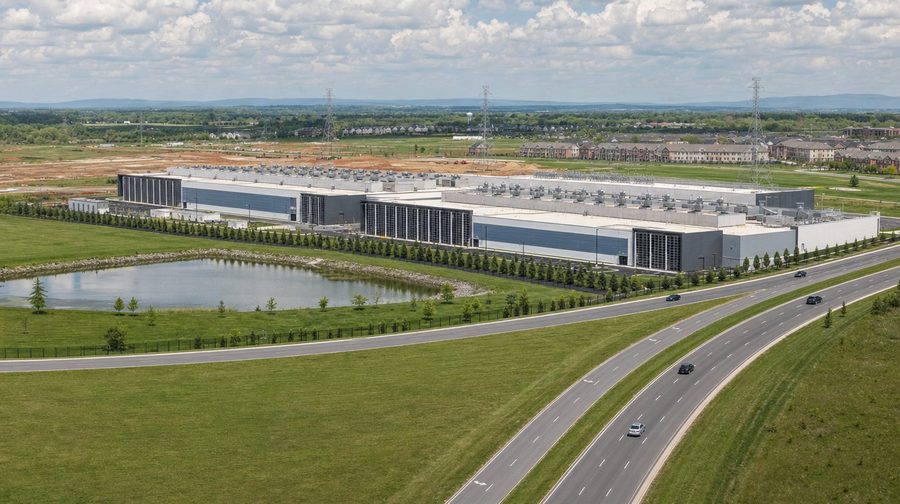
    A long data center campus beside a divided parkway, a pond and green fields
    Artist’s rendering. A data center campus beside a divided parkway in eastern Loudoun.
    • $1.3 billion, 40% of the budget is what the county’s fiscal 2027 budget expects from data centers (adopted April 7, 2026).
    • The average homeowner’s bill still went from about $6,280 to about $6,421 for tax year 2026, because the average home’s assessment rose from $780,100 to $798,400.
    • Cars too: the vehicle tax rate fell to $3.09 per $100 for 2026, with $2.94 planned for 2027.
    • The county’s warning: data center equipment revenue “will plateau in the next five to 10 years,” and the Board may then need to raise home or vehicle tax rates if spending isn’t managed.12

    Home values

    Do data centers lower nearby home prices? The evidence so far is thin and mixed.

    Takeaway: no study shows a big drop across Loudoun, and one finds a small one right next to newly announced projects. What matters most is the single street: the view, the sound and what’s planned next door.

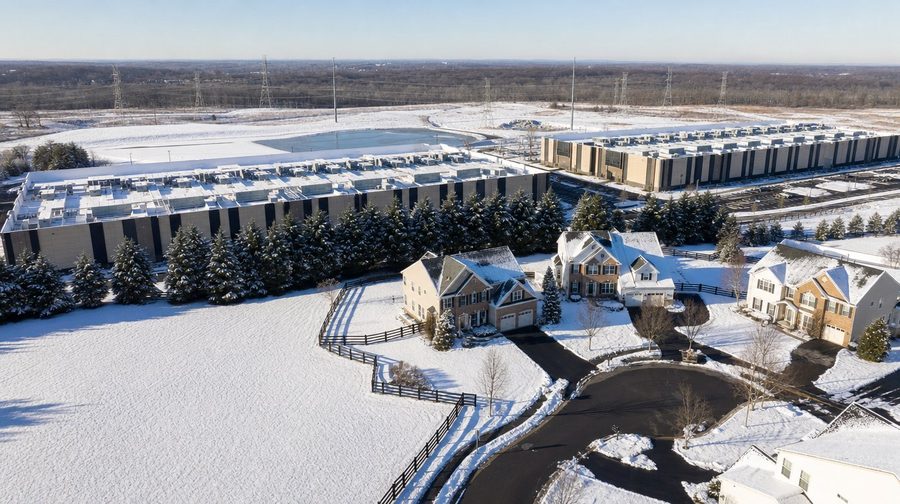
    Snow-covered homes on a cul-de-sac with large data center halls behind a row of evergreens
    Artist’s rendering. Homes on a snowy cul-de-sac with data center halls behind the evergreens.

    Loudoun County, undated page read October 2026

    No visible discount

    Assessments are based on sales, and “prices have not reflected discernable discounts due to adjacency to a data center.” The county adds that could change if buyers had more homes to choose from.13

    George Mason University, August 2025

    No measurable drop on average

    A study of 2023 sales across Northern Virginia found no statistical evidence that being near a data center lowers home values. It is a short research note, not peer reviewed.13

    Working paper, January 2026

    About 2.8% less within half a mile

    Using Loudoun sales, it finds homes within 0.5 miles of an announced data center sold for roughly 2.8% less than similar homes slightly farther away. Not yet peer reviewed.13

    Virginia’s 2024 state study (JLARC) reached the same place: “there is not yet evidence” of an effect on resale values, while some nearby residents report the constant noise affects their well-being.4

    The bigger picture

    Data centers send millions of dollars into land and the county budget, and the cost everyone shares is the power grid.

    Takeaway: the biggest money goes to owners of land that can win data center zoning and power, and to the county budget. The biggest shared risk is the electric bill as the grid grows. New state rules now push more of that cost onto the largest users. None of it is guaranteed: land deals can fall apart, and the county expects its data center tax money to level off.

    What an acre sold for, or was offered for

    Loudoun and Prince William counties, 2023 to 2026, dollars per acre

    • Similar land, not zoned for data centersLoudoun County estimate, undated page read October 18, 2026

      $300,000 to $500,00048
    • Digital Gateway contracts, Prince WilliamContract prices from 2023. The rezoning was later voided, so these sales did not close.

      $315,000 to $900,00053
    • Devlin Tech Park, Bristow, Prince WilliamAmazon, about 189 acres for $700 million, fall 2025

      about $3.7 million51
    • Average data center land sale, LoudounCounty assessment report, February 2026

      $3.76 million49
    • Twin Creeks, east of Leesburg97 acres for $615 million, November 3, 2025, a county record

      about $6.3 million50
    Bar length shows price per acre. The longest bar is about $6.3 million. Gray bars are land that did not sell as data center land. Per-acre figures for Devlin Tech Park and Twin Creeks are our division of the reported price by the reported acres. The county says data center land prices depend on size, yield, whether the land is part of an assemblage, and how close it is to power, fiber and water.49

    Opportunities

    • Land worth many times more. In Loudoun County, parcels where data center development is potentially permitted can sell for between $2 million and $6 million per acre. Land with similar characteristics that is not zoned for data center development could sell for $300,000 to $500,000 per acre.48
    • A tenfold jump in four years. The Twin Creeks land east of Leesburg sold for $615 million on November 3, 2025. The seller had spent $57 million to acquire the assemblage along Cochran Mill Road four years earlier.50
    • Home land turned data center land. A homebuilder first planned 516 single-family homes at Devlin Tech Park in Bristow, then won county approval in late 2023 to switch to data centers. Amazon bought 189 of its 270 acres for $700 million in fall 2025.51
    • Jobs, mostly in the building trades. Loudoun counts more than 17,000 direct and indirect data center-related jobs as of March 1, 2026.54 Statewide, 59,000 of about 74,000 yearly jobs come from building data centers, not running them (JLARC, 2024).55
    • A lower home tax rate. Data center taxes are the main reason Loudoun’s real estate rate fell every year for a decade. The numbers are in Taxes.

    Risks

    • Electric bills. Virginia’s 2024 state study found a typical residential customer of Dominion Energy could experience generation- and transmission-related costs increasing by an estimated $14 to $37 monthly in constant (or real) dollars by 2040, depending on how much data center demand gets built.55 Separately, the SCC’s November 25, 2025 rate order raised a typical home bill by $11.24 a month in 2026 and $2.36 in 2027, for all of Dominion’s costs, not only data centers.56
    • Deals can collapse. More than 100 Prince William landowners signed to sell to data center buyers at the Digital Gateway. Courts voided the rezoning, and on July 29, 2026 the land went back to its earlier zoning.52 While they waited, one owner’s 131-acre assessment rose from $3.2 million to $50.1 million.53
    • A slowdown or overbuilding. If demand for AI computing cools, grid built for it could be left for others to pay. Dominion says its new rules for the biggest users from January 2027 (14-year contracts, collateral, minimum charges) are designed to minimize both cross-rate class subsidies and stranded costs.57 For now, space is scarce: Northern Virginia data center vacancy was 0.24% in the first half of 2026 (CBRE).63
    • Water. On an average day, data centers in Loudoun account for 9% of total potable water use. Loudoun Water also sent more than 750 million gallons of reclaimed water to about 40 customers in 2025.61
    • Lines, substations and noise. Nine high-voltage line projects are approved, waiting or proposed in Loudoun. See Power lines and Noise.

    The long view

    • Power sets the pace. Dominion had about 53.8 gigawatts of data center demand in some stage of contracting in July 2026, with 12 gigawatts under signed service agreements.62 The utility says it will take about seven years for the customers in the queue to get power (reported October 16, 2026).64
    • The tax money levels off. The county expects data center equipment revenue to plateau in 5 to 10 years, and says home or car tax rates may then need to rise if spending isn’t managed. See Taxes.
    • Older buildings face a choice. The newest AI chips need far more power and cooling per rack. Industry reporting in July 2026 found supporting AI’s skyrocketing densities would typically require a comprehensive redesign of the hall’s entire electrical infrastructure. Expect refits, rebuilds or new uses on older campuses over the next 10 to 20 years.68
    • Growth is moving outward. Stafford supervisors approved a 590,000-square-foot campus on about 121 acres on October 8, 2026.65 Microsoft filed in September 2026 to build two buildings on its Gainesville land in Prince William.66 An environmental group counts more than 10 million square feet approved in Culpeper.65
    • More limits are possible. Loudoun’s Board votes October 20, 2026 on pausing data center votes (see The rules). A Loudoun state senator recommends a three-year moratorium for the January 2027 session.64

    What most people don’t see

    1. Most of the tax is on the computers, not the buildings. Loudoun’s adopted fiscal 2027 budget expects about $1.3 billion in local taxes from data centers: $879 million from personal property taxes on computer equipment and $417.7 million from real property taxes on the buildings and land. So about two-thirds of it depends on servers being installed and replaced (our arithmetic).60
    2. They use few county services. In April 2025 the county’s economic development director said data centers return $26 in revenue for every $1 the county spends on services to them. That is his estimate, not an audit.67
    3. Most of the jobs are construction jobs. JLARC’s 2024 study counted 59,000 jobs a year from building data centers in Virginia and 15,000 from running them, of which 4,400 were direct data center jobs.55
    4. The tax roll can trail the market by 10 times. Before Twin Creeks sold for $615 million in November 2025, the assemblage was on the tax rolls at a value of $59.8 million, less than 10% of the market sale.50
    5. Big users are being made to pay more of their own grid. From January 1, 2027, customers using 25 megawatts or more move into their own rate class.56 On July 31, 2026 the SCC also ordered that new large users pay for the substations and lines built just to connect them, and it cut a planned home increase in Dominion’s transmission charge from $2.90 per month to $0.94 per month.58
    6. The state now taxes their electricity. Beginning July 1, 2026, each data center operator must pay an electricity consumption tax of $0.011 per kWh of electricity consumed at each Virginia data center each month. The state kept its sales tax exemption on data center equipment.59

    Who wins, who pays

    WhoWhat they gainWhat they carry
    Owners of land that can get data center zoning and powerSale prices of $2 million to $6 million an acre in Loudoun48Years of waiting, court risk, and higher assessments while a rezoning is pending5253
    Loudoun homeowners overallA real estate tax rate that fell every year for a decade (Taxes)Bills still rose with assessments, and the county warns rates may need to rise once the revenue plateaus (Taxes)
    Homes beside new halls, lines and substationsThe same lower tax rate as everyone elseViews, a steady hum, construction and taller poles (Noise, Power lines). Price evidence is mixed (Home values)
    Building tradesMost of the industry’s jobs: 59,000 a year in Virginia from construction55Work follows new projects, and new projects are spreading to other counties65
    Every Dominion customer in VirginiaJLARC found data centers pay their full cost of service today, and new rules shift more grid cost to them5558$14 to $37 more a month by 2040 for generation and transmission, in today’s dollars (JLARC estimate)55

    Own land, own a home near a planned project, or want to buy near one?

    The numbers above are county-wide. For a single property, the street decides: what the land next door is zoned for, what’s already approved, where the next power line is planned, and whether power can reach a site at all. Send me the address and I’ll check it with you, in English or Arabic.

    This section is general information, not investment, legal or tax advice. Prices, rules and court cases change. Talk to your own lawyer, tax adviser or appraiser before you act.

    Questions

    What people ask about data centers in Loudoun County.

    How many data centers are in Loudoun County?

    Loudoun County counts about 233 data center buildings built or under construction, about 56.5 million square feet, as of March 1, 2026. Another 116 buildings (35.7 million square feet) are approved but have no building permit yet, and 21 applications (20.7 million square feet) are waiting for a Board vote. The county says it does not expect every approved project to be built.

    Where are the data centers in Loudoun County?

    Almost all are in eastern Loudoun, between Leesburg, Ashburn, Sterling and Dulles Airport. By the county’s planning areas, about 64% of the built square footage is in the Ashburn area, 17.5% in Dulles, 9.7% in Sterling and 8.8% in Leesburg (county parcel data as of March 1, 2026). The rural zoning that covers about two-thirds of the county does not allow data centers.

    How do I find out if there is a data center near a house in Loudoun?

    Open Loudoun County’s free "Existing & Potential Data Centers" map and search the address. Look about half a mile around it for built and approved parcels, turn on "In Legislative Process" and "Substations" for pending applications, turn on "Zoning Districts Allowing Data Centers by SPEX" to see land where a future application could be filed, and check Dominion Energy’s GeoVoice map for proposed power lines.

    How close to homes can a data center be built in Loudoun?

    When a data center property is next to homes, approved home plans or land zoned for homes, Loudoun’s zoning ordinance requires the buildings to be set back at least 200 feet from the shared property line, with berms, evergreen screening and sound walls around outdoor equipment. Since March 18, 2025, every new data center also needs a special exception: a public hearing and a Board vote.

    How loud can a data center be next to my house?

    Loudoun’s limit is 55 A-weighted decibels at a home’s property line, the same day and night. Backup generators running in an emergency, generator testing, and substations and power lines are exempt. The county says decibel readings generally do not capture low-frequency noise or steady tones; rules for those are expected in spring or summer 2027.

    Do data centers lower home values in Loudoun?

    The evidence is thin and mixed. Loudoun County says sales prices have not shown a discount for homes next to data centers, and a George Mason University note on 2023 sales found no statistical evidence of lower values. A January 2026 working paper using Loudoun sales found homes within half a mile of a newly announced data center sold for about 2.8% less. Neither study is peer reviewed.

    Do data centers lower property taxes in Loudoun?

    Data centers paid $1.2 billion in property taxes in fiscal 2026, 39% of the county budget, and the county credits them for lowering the real estate tax rate from $1.145 per $100 of assessed value in 2016 to $0.805 in 2026. Bills still rose as home values went up, and the county warns data center revenue growth will level off in five to 10 years.

    Can a data center be built in western Loudoun?

    Not under current zoning. Loudoun County says data centers stand only on land zoned for offices and industry, and the rural zoning that covers about two-thirds of the county, mostly in the west, has never allowed them. Power lines are different: two proposed high-voltage lines would cross northern and northwestern Loudoun.

    Your next step

    Looking at a house in eastern Loudoun? Send me the address.

    I’ll check it against the county’s data center map, the power line plans and what’s zoned next door. I answer in English or Arabic.

    اقرأ هذه الصفحة كاملة بالعربية ←

    وكيلك العقاري الموثوق في شمال فرجينيا.

    Keep exploring

    More on living in eastern Loudoun.

    Keep reading