

How to Make a Noisy Home QuieterHighways, planes and data centers: what works, what is a myth, what it costs
Pick your noise. See the fixes that work for it, ranked, with how many decibels each one cuts and what it costs.
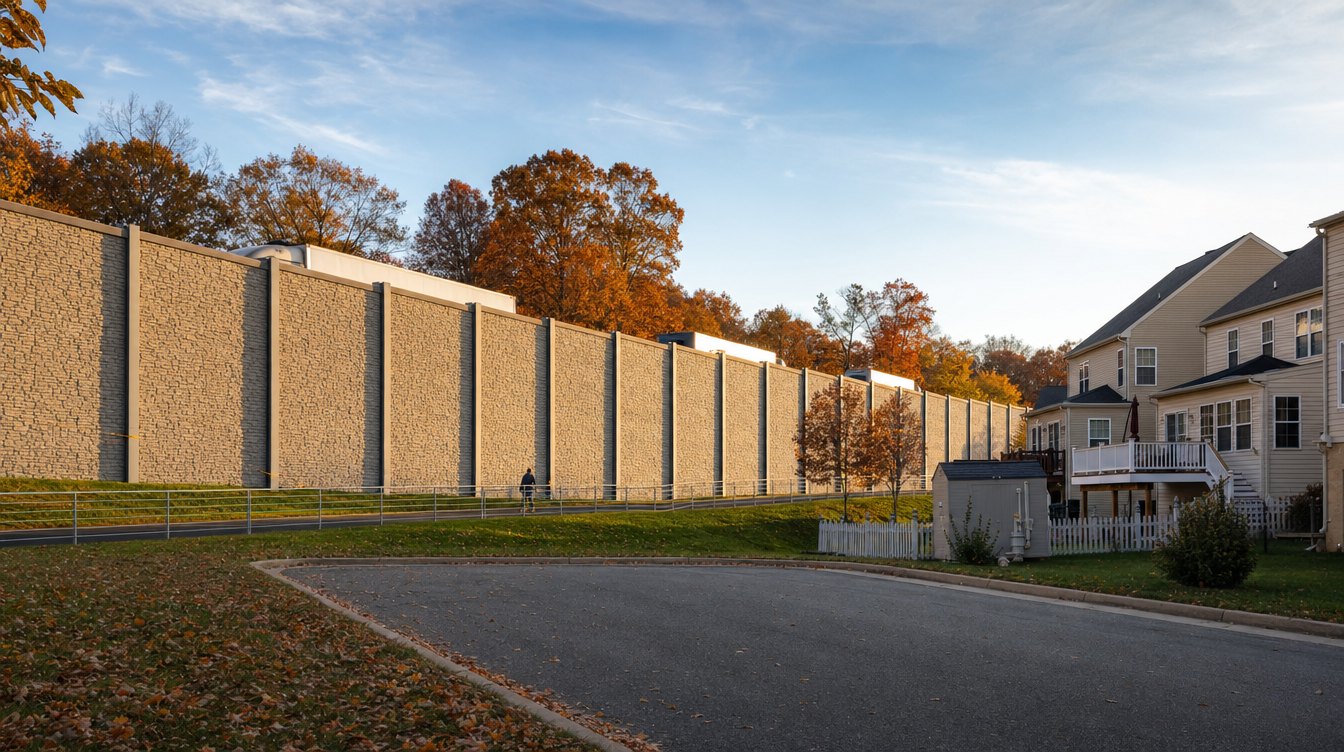
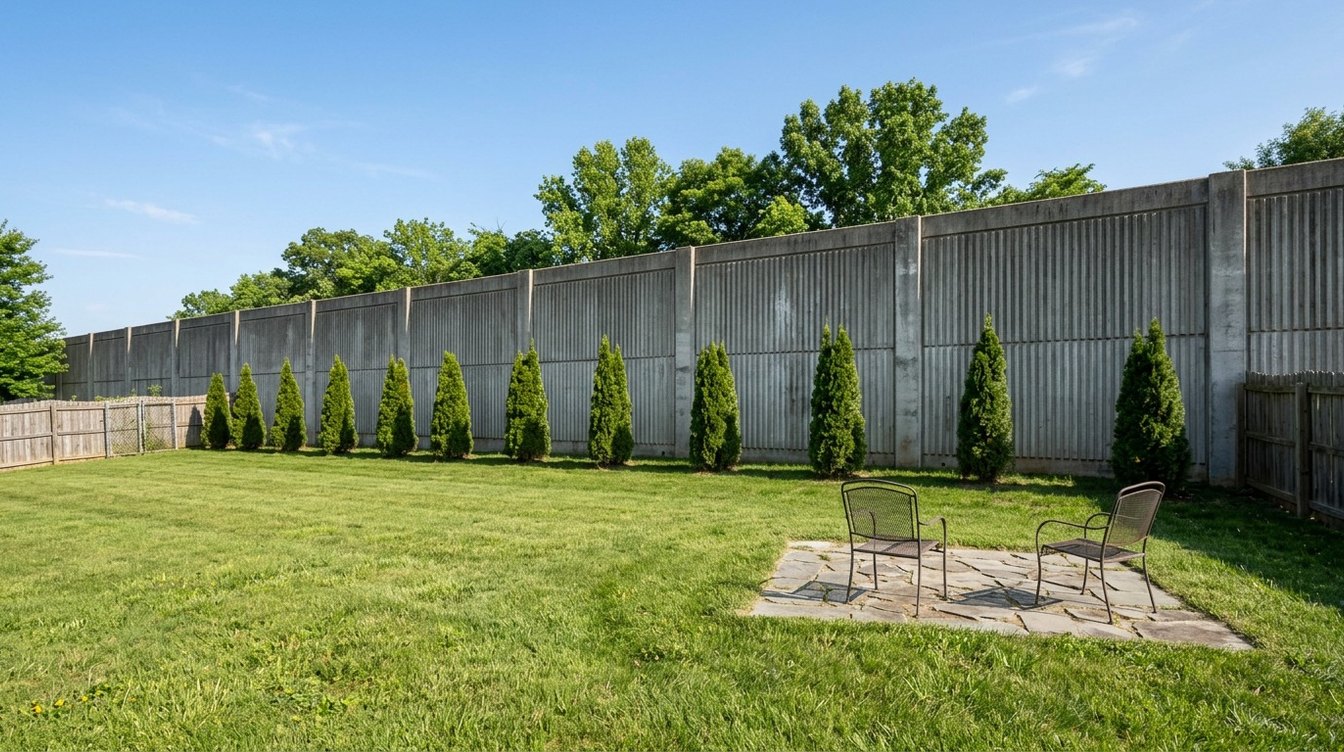
A sound wall behind townhouse decks· Northern Virginia
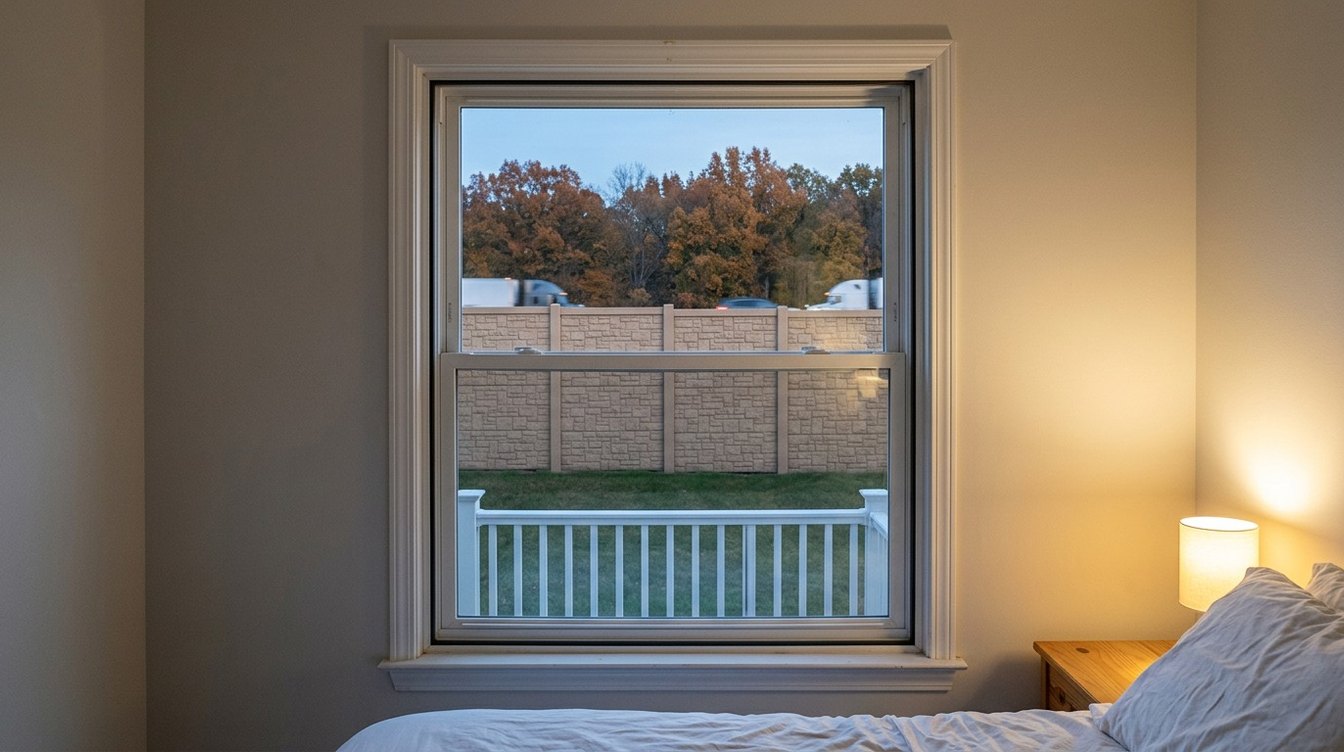
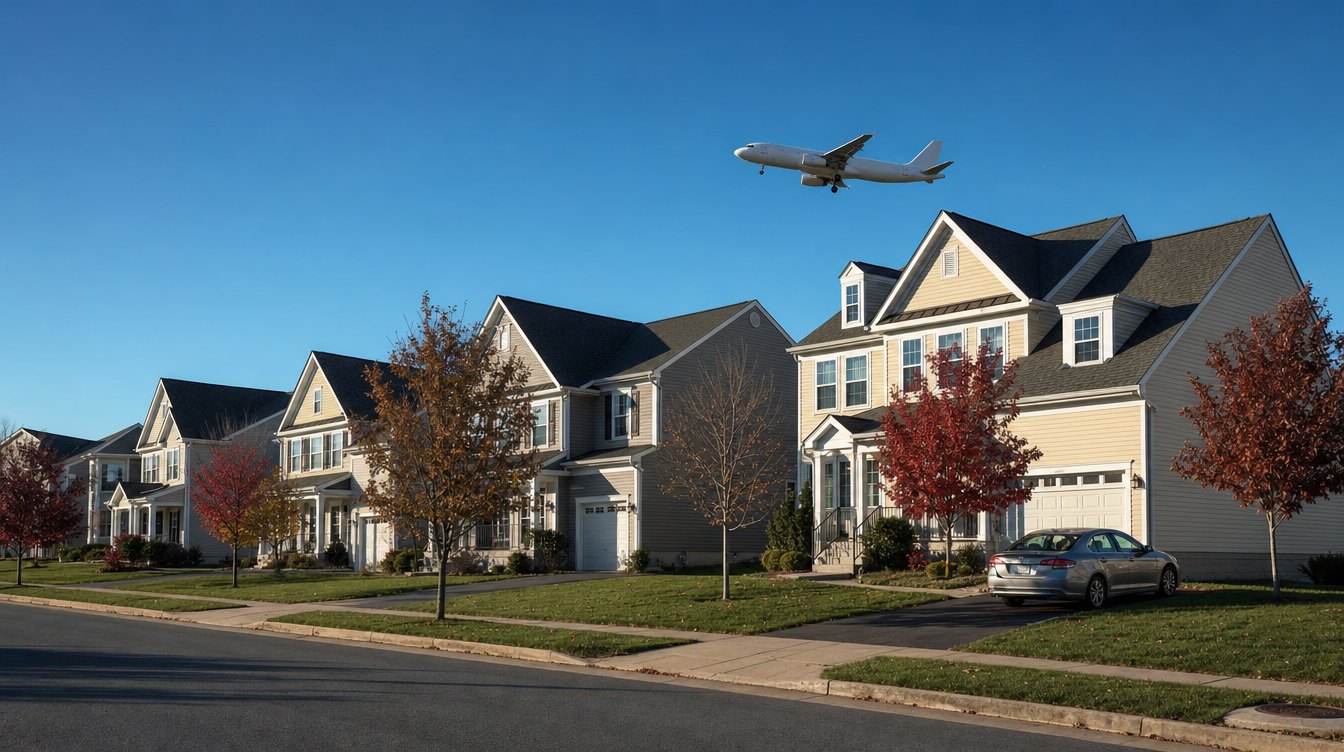
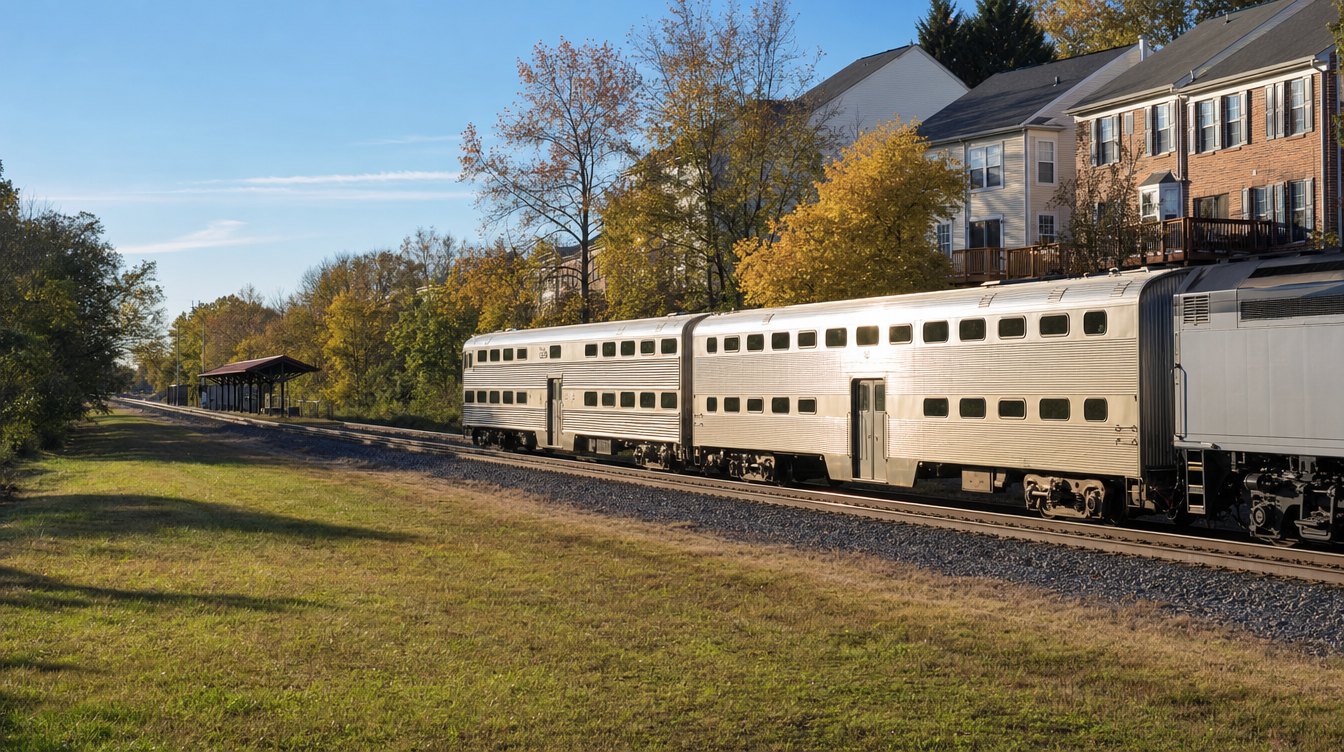
Pictures: artist’s renderings of real kinds of places in Northern Virginia.
Your best fixes
Pick your noise. Get your fixes, ranked.
1. What is the noise?
2. Where does it bother you?
3. Do you own or rent?
Three taps. The fixes come back in the order that does the most for that noise, with the decibels each one cuts and what kind of number it is: a lab test, a field test in real homes, a seller’s test or official guidance.
Updated October 22, 202629 sources: FHWA, FAA, VDOT, NRC Canada, countiesAbout an 8-minute read
Quick answer
Seal the gaps first, then add a second layer of glass with a wide air gap. That is where most of the quiet per dollar is: a tiny gap can cost a wall 10 dB,7 and a second window 3 inches inside an old one raised it from OITC 23 to 30 in lab tests.2 Triple pane barely beats double pane.3 Outside, a solid wall cuts about 5 dB once it hides the road, but trees need a dense belt about 100 feet deep to do the same.15 Data center hum is the hardest: low pitches pass through light walls, so weight and airtightness matter most, and the real fix is at the source.6 Noise-cancelling windows exist only in labs so far.22

Quieting a home, in six numbers
FHWA, FAA, NRC Canada, USDA; checked October 22, 2026
dB: decibels. STC and OITC: lab ratings for how much sound a window, door or wall blocks; higher is quieter. OITC weighs the low rumble of traffic and planes more.
The problem
Not all noise is the same. Low hum walks through walls.
A wall or window blocks about 6 dB more each time its weight doubles, and about 6 dB less each time the pitch halves.5 So the hiss of tires stops at the glass, while the rumble of trucks, the roar of a jet and the steady hum of data center fans get through.6
High hiss: almost goneLow hum: still there
Which fix works at which pitch
Each bar shows the pitches a rating measures or a fix works on, from low rumble (left) to high hiss (right). Log scale.
Where noise gets in
Noise takes the easiest way in. Find it first.
A wall is usually not the weak spot. Windows, doors and openings are: National Research Council Canada says the sound insulation of walls is usually limited by the windows, doors and openings in them.2
Before: six ways noise gets in. After: about 12 dB quieter, windows shut.
- 1Windows
The biggest path for most homes. Older single-pane windows rate about STC 25.8
A second window inside, or sound-rated glass - 2Doors
Hollow-core doors rate about STC 20 to 25, and gaps ruin even a good door.7
Solid core, sealed on all four edges - 3Vents
Kitchen and bath fans are open ducts to the outside.2
Baffled or lined ducts, a tight damper - 4Attic and roof
The path for plane noise from above; chimneys too.29
Deep attic insulation, a closed-up chimney - 5Thin walls
Vinyl siding on wood studs rates about OITC 25; brick about 40.2
An extra layer of drywall on the noisy side - 6Gaps and cracks
Small, but 0.1% open can cost a wall 10 dB.7
Acoustic caulk and new weatherstripping
The fixes, one by one
Start cheap and inside. Work out to the big jobs.
Airport programs learned this the hard way: in an early FAA pilot, homes that got only sealing and vent baffles measured about 4 dB quieter; homes that also got windows, doors, insulation and air conditioning measured about 12 dB quieter.12 Sealing is the start, not the finish.
Read each fix in detail, with its source
1. Seal the gaps first
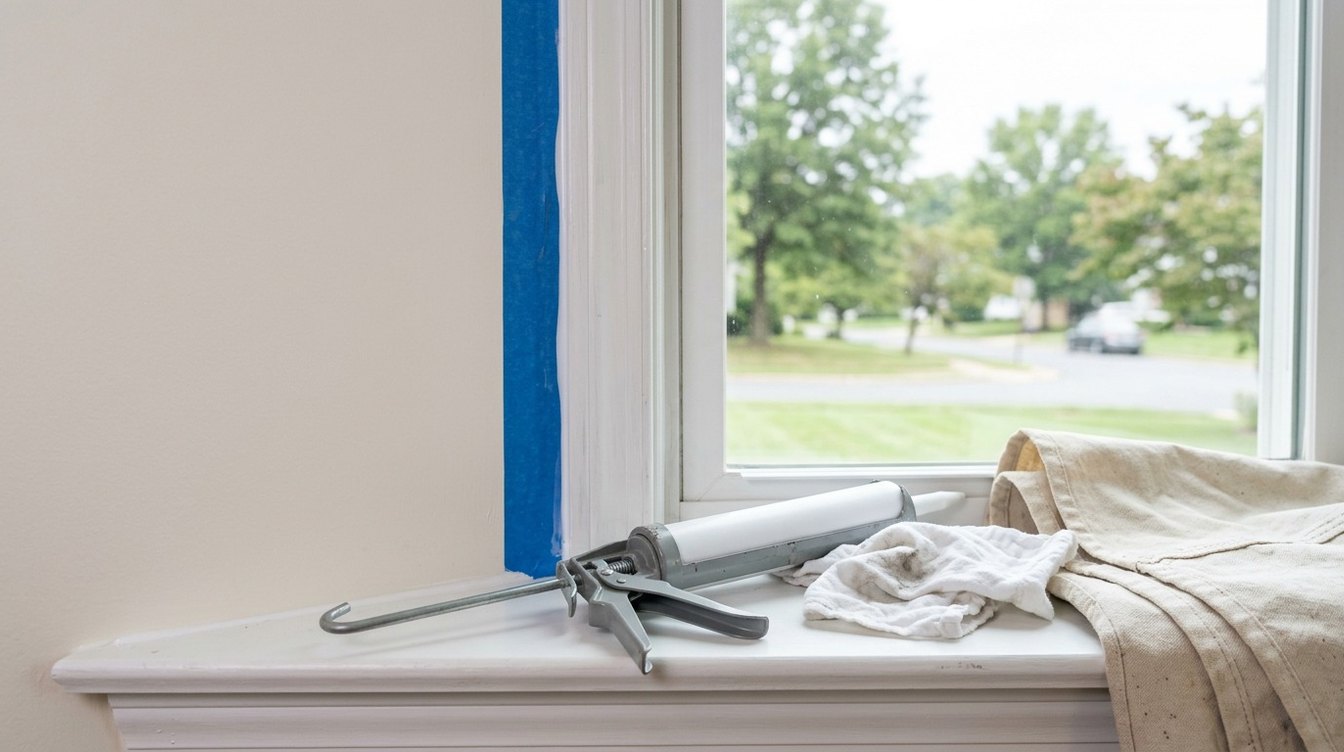
Acoustic caulk around window and door trim, new weatherstripping, door sweeps, foam gaskets behind outlets on outside walls.
How much quieter: A wall that blocks 40 dB blocks only 30 dB with 0.1% of it open. A door rated STC 52 acts like STC 21 with 1/8 inch gaps.7
Cost: Low: hardware-store supplies. Who: Do it yourself.
2. Add a second window inside
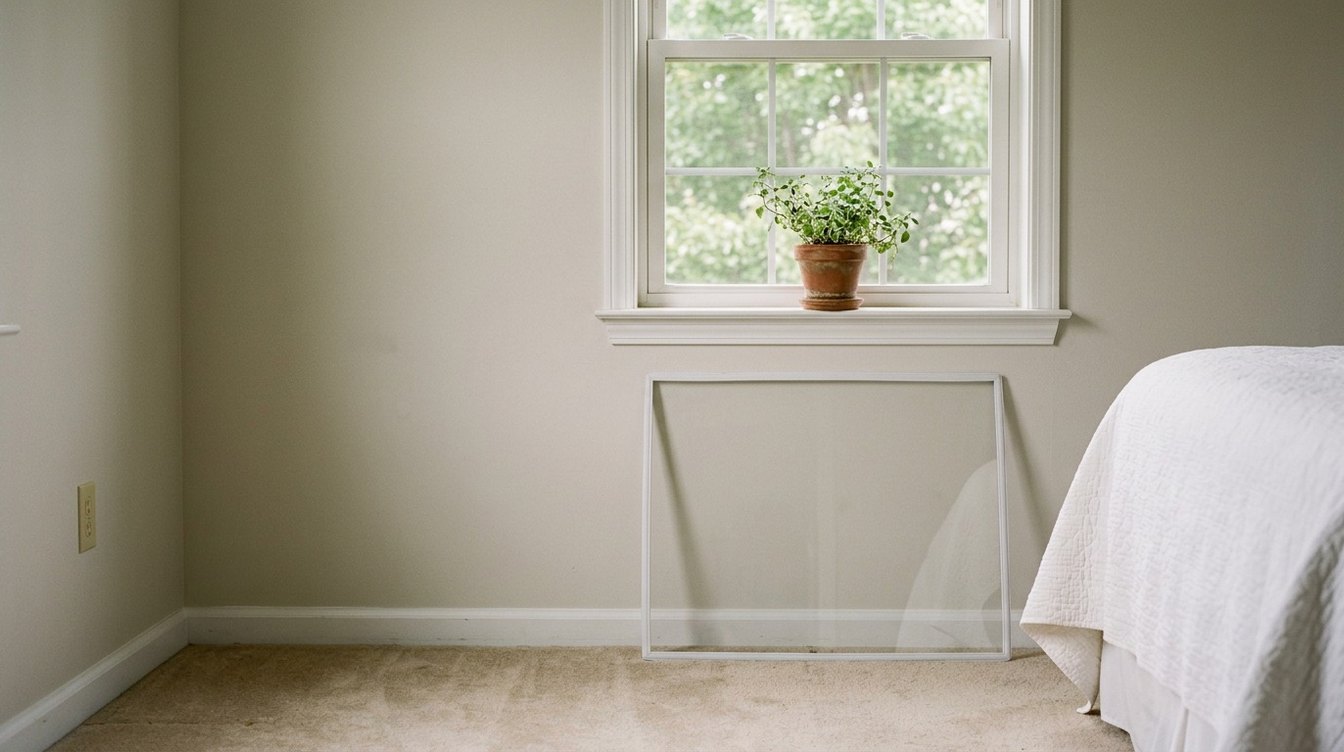
An interior insert or secondary window a few inches inside the one you have. The air gap between them does the work.
How much quieter: NRC lab: a second window with a 3 inch (76 mm) gap took a double-pane window from OITC 23 to OITC 30. One insert maker’s test: STC 24 to 37.2, 8
Cost: About $60 to $200 a window for exterior storm windows; about $324 for one 30 by 50 inch interior insert. Who: You or a pro.
3. Sound-rated replacement windows
Ask for the OITC number and the ASTM E90 test report. Thicker glass, a wider gap and laminated glass beat a third pane.
How much quieter: Glass only: 3 mm panes with a 13 mm gap rate OITC 26; 6 mm panes with a 19.5 mm gap rate OITC 32. Triple pane rates about the same as double.9, 3, 11
Cost: About $450 to $1,200 a window, average about $800 (general estimate). Who: Pro install.
4. Solid doors with sealed edges
Swap hollow-core outside doors, add a storm door, then seal all four edges. A solid bedroom door helps only if its gaps are closed too.
How much quieter: Hollow-core doors rate about STC 20 to 25. Gaps can cut a good door to STC 21.7
Cost: Varies: get quotes. Who: You or a pro.
5. Quiet the vents and chimney
Baffled or lined kitchen and bath fan ducts, a tight chimney damper. These are open holes to the outside.
How much quieter: NRC: untreated kitchen and bath vents can seriously limit everything else you do. Roof vents in an R40 attic cost only 1 to 2 dB.2, 29
Cost: Varies: get quotes. Who: Pro.
6. Central air, so windows stay shut
Every number on this page is with windows closed. That is why airport programs add air conditioning.
How much quieter: FAA programs judge homes with windows closed and add central air to the package.13
Cost: Varies: get quotes. Who: Pro.
7. Add weight to the walls
An extra layer of drywall with a damping layer on the noisy side. Heavy cladding (brick) is the gold standard.
How much quieter: NRC: a wood-stud wall with vinyl siding rates about OITC 25; the same wall with brick about OITC 40.2, 5
Cost: Varies: get quotes. Who: Pro.
8. Earplugs at night
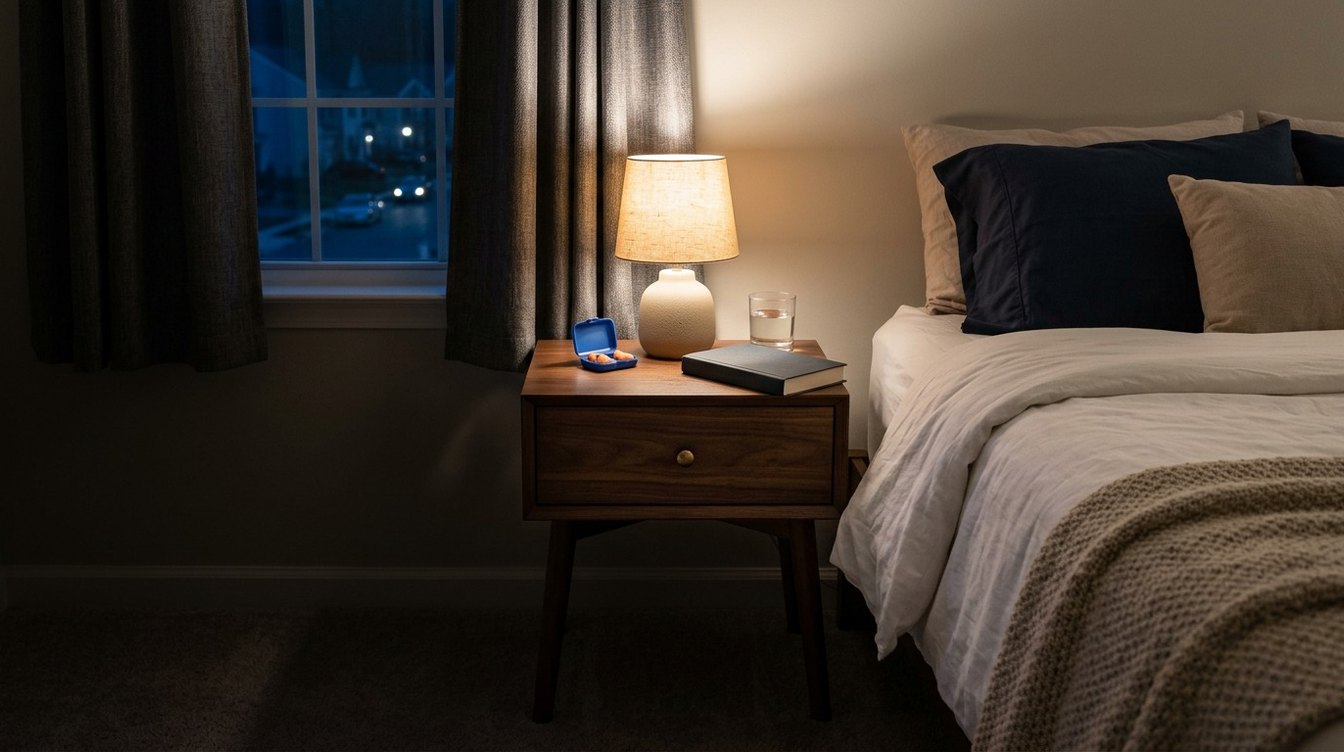
Foam or silicone earplugs. Cheap, and the best-tested way to protect sleep.
How much quieter: A 2026 sleep lab trial: earplugs protected sleep best; continuous pink noise cut REM sleep.27
Cost: Low. Who: Do it yourself.
9. Sleep on the quiet side
Move the bedroom to the side of the house away from the road or the hum. Closets and a hallway between you and the noise help.
How much quieter: Distance and the house itself shield you. No home study gives a decibel number.
Cost: Free. Who: Do it yourself.
Two panes
OITC 29Regular double-pane glass, maker’s rating.9
A second window inside
OITC 23 → 30An old double-pane window plus a second one 3 inches inside it, NRC lab test.2
| Fix | Highway | Planes | Data center hum | Cost | Renters |
|---|---|---|---|---|---|
| Seal the gaps first | Best | Best | Good | Low: hardware-store supplies | Yes |
| Add a second window inside | Best | Best | Good | About $60 to $200 a window for exterior storm windows; about $324 for one 30 by 50 inch interior insert | Yes |
| Sound-rated replacement windows | Best | Best | A little | About $450 to $1,200 a window, average about $800 (general estimate) | No |
| Solid doors with sealed edges | Good | Good | A little | Varies: get quotes | No |
| Quiet the vents and chimney | Good | Best | A little | Varies: get quotes | No |
| Central air, so windows stay shut | Good | Good | Good | Varies: get quotes | No |
| Add weight to the walls | Good | Good | Best | Varies: get quotes | No |
| Earplugs at night | Best | Best | Best | Low | Yes |
| Sleep on the quiet side | Good | A little | Good | Free | Yes |
| A solid wall or berm outside | Best | None | A little | Wood privacy fence about $33 to $53 a linear foot | No |
| Trees and shrubs | A little | None | None | Varies | No |
| White or pink noise | A little | A little | A little | Low | Yes |
Fit ratings are our summary of the sources on this page; costs are national estimates, not quotes, and sound-rated products can cost more. We name no contractors or installers: get several quotes and ask each for the product’s test report.
Outside: walls vs trees
A wall works if it hides the road. Trees mostly hide the view.
A barrier cuts about 5 dB once it breaks the line of sight, and about 1.5 dB more for each extra meter of height. It has to be solid, long and gap-free, and it helps most within about 200 feet of the road.15
A solid wall that hides the road
Masonry, solid wood or a berm, 4 lb per square foot or more, no gaps at the bottom or between boards.15 A wood privacy fence costs about $33 to $53 a linear foot.17
Myth: one row of trees
If you can see light through it, it is not cutting noise. Trees still help how noise feels: out of sight, out of mind.15, 16
A dense belt, 100 feet deep
Evergreens at least 15 feet tall, dense enough to block the view, about 100 feet deep. Few yards have room for it.15
Fence height limits
- Fairfax: 7 feet in side and rear yards; a solid wall up to 8 feet in a rear yard that backs to a major road.
- Loudoun: 8 feet outside front yards; towns set their own (Leesburg 7).
- Prince William: 6 feet, taller only with a matching setback; zoning approval for every new fence.
HOA rules can be stricter.17
Programs and county rules
Who can help, for each kind of noise.
Some noise is someone else’s job to fix. Here is what each agency does, and what it does not.
Highway: VDOT noise walls
No walls for existing roads. VDOT does not build retrofit walls. It studies walls only when a road is built or widened.18
- A home counts as impacted at 66 dB(A), or with a 10 dB rise.
- A wall must cut 5 dB for at least half of the impacted homes and reach 7 dB for at least one.
- At most 1,600 square feet of wall per home that benefits.
- The homes that benefit vote; the majority decides.
To check a road near you, find the project on VDOT’s site and open its noise report.
Planes: FAA sound insulation
FAA-funded programs cover homes inside an airport’s DNL 65 line, with 45 dB or more inside with windows closed, built before October 1, 1998. The airport applies; owners do not apply directly.13
Dulles and Reagan National: our research found no MWAA program that sound insulates homes. Call MWAA’s Noise Information Office, 703-417-1204, before you buy, and file complaints at 703-572-8215 (Dulles) or 703-417-8020 (National).14
Hum: county noise rules
Loudoun: data center sound may not top 55 dBA at a home’s property line. There is no tonal rule yet; stricter standards are expected in 2027. Report outdoor noise through Zoning Enforcement (LEx), indoor noise with windows shut to the Sheriff’s non-emergency line, 703-777-1021, while it is happening.19
Prince William: steady tonal noise is enforced since May 1, 2026, with fines first. Report through PWC 311 or 703-792-6500; the county aims to test within 48 to 72 hours.20
New technology
Is there noise cancelling for a whole house?
Not yet. Noise cancelling plays a mirror image of a sound so the two cancel. It works on steady low tones, but only in a small spot: more than 10 dB only within about a tenth of a wavelength of the microphone, about 13 inches for a 100 Hz hum.21 That is why it works inside headphones and cars, and why a room is so hard. Here is where each idea stands in 2026.
On sale now
Vacuum insulated glass (VIG)
Super-thin vacuum between two panes, sold for energy savings. For sound it rates OITC 30 versus 29 for regular double pane: about one point.9
Acoustic laminated glass
A special plastic layer in the glass adds up to 10 dB over regular laminated glass, but mostly for high pitches (1,000 to 4,000 Hz): great for tire hiss and voices, weak on hum.10
Working, at the source
Noise cancelling built into machines
Cars cancel road rumble today (Hyundai reported 3 dB in 2019). On a power transformer, field tests cut its 120 and 240 Hz hum by 15 dBA. For data center fans and generators we found patents, not installations.25
Still in the lab
Noise-cancelling windows
Small speakers across an open window cut traffic noise by up to 10 dB in a lab mock room (NTU Singapore, 2020), for sounds above about 300 Hz; a closed window still did better. In a real apartment, a 2024 test got 2.9 to 4.8 dB.22, 23
Open rings and vibrating glass
A 3D-printed open ring blocked 94% of one tuned pitch in a pipe (Boston University, 2019); glass shaken by tiny motors cut 10 to 15 dB up to 600 Hz in tests. Neither is a home product.26
Sleep
At night: earplugs beat sound machines.
The World Health Organization sets night noise outside the home below 45 dB for road traffic and 40 dB for aircraft.27 Until the house gets there, protect the bedroom.
Earplugs: best tested
In a 2026 University of Pennsylvania sleep lab trial, earplugs protected sleep best.27
White or pink noise: use with care
A 2021 review rated the evidence that steady noise helps sleep as very low quality, and the 2026 trial found pink noise reduced REM sleep.27
Move the bed
Sleep on the side of the house away from the road or the hum, with a closet or hall between you and it. Free, and it works with everything else.
Before you buy
Six checks before an offer on a home near noise.
Fixing noise after you buy costs money; knowing about it before costs a little time.
- Check the address on How loud is my street? for road, rail and plane noise, the airport noise map for official zones, and the data center map for what is built or planned nearby.
- Visit twice, once at rush hour and once late at night, windows open and shut. Stand in the bedrooms.
- Ask about the windows: age, glass and any OITC or STC rating; look for inserts or storm windows.
- Look at the road: a planned widening can bring a VDOT noise study, and sometimes a wall.18
- Read the papers: in Loudoun, homes in the airport overlay carry a noise notice in deeds and HOA documents.
- Think resale: the next buyer will hear the same noise. Price it in now.
Questions
What people ask about quieting a noisy home.
Do new windows stop highway noise?
They help, but the glass type matters more than the number of panes. Thicker glass and a wider air gap raise the rating (3 mm panes with a 13 mm gap rate OITC 26, 6 mm panes with a 19.5 mm gap OITC 32), and triple pane rates about the same as double pane. A second window inside the one you have, with a 3 inch gap, raised a window from OITC 23 to 30 in National Research Council Canada tests, often for less money than replacement. Seal the gaps first either way.
Do trees block highway noise?
Barely. The Federal Highway Administration says a planting must be at least 15 feet tall, 100 feet deep and dense enough to block the view to cut up to 5 dB. A single row of trees gives no noticeable drop. Trees do hide the road, and that makes the noise feel less annoying.
How do I block low-frequency hum from a data center?
Hum is the hardest noise to stop because low pitches pass through light walls and glass. What helps most: seal every air leak, add weight (an extra layer of drywall, heavier glass), and a second window with a wide air gap. Earplugs protect sleep. Light fences, trees, foam panels and curtains do little. The real fix is at the source, so report it: Loudoun limits data center sound to 55 dBA at a home's property line, and Prince William enforces steady tonal noise since May 1, 2026.
Is there noise cancelling for a whole room or a window?
Not as a product you can buy and trust today. Lab windows with small speakers cut traffic noise by up to 10 dB (NTU Singapore, 2020), and a test in a real apartment got 2.9 to 4.8 dB. Noise cancelling works in cars and on machines like transformers, at the source. For a home, earplugs or noise-cancelling sleep earbuds are the working version today.
Will the airport pay to soundproof my house?
Only through an FAA-funded program, and homes generally qualify only inside an airport's DNL 65 line, with 45 dB or more inside with windows closed, built before October 1, 1998. Our research found no such program run by MWAA for Dulles or Reagan National. Ask MWAA's Noise Information Office, 703-417-1204, before you buy.
Can I get VDOT to build a noise wall behind my house?
Not on its own. VDOT does not build retrofit noise walls on existing roads. It studies walls only when a road is built or widened, and then a wall must cut at least 5 dB for half the impacted homes and win a majority vote of the homes that benefit. Look for the noise report on the project page.
Does white noise help with traffic noise at night?
It covers noise but does not remove it, and the evidence is thin: a 2021 review rated it very low quality, and a 2026 sleep lab trial found continuous pink noise reduced REM sleep while earplugs protected sleep best.
Your next step
Living with noise, or buying near it? Ask me.
Tell me the street. I’ll tell you what I know about its noise, and how noise plays into the price, whether you are buying or selling. English or Arabic, real numbers, not a pitch.
اقرأ هذه الصفحة كاملة بالعربية ←
وكيلك العقاري الموثوق في شمال فرجينيا.
Keep exploring
Check the noise before you pick the street.
How Loud Is My Street?
Road, rail and plane noise at any address.
ToolAirport Noise Map
Is a house inside an official Dulles or Reagan National zone?
GuideLiving Near a Data Center
Loudoun’s data center map, the noise rules, and how to check an address.
Seller guideSelling in Northern Virginia
What it costs, when to list, how to price.
Home valuationPriced on evidence.
Comparable closed sales near you, checked by hand.