
How Loud Is This House?A free noise meter on your phone, checked against the noise map
At a showing, tap Start. Your phone measures the noise in the yard and in each room, puts the federal noise map’s number for that spot on the same dial, and shows how much the house blocks.
Reston: 87% of land under 50 dB· Reston, Fairfax County
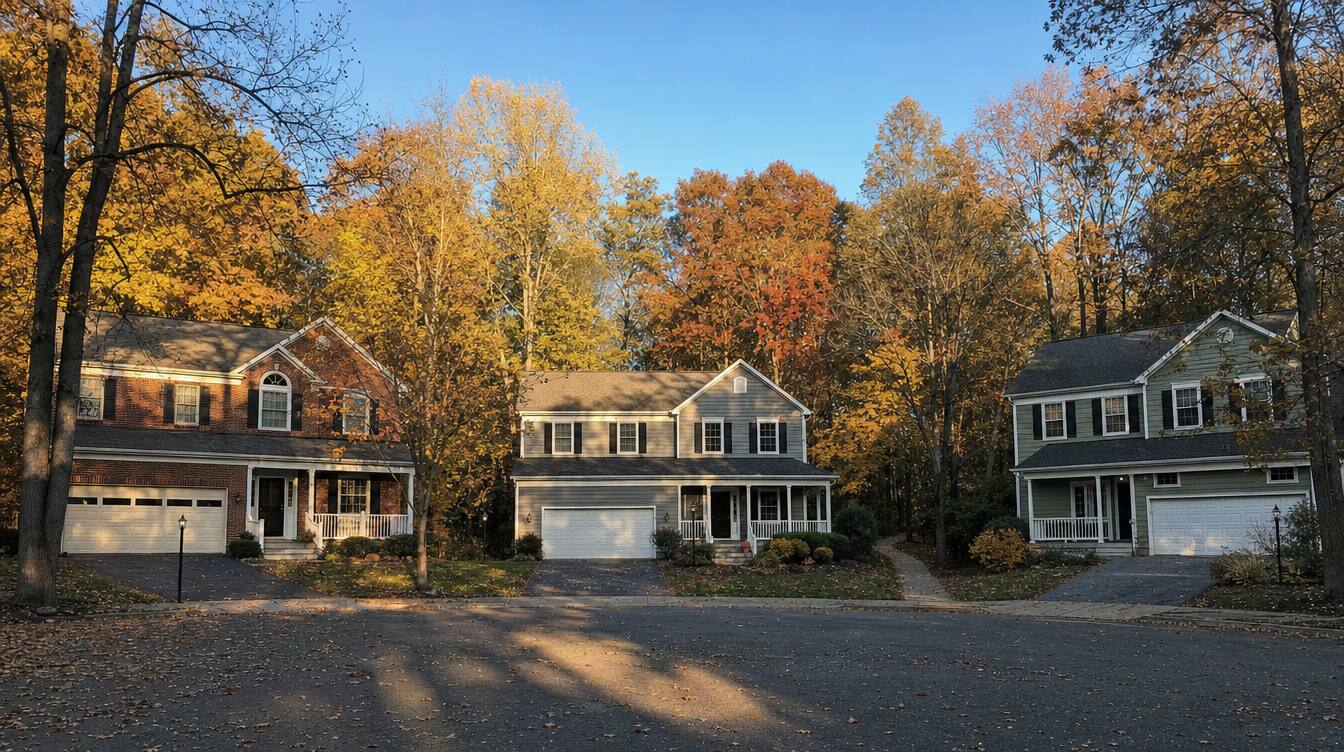
Noise: US DOT / BTS National Transportation Noise Map, 2020. Pictures: artist’s renderings of real places.
Measure the noise
Tap Start. Hold the phone out. Read the dial.
Tap Start to turn on the microphone.
Where are you? (optional)
Fine-tune for your phone
If you know your phone reads high or low (for example from a calibrated sound meter app), adjust it here. This phone remembers it.
Pick where you are, then tap Measure for a 15-second average. Do one spot outside and one room inside to see how much the house blocks. The sound never leaves your phone.
Updated October 23, 2026Noise map: US DOT / BTS, 2020 editionThe tool first, then a 2-minute read
Quick answer
Yes, your phone can estimate how loud a house is. Tap Start, allow the microphone, and measure 15 seconds in the yard and in each room. The page shows the level in decibels (dB), what it sounds like (a whisper is about 30 dB, conversation about 60)2, the US DOT noise map’s 24-hour average for the spot you stand on1, and how many dB the house cuts from outside to inside. A typical home cuts about 20 dB with the windows closed.4 Nothing is recorded.

Noise at home in six numbers
CDC, EPA, FAA and the US DOT noise map
Phone microphones vary, so a phone reading is an estimate, best within about 5 dB. It is most useful for comparing rooms and houses on the same phone.
What the number sounds like
From a whisper to a motorcycle.
Decibels climb fast: every 10 dB step sounds about twice as loud. The bars are drawn on the dial’s own scale, 20 to 100 dB.
How to measure a house
Four readings tell you most of the story.
Where
- The backyard or patio, where you would sit.
- The front yard, facing the street.
- The main bedroom with the windows closed.
- The living room with the windows closed.
How
- Hold the phone out at arm’s length, microphone uncovered, and stay quiet.
- Measure at the hours you will be home: weekday rush hour and a weekend evening.
- Pick a calm day. Wind on the microphone reads as noise.
- Use the same phone for every house so the readings compare fairly.
Outside minus inside is how much the walls and windows block. About 20 dB is typical with the windows closed.4 If a house blocks much less, see how to make a noisy home quieter.
Phone vs map
Your ears today, the map for the long run.
Your phone
- This moment, everything you hear: traffic, planes, wind, birds, air conditioners, voices.
- An estimate, best within about 5 dB. Phone microphones vary by model.
- Great for comparing rooms and houses on the same phone.
The noise map
- A 24-hour average of road, rail and airplane noise for 2020, from federal traffic and flight models.1
- The same for every visit, so it shows the long run.
- Check any address on How loud is my street? and the airport noise map.
Questions
What people ask about measuring noise.
Can my phone measure how loud a house is?
Yes, as an estimate. Tap Start on this page and allow the microphone: the page shows the sound level in decibels (dB), weighted the way ears hear (A-weighting), and measures 15 seconds for an average. Phone microphones are not lab meters, so expect it to be within about 5 dB. It is best for comparing: the backyard against the bedroom, or this house against the last one.
Is the sound recorded or sent anywhere?
No. The page works out the level inside your browser many times a second and keeps only the numbers on screen. No sound is recorded, saved or sent. The microphone turns off when you tap Stop or leave the page.
Why is my reading different from the noise map?
The US DOT noise map is a 24-hour average of road, rail and airplane noise for 2020, from traffic and flight models. Your reading is this moment, and it includes everything: wind, birds, voices, air conditioners. Rush hour and flights overhead read higher than the average, and late night reads lower. Use both: the map for the long run, your reading for what you hear today.
How much quieter should it be inside?
A typical home cuts outside noise by about 20 dB with the windows closed, according to the FAA's guidance for airport noise programs. Measure one spot outside and one room inside, and this page shows how much this house cuts. Much less than 20 dB often means leaky windows or doors, which can usually be fixed.
When is the best time to measure?
Measure at the times you will be home: weekday rush hour (about 7 to 9 AM and 4 to 7 PM), a weekend evening, and at night in the bedroom if you can. Pick a calm day, because wind on the microphone reads as noise.
What is a quiet level?
For scale, a whisper is about 30 dB and normal conversation about 60 dB (CDC). A refrigerator hum is about 40 dB. The EPA's 1974 Levels Document named 55 dB, as a day-night average outdoors, as the level that protects health and welfare in residential areas. Every 10 dB step sounds about twice as loud.
Your next step
Measured a house you like? Let’s talk.
Send me your readings and the street, and I’ll tell you what I know about that block, from traffic patterns to what quiet homes there sell for. English or Arabic.
Keep exploring
More ways to find a quiet home.
How loud is my street?
Type any address, see its road, rail and plane noise.
ToolAirport noise map
Is this house in an official airport noise zone?
GuideMake a noisy home quieter
The fixes that work and how many dB each cuts.
ToolHow much sun will this house get?
When direct sun reaches each room, by season.
ToolSchool Boundary Finder
Type an address, see its schools’ official lines.
Home valuationPriced on evidence.
Comparable closed sales near you, checked by hand.