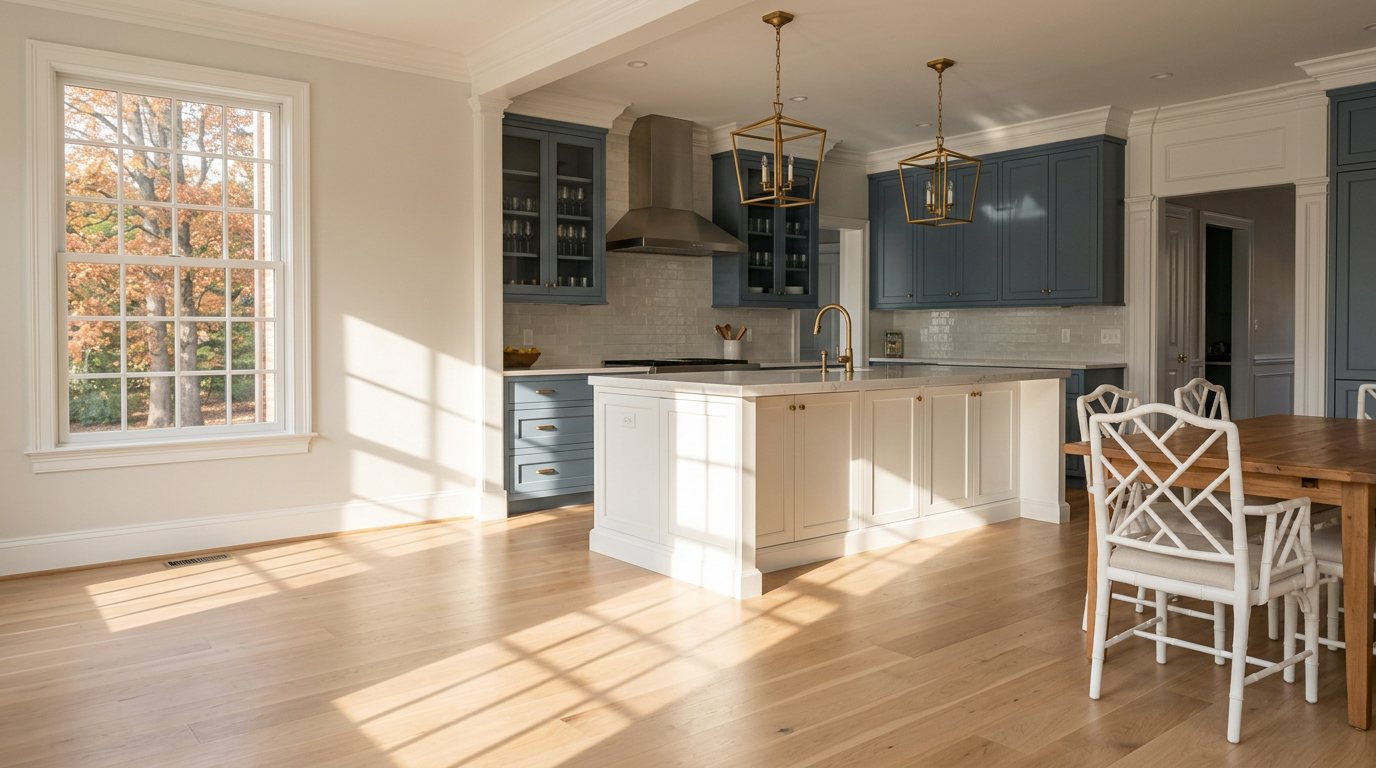
Morning sun through a tall window laying window-shaped light across the island and oak floor of a colonial kitchen
Tools

How Much Sun Will This House Get?Sunlight room by room, at any Northern Virginia address

Type an address. See when direct sun reaches the kitchen, the living room and the bedrooms, morning or afternoon, in summer and in winter.

Morning sun in a colonial kitchen· McLean, Fairfax County

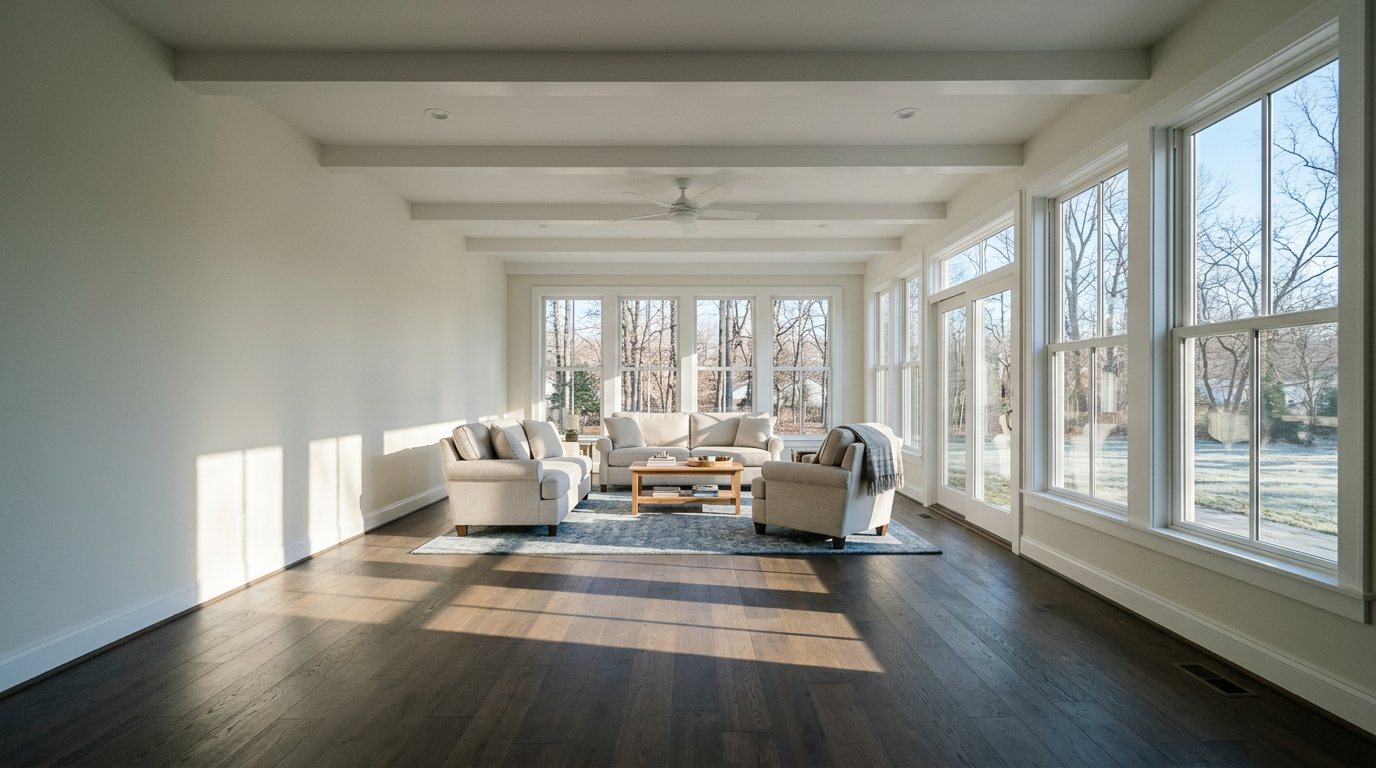
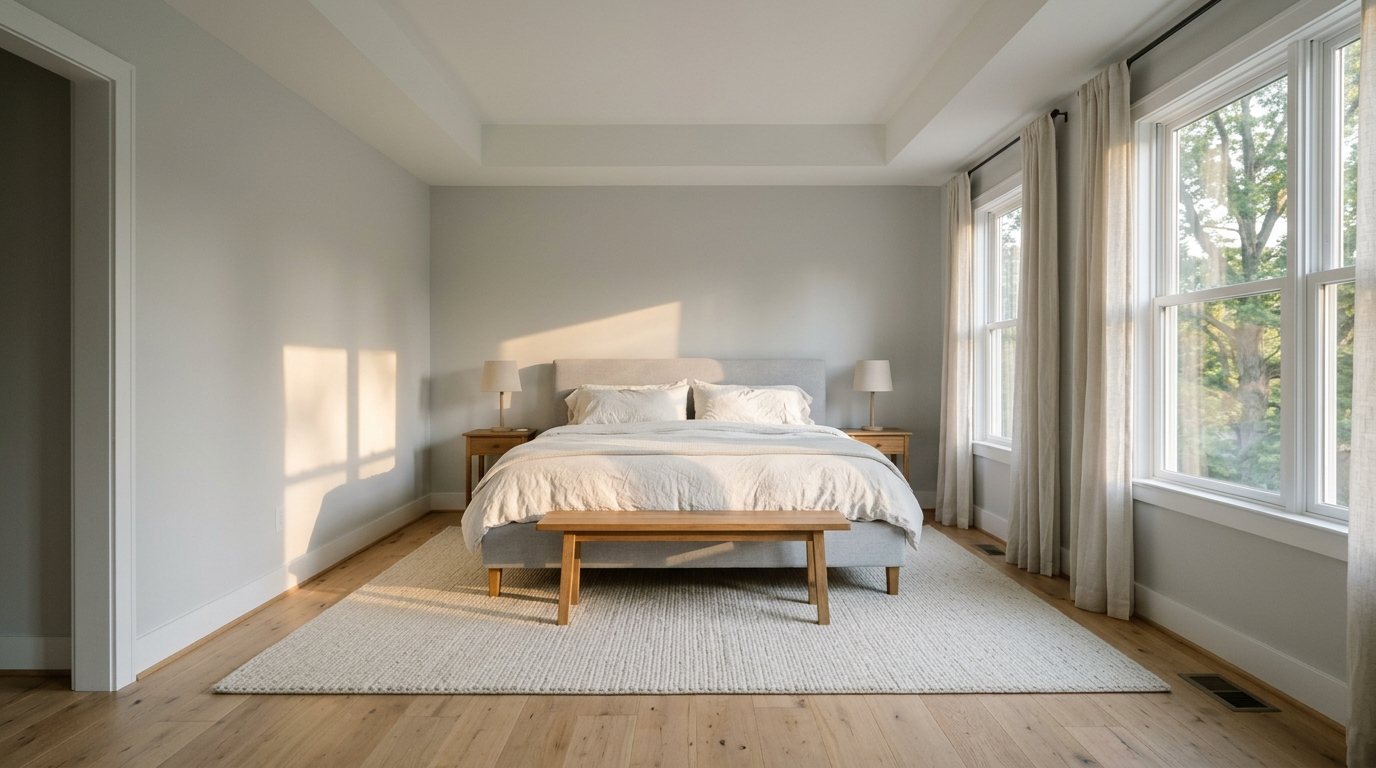
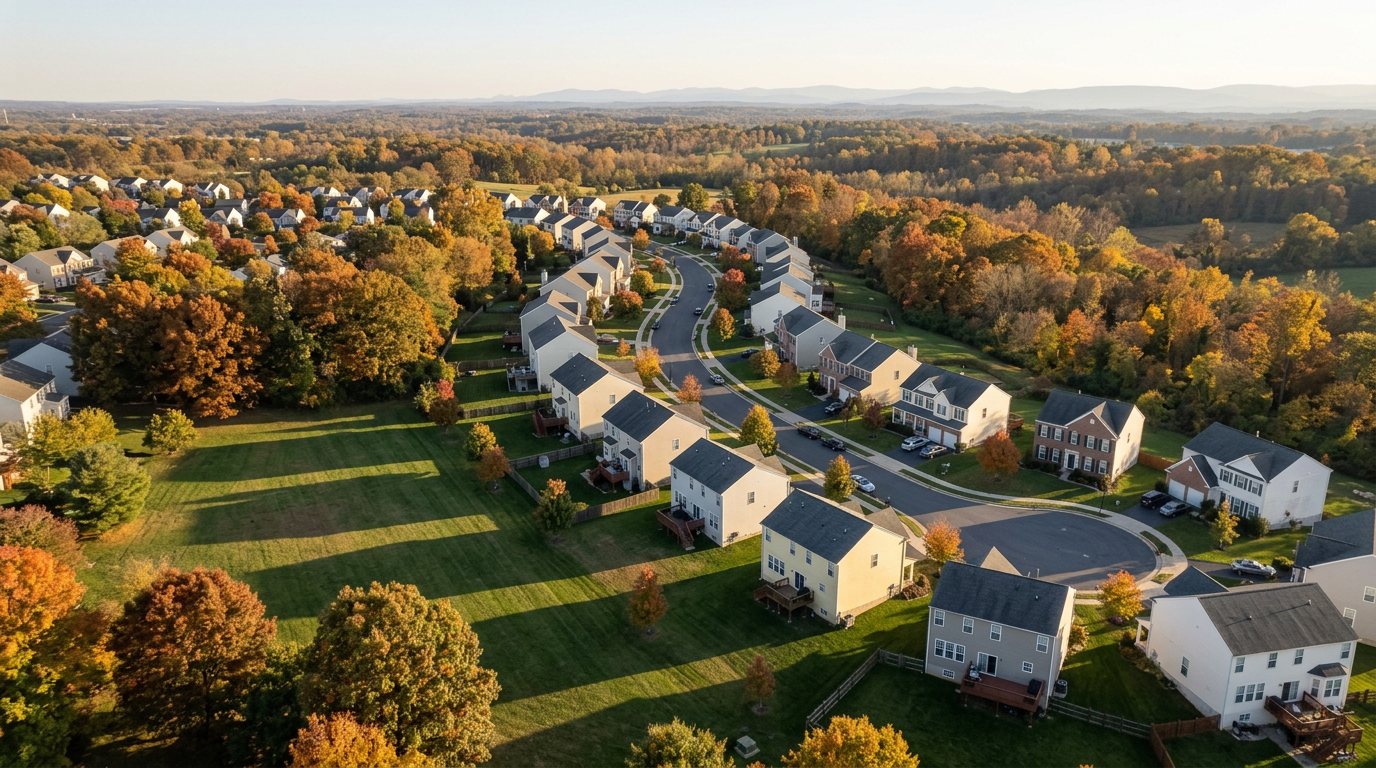
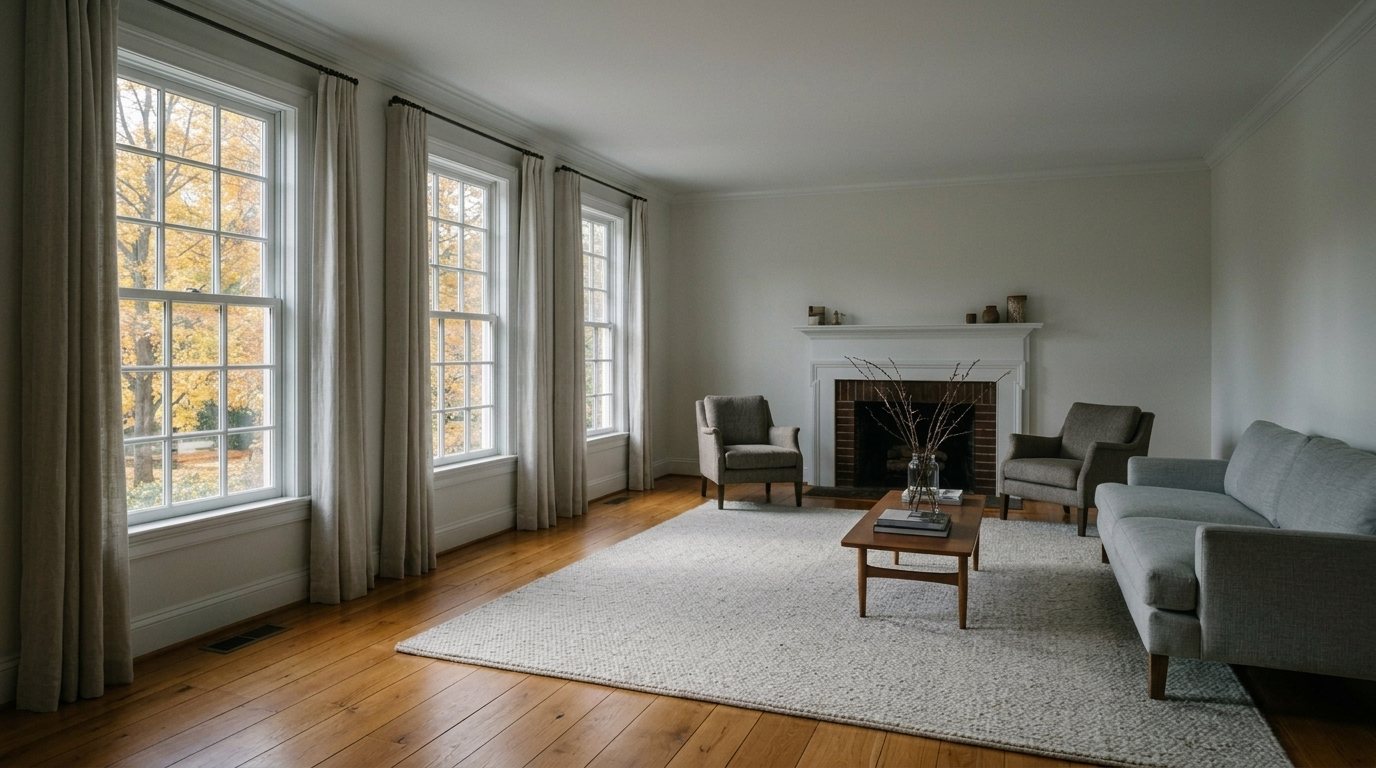
Sun times: Eastern, from the standard solar equations. Pictures: artist’s renderings, not homes for sale.

Check an address

Type an address. See the sun, room by room.

Standing at the house? Your phone finds it. Your location stays on your phone.

At a showing

Point your phone out a window.

Hold the phone flat at the window, top edge pointing out through the glass. The compass reads which way the window faces, and the page shows when the sun comes through it. Works best a foot away from fridges, stoves and metal frames.

Pick the address from the list. The page finds the house, works out which way the front faces, and shows when direct sun reaches each room. You can move rooms to the side they are really on.

Updated October 23, 2026House outlines: Microsoft, 2026 releaseAbout a 3-minute read, under the tool

Quick answer

Type a home address and the page finds the house outline and the street in front, works out which way each side faces, and shows when direct sun reaches each side and each room, in June, March and December.1 In Northern Virginia a south wall gets the most sun across the year (8.7 hours on December 21), east walls get the mornings, west walls the afternoons, and a north wall gets no direct sun from late September to late March.

Northern Virginia sun in six numbers

Computed for the center of the area (38.88° N); every town here is within a few minutes

14 h 50 minof daylight on June 21, sunrise 5:45 AM, sunset 8:35 PM1
9 h 25 minof daylight on December 21, sunrise 7:25 AM, sunset 4:50 PM1
75°how high the sun gets at noon on June 21; on December 21 only 28°1
8.7 hof direct sun on a south wall on December 21, the most of any side1
0 hof direct sun on a north wall from about September 22 to March 201
516,738house outlines in the four counties and their cities, read by the tool2

Times are Eastern, with daylight saving time when it applies. Direct sun on a wall: the sun is at least 3° above the horizon and less than 80° to the side of the wall.

Which way should a house face?

Hours of direct sun on a wall, by the way it faces.

Most Northern Virginia homes have the living room at the front and the kitchen and family room at the back, so the way the front door faces decides when the kitchen gets its sun. A wall facing south gets the most sun in winter; east gets the mornings, west the afternoons.

4 h8 hNNEESESSWWNW

June 21: every wall gets some sun. North walls get it early and late.

December 21: south walls get nearly all of it (8 h 40 min); north walls get none.

Each petal is the hours of direct sun on a wall facing that way, with nothing in the way.

Front door facesJune 21March 20December 21What it means
Northback faces south4.2 h6:10 AM to 8:10 AM and 6:10 PM to 8:15 PM0 hno direct sun0 hno direct sunFront rooms: soft light. Back rooms: sun most of the day, all year.
Northeastback faces southwest5.7 h6:10 AM to 11:45 AM2.9 h7:35 AM to 10:25 AM0 hno direct sunFront: summer mornings. Back: afternoon and evening sun, all year.
Eastback faces west6.8 h6:10 AM to 12:55 PM5.3 h7:35 AM to 12:50 PM3.7 h7:50 AM to 11:25 AMFront: morning sun. Back: afternoon and evening sun.
Southeastback faces northwest7.8 h6:10 AM to 1:55 PM7.3 h7:35 AM to 2:50 PM6.8 h7:50 AM to 2:30 PMFront: morning and midday sun, all year. Back: summer evenings.
Southback faces north5.8 h10:20 AM to 4 PM9.9 h8:20 AM to 6:10 PM8.7 h7:50 AM to 4:25 PMFront: sun most of the day, all year. Back: soft light, summer mornings and evenings.
Southwestback faces northeast7.8 h12:30 PM to 8:15 PM7.3 h11:45 AM to 7 PM6.8 h9:45 AM to 4:25 PMFront: afternoon sun, all year. Back: summer mornings.
Westback faces east6.9 h1:25 PM to 8:15 PM5.3 h1:45 PM to 7 PM3.7 h12:50 PM to 4:25 PMFront: afternoon and evening sun. Back: morning sun.
Northwestback faces southeast5.8 h2:35 PM to 8:15 PM3 h4:05 PM to 7 PM0 hno direct sunFront: summer evenings. Back: morning and midday sun, all year.

Hours of direct sun on the front wall, with nothing in the way, for the center of Northern Virginia. Times are Eastern (daylight saving time in June and March). September 22 is close to March 20, about 15 minutes earlier by the clock. The back wall’s hours are the row of the direction it faces.

Sun through the year

Long, high summer sun. Short, low winter sun.

In June the sun rises in the northeast, passes high overhead and sets in the northwest, so even a north wall sees it early and late. In December it rises in the southeast, stays low in the southern sky and sets in the southwest: low sun reaches deep into rooms that face south.

6:00 AM8:00 AM10:00 AM12:00 PM2:00 PM4:00 PM6:00 PM8:00 PMJanFebMarAprMayJunJulAugSepOctNovDecClocks spring forwardClocks fall backSunset 8:35 PMSunrise 5:45 AMSunset 4:50 PMSunrise 7:25 AM

Sunrise (bottom edge of the gold) and sunset (top edge) for every day of the year, Eastern time. The two jumps are the clock changes in March and November.

June 21

  • Sunrise 5:45 AM, sunset 8:35 PM (14 h 50 min)
  • Sun rises 59° east of north and sets 59° west of north
  • Highest at 1:10 PM, 75° above the horizon

December 21

  • Sunrise 7:25 AM, sunset 4:50 PM (9 h 25 min)
  • Sun rises 60° east of south and sets 60° west of south
  • Highest at 12:10 PM, only 28° above the horizon

Why low winter sun reaches deeper: a south window through the year

2 ft eaveRoom, looking from the side. The window faces south (left).
December

Noon on the 21st of each month, a window 3 to 7 feet off the floor under a 2-foot roof overhang. Real eaves, windows and rooms vary.

Bounce light simulator

The house across can light your room.

When the sun shines on the house across the street or the green, its siding throws part of that light back into your windows. A north-facing room across from a sunny white wall can be far brighter than its direction suggests. Set the scene and watch the light move.

1 PM

A clear-day estimate for the center of Northern Virginia, Eastern time. It uses standard daylight formulas (sunlight and sky brightness by sun height), typical reflectance of each siding color, and how much of your window’s view the facing wall fills. Trees, clouds, glass and curtains are not counted. Lux is brightness on the window glass; an office is lit to about 500 lux.

Light and well-being

Why a bright home feels better.

Drag the line across each picture. Same room, same hour of the day: one with the sun coming in, one without. Then the research on what daylight at home does for the people living there. Most of it shows links, not proof, and each card says how strong the evidence is.

The same living room with no direct sun, lights off
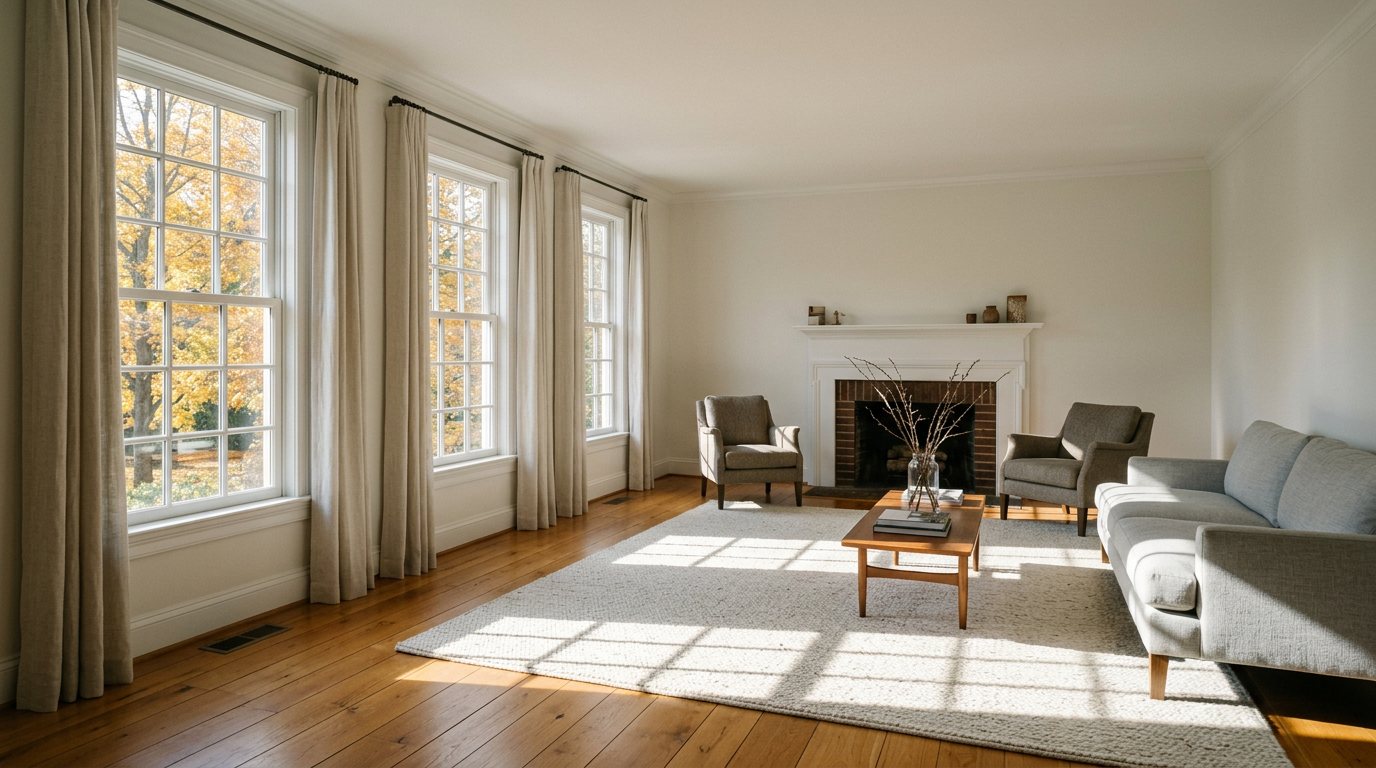
Living room with afternoon sun coming in, lights off
Sun, lights offNo sun, lights off
Same living room, ceiling lights off in both: with sun on the floor, and on a side that gets no direct sun.
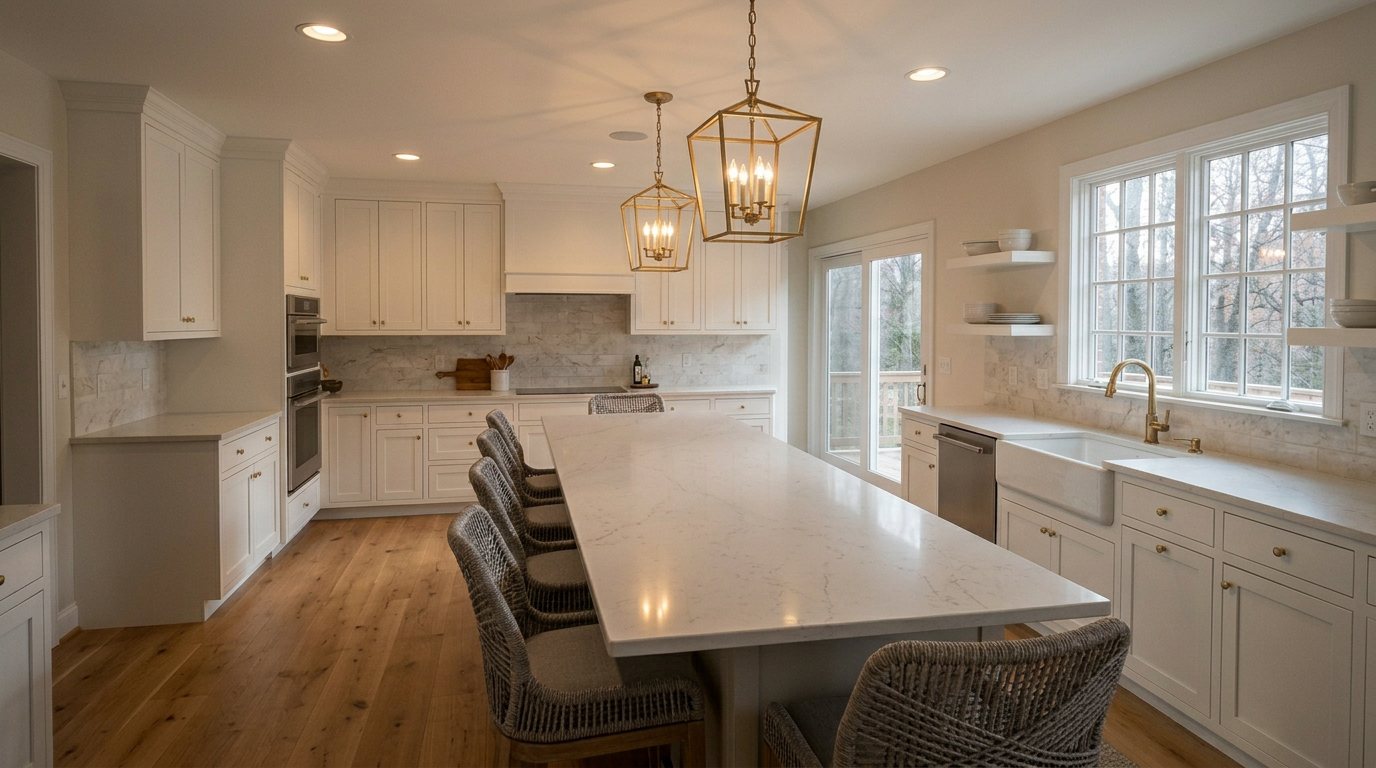
The same kitchen with no sun and the ceiling lights on
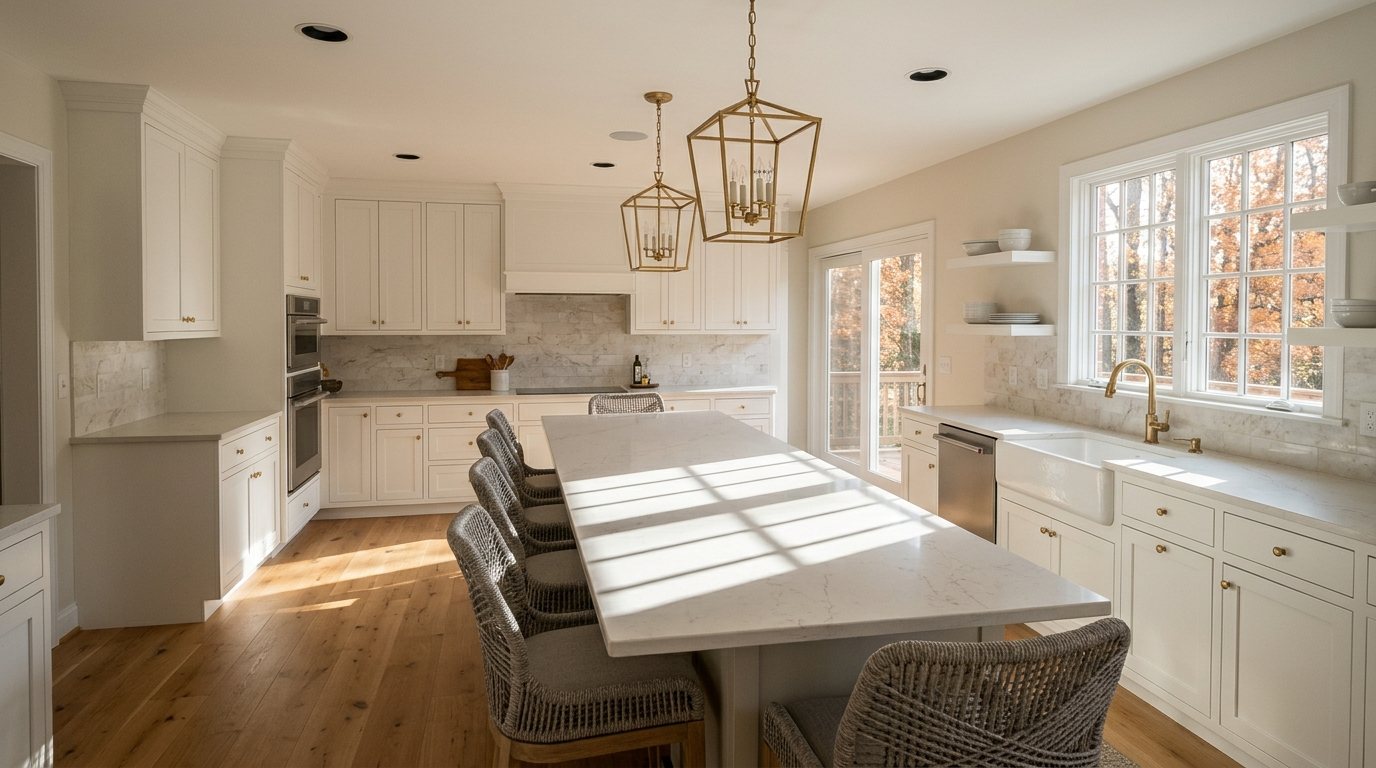
Kitchen with morning sun, lights off
Morning sun, lights offNo sun, lights on
Same kitchen: morning sun with every light off, and no sun with the ceiling lights on.
Strong in lab studies

Morning light sets your body clock

Morning light moves the body clock earlier. In a 2025 study, each extra 30 minutes of morning sun before 10 AM went with a sleep midpoint about 23 minutes earlier, and a diary study of 103 U.S. adults linked morning sun with better sleep.

Rooms facing east get it: kitchens and bedrooms there see the sun first.

Source: NIH (PubMed Central)

Good evidence

Steadier winter mood

Winter-pattern seasonal affective disorder is more common where winter days are short, says the National Institute of Mental Health. Washington-area research put it at 2 to 6% of people each winter. Room daylight is not a treatment; doctors use a 10,000-lux light box.

Here, a south wall still gets about 8 h 40 min of direct sun on December 21.

Source: NIMH

Early evidence

Sharper days

Bright daytime light is linked to better focus: a 2025 study found 7 to 10% faster reaction times after bright light than after dim light. In a small 2014 study, office workers with windows slept 46 minutes more a night.

Working from home? Put the desk on the bright side.

Source: University of Manchester

Strong (building physics)

Lower bills, if the glass faces the right way

The U.S. Department of Energy says windows meant to warm a home in winter should face within 30° of true south and stay unshaded from 9 AM to 3 PM. ENERGY STAR warns that west windows take summer sun at the hottest part of the day.

The tool shows which way each side of a house faces.

Source: U.S. Department of Energy

Strong

Light, not vitamin D

Window glass blocks the UVB rays that make vitamin D, says the NIH Office of Dietary Supplements. A sunny room gives light and warmth, not vitamin D.

For vitamin D, step outside.

Source: NIH Office of Dietary Supplements

Department of Energy guidance

The downsides have easy fixes

Low-e glass cuts sun fading of furniture by up to 75%. A roof overhang shades high summer sun but lets low winter sun in. Leafy trees shade summer and let winter sun through. Vertical shades help east and west windows.

See the window drawing above: the eave is doing that work.

Source: U.S. Department of Energy

This is general information, not medical advice. Evidence labels are our summary of the studies, not ratings given by the sources.

Did you know?

A plane mapped every tree in Northern Virginia with a laser.

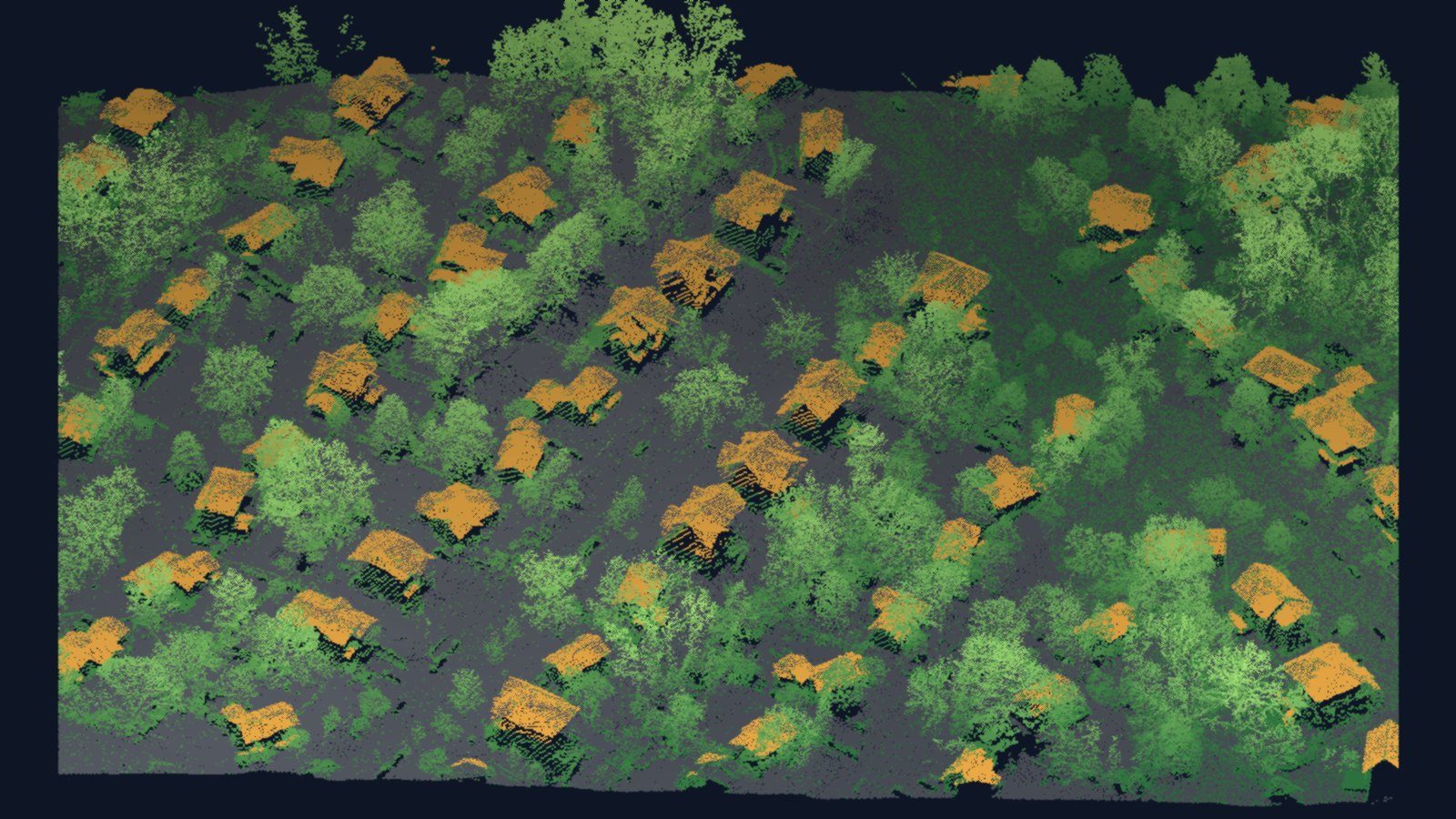
In December 2022 a survey plane flew back and forth over Fairfax, Loudoun and Prince William, firing laser pulses at the ground. Every pulse that bounced back became a dot with a height: about 89 billion dots. This page reads those dots to know how tall the trees around a home are.

Laser survey dots over a street of houses in Vienna, Virginia, seen at an angle: gold roofs, green trees, gray ground
What the laser saw over one street in Vienna: 1.3 million dots. Gold = roofs, green = trees (lighter is taller), gray = ground. December 2022, USGS.
Who flies it

The U.S. Geological Survey, through its 3D Elevation Program, with state and local partners sharing the cost. The goal is the first laser map of the whole country.

Why they pay for it

Flood risk maps lead the list. The same map helps plan roads and construction, farming, conservation, water supply and forests. Knowing the ground to the inch shows where water will run in a storm.

What it is worth

USGS puts the benefit at at least $690 million a year across the country, and possibly $13 billion a year as more uses grow.

Why December

With the leaves down, the laser reaches the ground under the trees and still hits the branches, so it measures both the ground and how tall each tree is.

The survey is public and free to use. Trees planted or cut since December 2022 are not in it. Sources: USGS 3D Elevation Program; USGS fact sheet 2025-3034.

What it can and cannot see

The sun that can reach each side, not the light in the room.

Counted

  • The sun’s exact path over the address, any day.
  • The house outline and which way each side faces.
  • Neighboring houses, at their estimated heights.
  • Trees, from the December 2022 laser survey (LiDAR), with bare branches in winter and leaves in summer.
  • Ground-floor and upstairs windows (bedrooms are upstairs).

Not counted yet

  • Trees planted or cut since December 2022, and evergreens versus bare trees.
  • Blinds, curtains, tinted glass, porch roofs and deep eaves.
  • How big the windows are and where they sit.
  • Inside walls between a sunny window and the room.
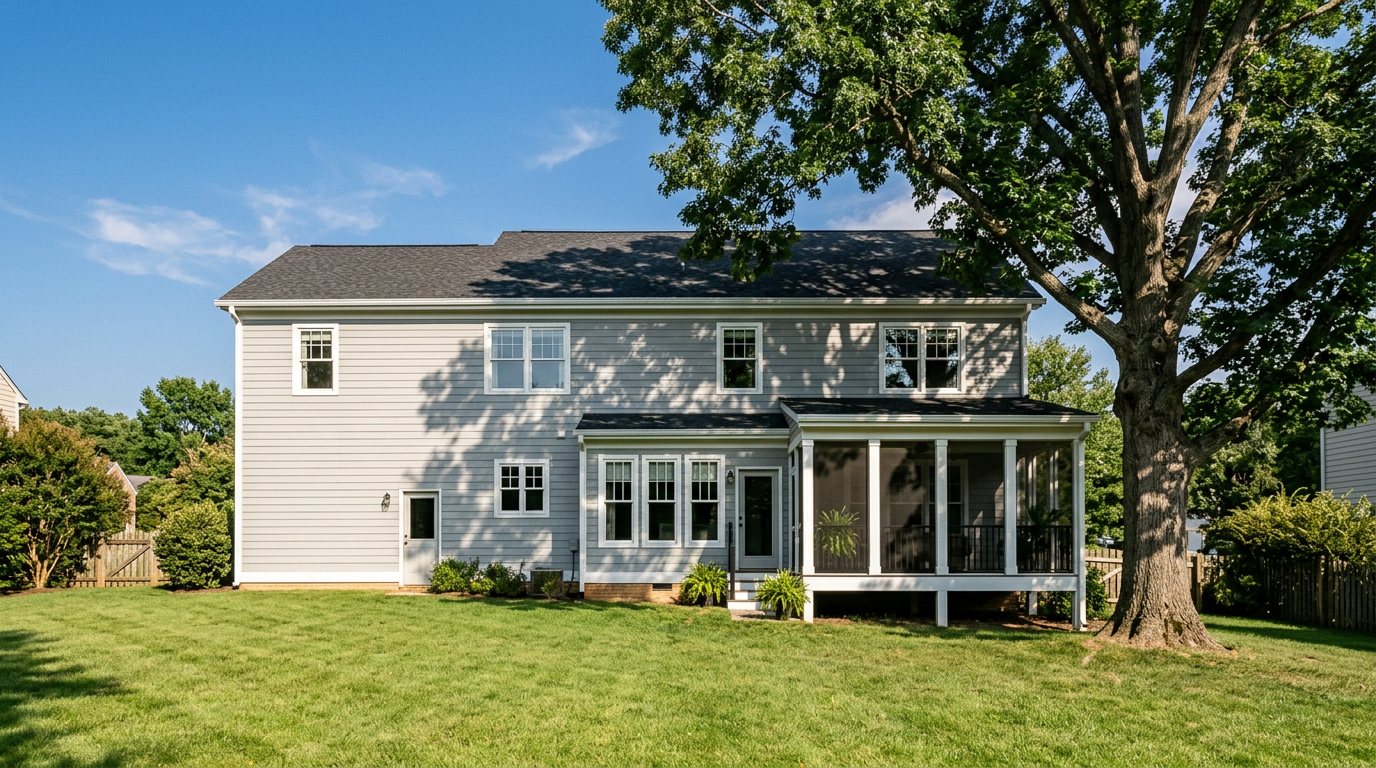
The back of a Fairfax colonial with a screened porch, dappled in the shade of a big oak on a summer afternoon
A big oak like this one shades a summer afternoon and lets winter sun through after the leaves drop. The page now counts trees like it, from the 2022 laser survey.

Front door direction: the side of the house that faces the nearest street, without driveways, parking aisles or back alleys. On corner lots and new streets it can be wrong, so the page lets you change it.

Check the light at a showing

Five things to look at before you buy.

  1. Visit at the hour you care about. If breakfast light matters, book an 8 AM showing; for evening light, 5 PM.
  2. Use a phone compass in the kitchen. Stand facing the biggest window and read the direction, then check it against the table above.
  3. Look at what stands on the sunny side. A big leafy tree to the south or west shades summer afternoons and still lets winter sun through. An evergreen blocks it all year.
  4. Count the windows on the sunny side. A south kitchen with one small window is darker than an east kitchen with a wall of glass.
  5. Remember the season. A house seen in June will have far less sun in its north rooms in December.

Questions

What people ask about sunlight and buying a home.

How can I tell how much sun a house gets?

Type the address into the box on this page. It finds the house outline and the street in front, works out which way each side faces, and shows when direct sun reaches each side and each room on June 21, March 20, December 21 and today, with the shade of neighboring houses and trees. Then visit at the hour you care about: blinds, curtains and window size change what you feel inside.

Which direction should a house face to get the most sun?

In Northern Virginia a wall facing south gets the most direct sun across the year: about 8.7 hours on December 21 and 9.9 on March 20, and its summer sun is high overhead, so it is easy to shade. For a bright kitchen at the back of the house, look for a front door facing north, so the back faces south. A back facing east gets morning sun; west gets afternoon and evening sun.

Is a north-facing house bad?

Not at all, if you want sun at the back. A house whose front faces north has its back, where most kitchens and family rooms are, facing south. It is the front rooms that get little direct sun: a north wall gets none from late September to late March, and only early morning and evening sun in summer.

Which rooms get morning sun and which get afternoon sun?

Rooms on the east side of a house get the morning sun (on June 21, an east wall has direct sun from 6:10 AM to 12:55 PM). Rooms on the west side get the afternoon and evening sun (1:25 PM to 8:15 PM). Southeast and southwest walls get the longest stretch in winter.

How accurate is this?

The sun's path is exact to within a few minutes. Which way the front faces is right for most single-family homes and townhouse rows; corner lots and new streets can fool it, so you can change it. Neighbor houses use estimated heights. Trees come from the December 2022 laser survey, so trees planted or cut since then are missed. No map can see blinds, curtains, tinted glass or window sizes. Treat it as the sun that can reach each side of the house.

Are trees included?

Yes. Tree heights come from the U.S. Geological Survey's laser survey (LiDAR) of Fairfax, Loudoun and Prince William, flown in December 2022. For each window the page finds the trees within about 400 feet and checks whether they stand between the window and the sun. Trees do not block all of it: bare winter branches let about half the direct sun through, and summer leaves about a fifth, so the page shows that time as sun through trees. It cannot tell an evergreen from a bare oak, and trees planted or cut since 2022 are not in it.

Is my address saved?

No. The address goes to Virginia's own address service (VGIN) to find the spot. The house outlines come from this site and the street map from OpenFreeMap, and the sun math happens in your browser. Nothing typed is stored.

Your next step

Found a bright house? Let’s see it at the right hour.

Tell me the address and the rooms you care about. I can book the showing for the hour the sun is in the kitchen. I answer in English or Arabic, with real numbers, not a pitch.

Keep exploring

More ways to check a house before you buy.