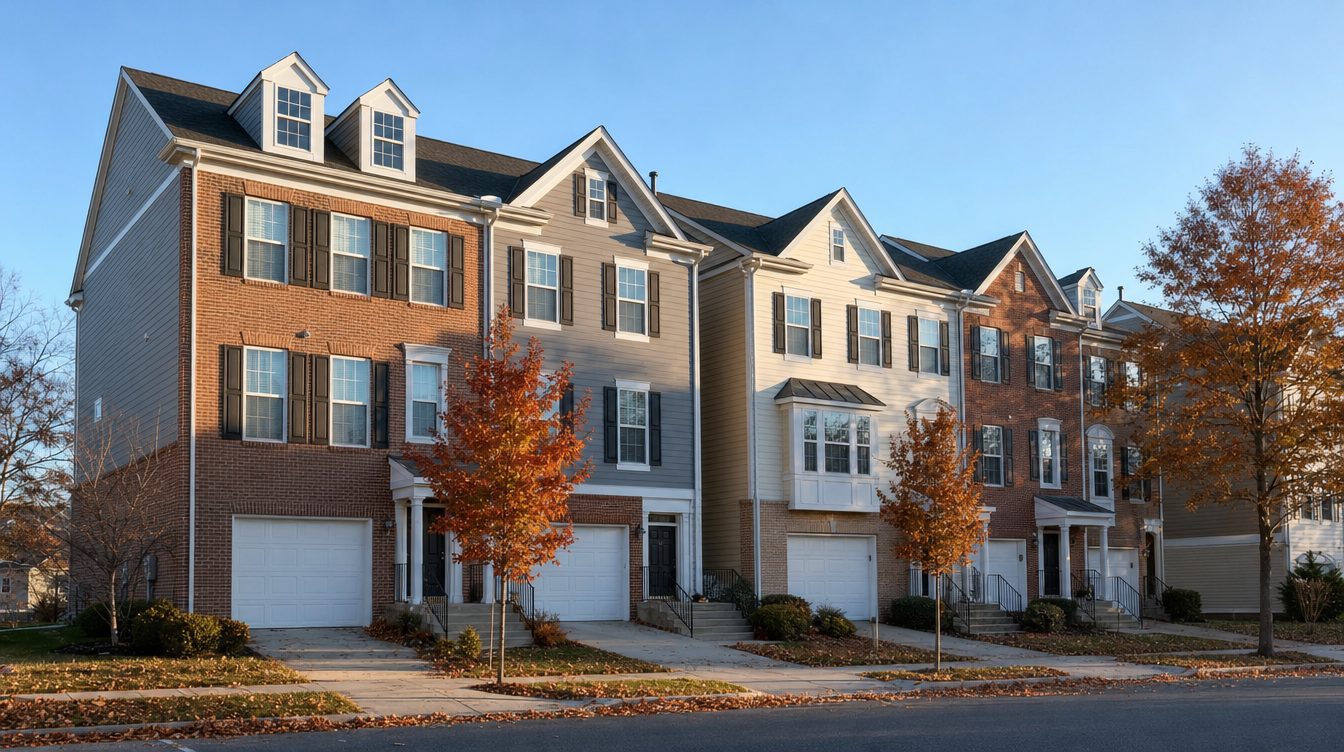

A fanned stack of sealed envelopes beside white hydrangeas on a marble kitchen island, with fall trees and brick homes outside the windows
Ask Ahmed

Why don’t home prices come down when buyers can’t afford them?Ask Ahmed, Question 3: a Northern Virginia REALTOR® answers

Real questions from real buyers and sellers, answered plainly in English and Arabic. No names, no sales pitch.

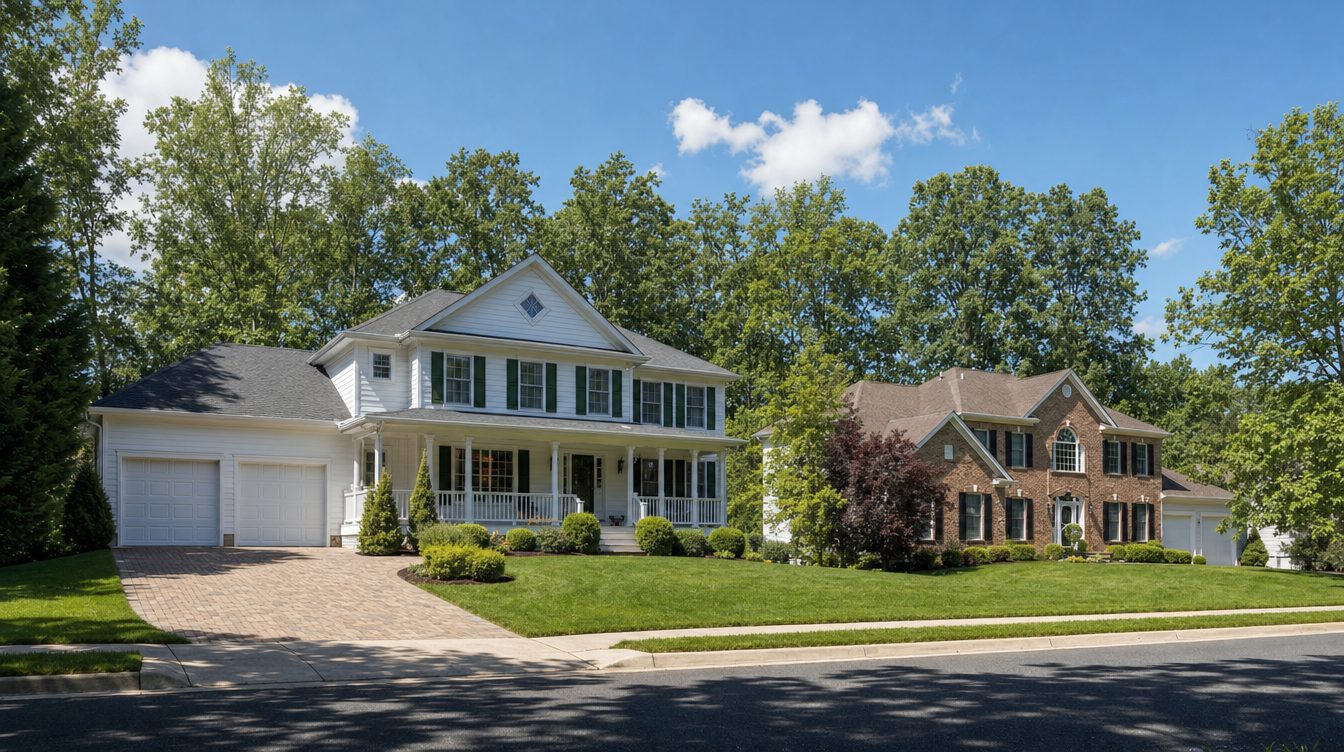
Brick colonials in early spring· Crosspointe Drive, Fairfax Station

Artist’s renderings of real Northern Virginia places.

Last updated October 20, 2026Question 3 of a weekly column; sales from Bright MLS, January to September of 2019 to 2026About a 5-minute read

Ask Ahmed · Question 3

“Why don’t home prices come down when buyers can’t afford them?”

Ahmed’s short answer: because a price needs a seller who agrees to it. Many owners here have low mortgage rates and no reason to sell at a loss, so when buyers pull back, fewer homes sell instead. Over the long run, rising prices have been normal here, though they have fallen before. Read the full answer or see the sales.

This question, by the numbers

Northern Virginia sales from Bright MLS, January to September of each year; mortgage figures from FHFA

−39%Closed sales of houses and townhouses, 2021 to 2026: 26,059 down to 15,8741
+25%The median sale price over the same years: $659,800 up to $825,0001
53.5%Virginia mortgages with a rate under 4%, first quarter of 20262
51,730Home sales the Washington metro lost to rate lock-in, mid-2022 to mid-2024 (FHFA estimate)3

Sales and medians count detached houses and fee-simple townhouses in Fairfax, Loudoun, Prince William and Arlington counties and the cities of Alexandria, Fairfax, Falls Church, Manassas and Manassas Park; condos are left out.

Question 3 · October 20, 2026

“Why don’t home prices come down when buyers can’t afford them?”

A question Ahmed hears from buyers. His answer, from his own messages, lightly edited.

People expect a home to be affordable when they buy it, and to sell at the top price when they sell it. Isn’t that a kind of irony? It’s the same person, at two different times.

Think of it like an investment. If someone bought a home in 2021, would they expect to sell it for the same price three or four years later? No. Over the long run, rising prices have been normal here; what changes is the pace.

People think affordability is the issue. I don’t think it is. It’s supply and demand. If more sellers were ready to sell at a loss and move on, prices would move down. But if most sellers have a low interest rate and no reason to sell at a loss, why would they?

Most sellers don’t sell at a loss unless they have to. Every seller has a limit.

Ahmed Makkiyah, REALTOR®

The expectation

What the data shows

“When I buy, prices should be affordable.”

The median sale price was $825,000 in 2026, up from $659,800 in 2021, even though 39% fewer homes sold.1

“When I sell, I should get top price.”

43.5% of 2026 sales closed over the asking price, down from 63.3% in 2021. Top price comes less often than it did.1

“If buyers can’t afford it, prices have to fall.”

From 2021 to 2023, sales fell 42% and the median price rose 11%. Fewer homes sold, at higher prices.1

“Prices here only go up.”

Not always. Prince William County’s price index fell about 40% from 2006 to 2009.7 See when prices fell

Northern Virginia, 2019 to 2026

Sales fell by more than a third. The median price still rose.

From 2021 to 2026, closed sales of houses and townhouses fell from 26,059 to 15,874, January to September of each year. The median sale price rose from $659,800 to $825,000.

Closed sales and median sale price of Northern Virginia houses and townhouses, January to September of each year, 2019 to 2026Closed sales peaked at 26,059 in 2021 and fell to 15,192 in 2023; they were 15,874 in 2026. The median sale price rose every year, from $549,000 in 2019 to $825,000 in 2026.Rates jumped010,00020,00030,00022,106201922,238202026,059202120,356202215,192202315,128202415,402202515,8742026Median sale price, same homes and months$549K$588.7K$659.8K$715K$735K$795K$815K$825K
Closed sales, January 1 to September 30Median sale price, same months
−30%

New listings, 2021 to 2026: 31,742 down to 22,110. 2026 is still 26% under 2019 (29,792).1

43.5%

Share of 2026 sales that closed over the asking price, down from 63.3% in 2021. Buyers compete less, yet the median price has not fallen.1

7 days

The median home went under contract in 7 days in 2026, against 5 in 2021 and 9 in 2019.1

This shows what happened, not why. A median is the middle sale, not the change in any one home’s value: it can rise when more higher-priced homes sell, even if no single home gained. Condos are left out of these Bright MLS figures.1

What the research shows

Why owners can wait instead of cutting the price.

These are published findings that fit Ahmed’s answer. Most are national or metro-wide studies, not measurements of Northern Virginia alone.

53.5%under 4%

Virginia mortgages by interest rate, early 2026

  • 22.9%under 3%
  • 30.6%3% to just under 4%
  • 46.5%4% or higher

Share of mortgages by number of loans, first quarter of 2026. The middle and last shares are our arithmetic from the published 22.9% and 53.5%.2

53.5%

Low rates keep owners put

That’s the share of Virginia mortgages with a rate under 4% in early 2026; 22.9% were under 3%.2 Federal researchers found each point the market rate sits above an owner’s own rate makes a sale 18.1% less likely.3

51,730

Fewer sales, not lower prices

That’s how many sales the Washington metro lost to lock-in from mid-2022 to mid-2024, the third most of any U.S. metro. Nationally, FHFA estimates the missing supply raised prices about 7%, more than higher rates pulled them down (about 5.6%).3

25–35%

Owners facing a loss ask more

Sellers who would lose money ask for more. A well-known study found they priced their homes higher by a quarter to a third of their loss, and took longer to sell. If an owner would lose $40,000, that’s about $10,000 to $14,000 more on the asking price.4

2.5

Months of supply, still tight

Active listings of all home types, condos included, in Fairfax and Arlington counties and the nearby cities and towns rose 30.7% from September 2025 to September 2026, yet their median sale price rose 4.2%. NVAR calls 5 to 6 months balanced. Detached listings rose only 5.7%.5

45%

What gets built

Of the 50,726 homes permitted in the nine jurisdictions from 2020 to 2025, 45% were in one-unit buildings (houses and townhouses). Nearly all the rest, 55%, were in buildings of 5 or more.6

Try it: every seller has a limit

Move what buyers can pay. Watch who sells.

Ten owners, each with the lowest price they would take. These are example numbers, not data. A home sells only when buyers reach its owner’s limit.

  • $720KStaysSells
  • $745KStaysSold
  • $770KStaysSold
  • $790KStaysSold
  • $805KStaysSold
  • $820KStaysSold
  • $840KStaysSold
  • $860KStaysSold
  • $885KStaysSold
  • $910KStaysSold

3 of 10 homes sell. The rest of the owners stay put, so when buyers can pay less, fewer homes sell; prices don’t have to drop.Owners who have to sell take less than their neighbors would, and those lower sales pull prices down. That is what happened here from 2006 to 2009.

Every seller has a limit

Prices here have fallen before, when many owners had to sell.

From 2006 to 2009, home price indexes fell across Northern Virginia. That drop came with a wave of foreclosures, and a Massachusetts study found foreclosed homes sold for about 27% less on average.8 Whether today’s owners could be pushed to sell is the question the crash study looks at.

−40%

Prince William County’s price index, 2006 to 2009. It did not pass its 2006 level again until 2022.7

−28%

Loudoun County’s price index, 2006 to 2011.7

−20%

Fairfax County’s price index, 2006 to 2009.7

Federal Housing Finance Agency all-transactions house price index, yearly, peak year to low year. An index follows the same homes over time, so it is not the same as a median sale price.7

Plainly

What the data shows, and what it can’t prove.

Shown by the data

  • From 2021 to 2026, sales and new listings fell, and the median sale price rose.1
  • In early 2026, more than half of Virginia mortgages carried a rate under 4%.2
  • Federal research estimates lock-in cut sales and, on balance, raised prices nationally.3
  • Prices here fell from 2006 to 2009, with many forced sales.7

Not proven here

  • That high prices themselves caused fewer sales. Rates, jobs, who is buying and how many homes are listed all moved at the same time.
  • How much of the national lock-in estimate applies to Northern Virginia alone.
  • How many homes would keep prices steady. No official number exists; the region’s goal of at least 320,000 new homes from 2020 to 2030 covers the whole Washington area.6
  • What prices will do next. Nothing on this page is a forecast.

Questions

What people ask about prices that won’t come down.

Why don’t home prices come down when buyers can’t afford them?

Ahmed’s answer: a price needs a seller who agrees to it. Many Northern Virginia owners have low mortgage rates and no reason to sell at a loss, so when buyers pull back, fewer homes sell instead. From 2021 to 2026 (January to September), closed sales of houses and townhouses fell from 26,059 to 15,874 while the median sale price rose from $659,800 to $825,000 (Bright MLS). That shows what happened, not why; prices here have fallen before.

Did Northern Virginia home sales drop after mortgage rates went up?

Yes. Closed sales of houses and townhouses from January to September fell from 26,059 in 2021 to 15,192 in 2023, down 42%, and were 15,874 in 2026. New listings fell from 31,742 in 2021 to 18,472 in 2023 and were 22,110 in 2026 (Bright MLS, nine Northern Virginia jurisdictions, condos left out).

What is mortgage rate lock-in?

Owners with a mortgage rate far below today’s rate are less likely to sell, because a new home would mean a new, higher rate. FHFA researchers found each percentage point the market rate sits above an owner’s own rate makes a sale 18.1% less likely. In Virginia, 53.5% of mortgages had a rate under 4% in the first quarter of 2026 (FHFA National Mortgage Database).

Have Northern Virginia home prices ever fallen?

Yes. From 2006 to 2009, the FHFA house price index fell about 40% in Prince William County and about 20% in Fairfax County; Loudoun County’s fell about 28% from 2006 to 2011. Prince William’s index did not pass its 2006 level again until 2022. That drop came with a wave of foreclosures.

How many homes does Northern Virginia need for prices to stay steady?

No official number exists. The Metropolitan Washington Council of Governments set a goal in 2019 of at least 320,000 new homes across the whole Washington region from 2020 to 2030, but it does not say what number would keep prices steady. From 2020 to 2025, the nine Northern Virginia jurisdictions permitted 50,726 homes, 45% of them houses and townhouses (U.S. Census Bureau).

More answers: all Ask Ahmed questions.

Your question

Send me your question. It could be next week’s answer.

Ask about buying, selling, renting or a town. I answer in English or Arabic, and I never publish your name.

اقرأ هذه الصفحة كاملة بالعربية ←

وكيلك العقاري الموثوق في شمال فرجينيا.

Keep exploring

More on where prices go, and why.

Keep reading