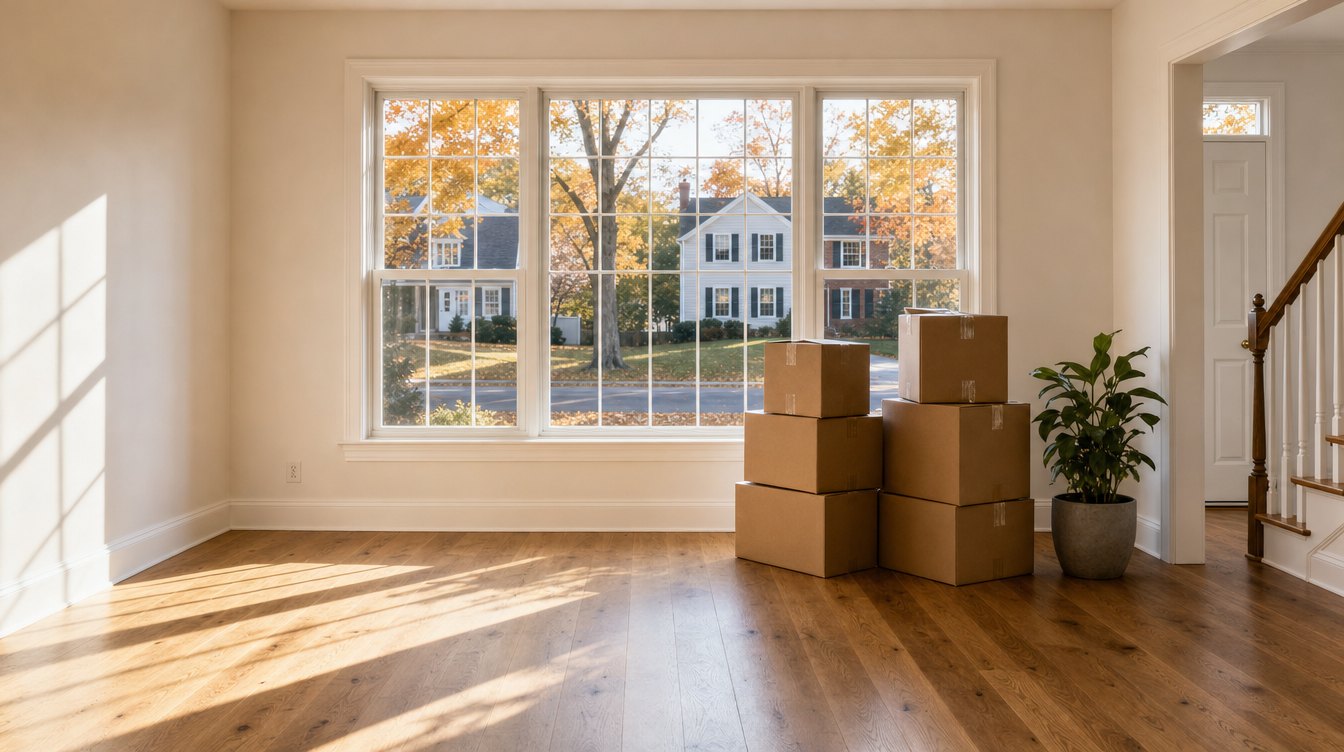

Stacked moving boxes and a potted plant in an empty living room with wood floors, a big window onto fall trees and a staircase by the front door
Ask Ahmed

Should I buy a house now or wait for rates to drop?Ask Ahmed, Question 1: a Northern Virginia REALTOR® answers

Real questions from real buyers and sellers, answered plainly in English and Arabic. No names, no sales pitch.

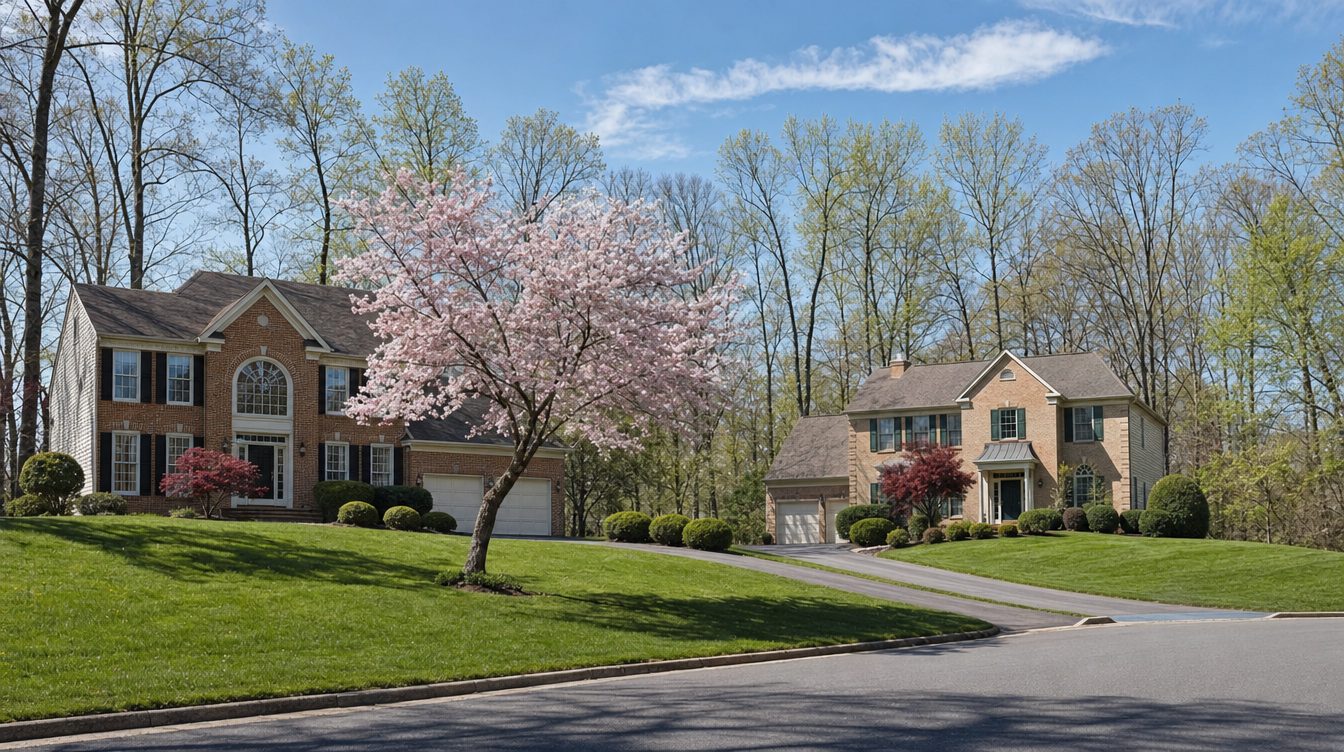
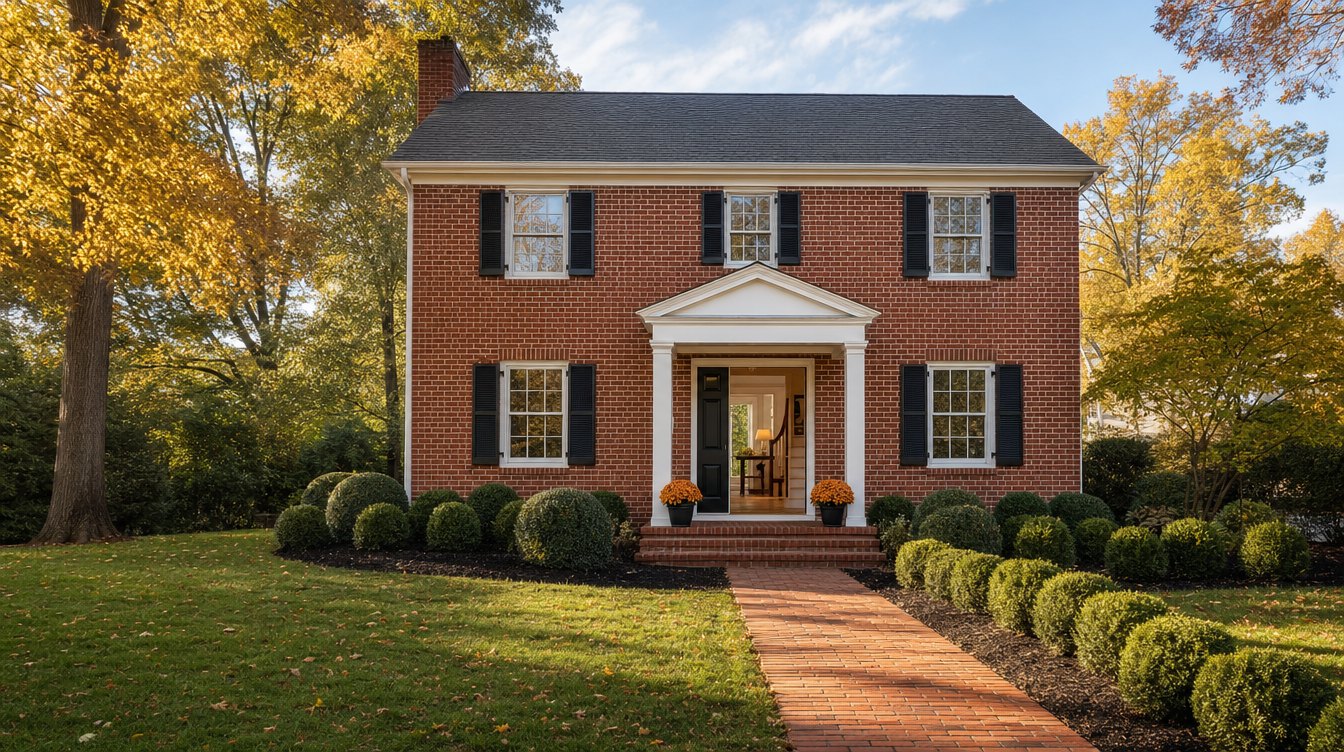
Brick colonials in early spring· Crosspointe Drive, Fairfax Station

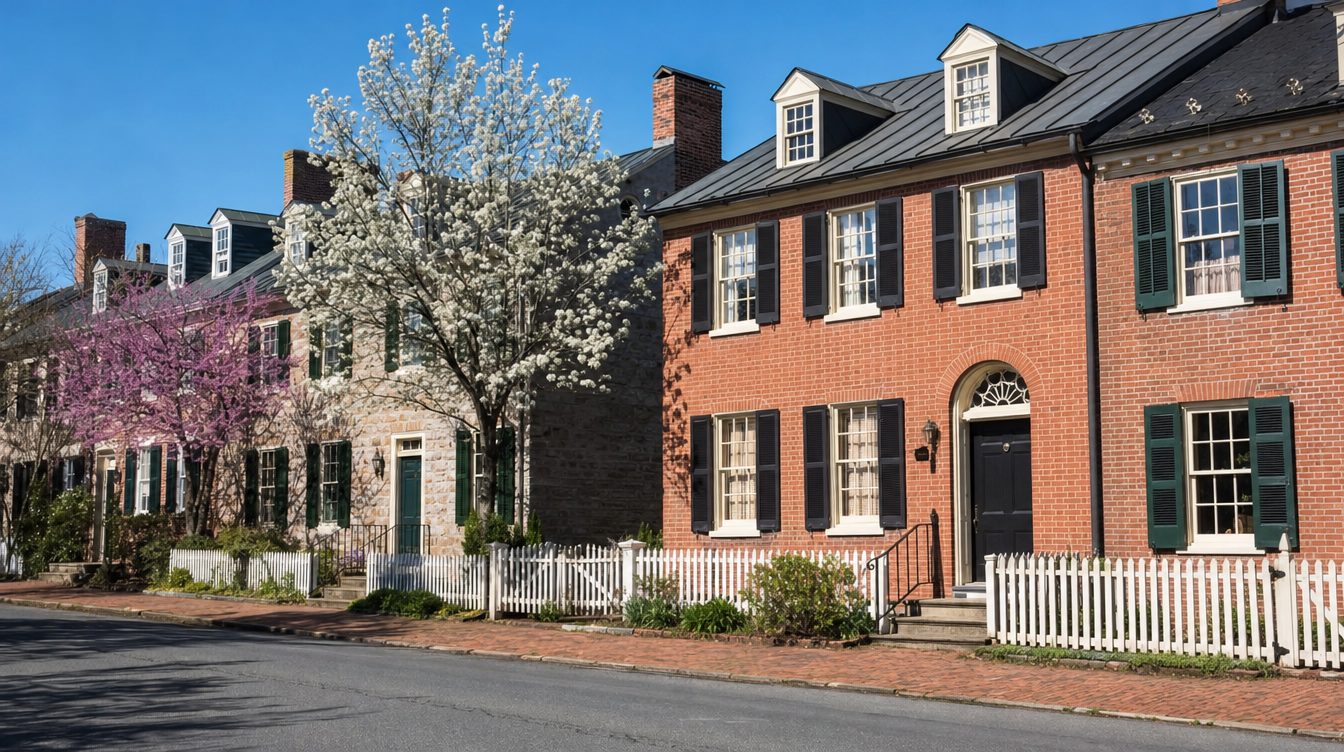
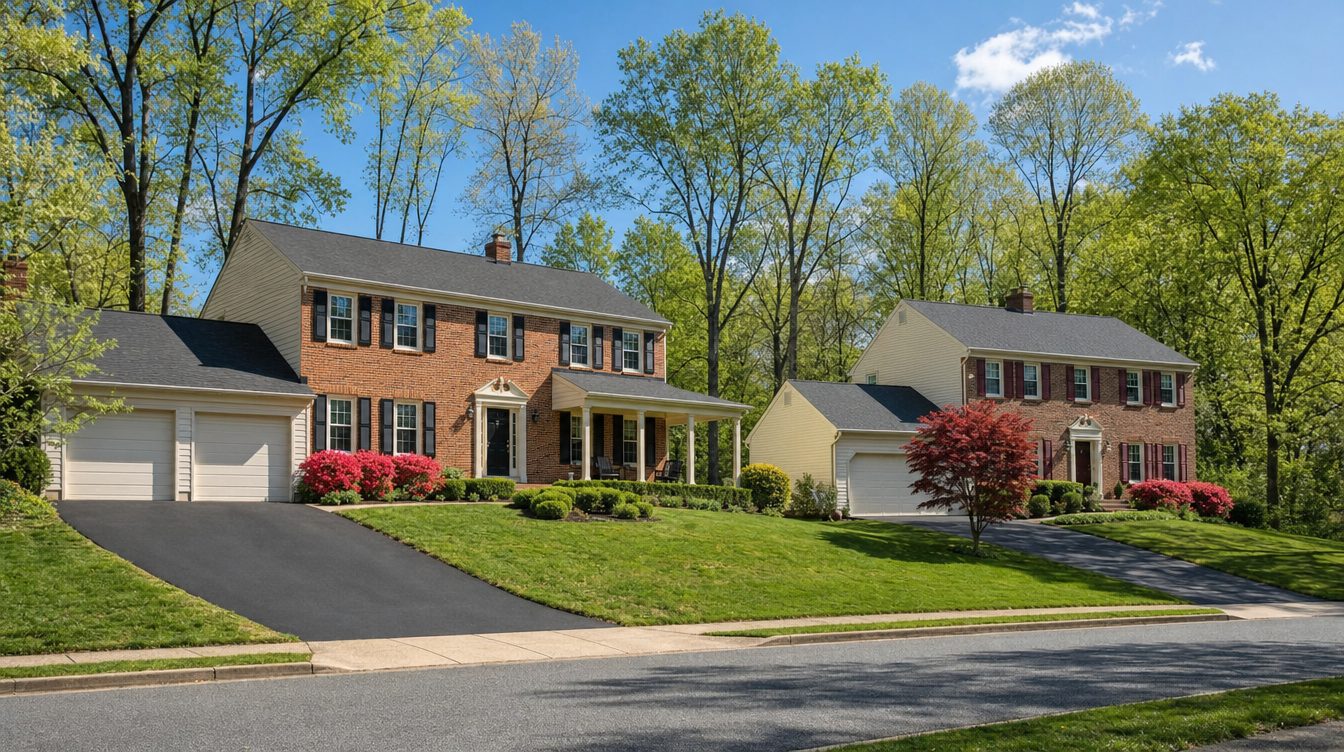
Artist’s renderings of real Northern Virginia places.

Last updated October 19, 2026Question 1 of a weekly column; mortgage rate from Freddie Mac (week of October 15, 2026)About a 4-minute read

Ask Ahmed · Question 1

“Should I wait for rates to drop before I buy?”

Ahmed’s short answer: if you can afford a bigger down payment, with 20% or more as the goal, and the monthly payment fits your budget, buy. Waiting is okay, but if rates fall, prices can rise with them, so what you save on the rate you may pay back in a higher price. The rule is the same whether rates are 6% or 8%. Read the full answer or try your own numbers.

This week’s answer, by the numbers

The latest rate updates every Thursday from Freddie Mac; payment examples worked out below

7.40%Latest U.S. average 30-year fixed mortgage rate1Week of Oct 15, 2026
7.40%The same average the week Ahmed answered, October 15, 20261
20%+The down payment Ahmed tells buyers to aim for when rates are high
$520A month less in principal and interest with 20% down instead of 10%, on a $750,000 example home at the latest rate2

The $750,000 home is an example price for the arithmetic, not a market figure. Payments are principal and interest on a 30-year fixed loan; taxes, insurance and mortgage insurance are not included.

Question 1 · October 17, 2026

“Should I wait for rates to drop before I buy?”

A buyer asked. Ahmed’s answer, from his voice note.

If you can afford a larger down payment, one that brings your monthly payment to a level you’re comfortable with, go ahead and buy.

Waiting is fine, too. But picture this: you wait a year, rates come down, and home prices go up. The money you hoped to save on interest ends up going into a higher price, either because more buyers are competing or because prices simply rose.

It’s a 50-50 call. Renting can work as a temporary solution. But as a family grows, it needs more space, a different area, or the schools it wants. In the end, it comes down to your finances.

My rule of thumb when rates are high: put down as much as you comfortably can. A bigger down payment means less interest and a lower monthly payment. Aim for 20% or more. And buy a home you can live in comfortably, without stretching past your budget.

Why 20%? It also gets rid of PMI, private mortgage insurance, and that saves you real money on every monthly payment. It doesn’t have to be exactly 20%. Seventeen or 18% is still a good place to be, so aim for something close. And if your home’s value goes up after you buy, you can ask your lender to take PMI off.

Ahmed Makkiyah, REALTOR®

Try your own numbers

Wait a year for a lower rate, or buy now?

Move the sliders. The example starts at a $750,000 home, 20% down and the latest average rate,1 then asks what happens if the rate falls half a point in a year while prices rise 3%. Those two are guesses, not forecasts: set them to your own.

Buy now

$4,154a month

Price $750,000 · down $150,000

Wait a year

$4,070a month

Price $772,500 · down $154,500

Waiting savescosts $84 a month, and the house costs $22,500 moreless, with $4,500 moreless down.

Principal and interest on a 30-year fixed loan, worked out with the standard loan formula.2 Not included: property taxes, insurance, HOA dues, mortgage insurance (usually charged with less than 20% down), and the rent you pay while you wait. This is arithmetic, not a loan offer.

Northern Virginia, 2019 to 2026

When rates jumped, Northern Virginia prices still went up.

From 2021 to 2023 the average 30-year rate more than doubled, from 2.92% to 6.64%. The median detached house in Northern Virginia still rose each year, from $760,000 to $834,750. It has not fallen in any year since 2019.

Median Northern Virginia detached house price and the average 30-year mortgage rate, January to September of each year, 2019 to 2026The median house price rose every year, from $630,000 in 2019 to $950,000 in 2026, including 2022 and 2023, when the average rate rose from 2.92% to 6.64%.Rates jumped$0$250K$500K$750K$1M$630K2019$675K2020$760K2021$825K2022$834.8K2023$900K2024$927.5K2025$950K2026Average 30-year fixed rate, same months4.01%3.24%2.92%4.90%6.64%6.75%6.73%6.41%
Median detached house price, January 1 to September 30Average 30-year fixed rate, same months
+$22,500

What one year of waiting added to the median house, 2025 to 2026: $927,500 to $950,000.

+$9,750

The slowest year was 2023, right after rates jumped. The median house still rose, from $825,000 to $834,750.

7 of 7

Yearly changes from 2019 to 2026 that were rises, comparing January to September each year.

This is what happened, not a forecast. Prices can fall, and one street can move differently from the region. Detached houses in Fairfax, Loudoun, Prince William and Arlington counties and the City of Alexandria.6 Rates are Freddie Mac’s weekly U.S. averages, averaged over the same months.7

From this answer

Ahmed’s rules of thumb when rates are high.

20%+

Aim for 20% down or more

A bigger down payment means a smaller loan, less interest and a lower monthly payment.

Budget

Stay under your budget

Buy a house you can comfortably live in, not the most the bank will lend.

50-50

Nobody knows the rate next year

If rates fall, more buyers come back and prices can rise, so the savings may not last.

Rent

Renting can be a bridge

A rental can work for a while, until the family needs more space, a different area or a school.

Questions

What buyers ask about waiting for rates.

Should I buy a house now or wait for mortgage rates to drop?

Ahmed’s answer: if you can put 20% or more down and the monthly payment fits your budget, buying now is reasonable, because if rates fall, prices can rise with more buyers competing. Waiting is okay too, and renting can be a temporary bridge; it depends on your finances and your family’s needs. When he answered, the average 30-year fixed rate was 7.40% (week of October 15, 2026, Freddie Mac); the rule is the same at any rate.

Did Northern Virginia home prices fall when mortgage rates went up?

No. Comparing January to September of each year, the average 30-year rate rose from 2.92% in 2021 to 6.64% in 2023, and the median detached house in Northern Virginia rose from $760,000 to $834,750 (Bright MLS). It has gone up every year since 2019. That is history, not a promise: prices can fall.

How much does waiting a year cost in Northern Virginia?

From 2025 to 2026 the median detached house rose $22,500, from $927,500 to $950,000 (January 1 to September 30 each year, Bright MLS). Whether waiting pays off depends on how far rates fall and how far prices rise; the calculator on this page lets you set both.

Why does Ahmed say to aim for 20% down?

With 20% down there is no private mortgage insurance (PMI) on a conventional loan, the loan is smaller, and the monthly payment and total interest go down. 17% or 18% down still lands in the cheapest PMI tier.

More answers: all Ask Ahmed questions.

Your question

Send me your question. It could be next week’s answer.

Ask about buying, selling, renting or a town. I answer in English or Arabic, and I never publish your name.

اقرأ هذه الصفحة كاملة بالعربية ←

وكيلك العقاري الموثوق في شمال فرجينيا.

Keep exploring

More help with the buy-now-or-wait question.

Keep reading